Ginseng is one of the most famous herbs in the world and also one of the most misused words on a supplement shelf. Half the products labeled "ginseng" are not true ginseng at all. This guide does two things: it sorts what actually counts as ginseng from the imposters, and then ranks the real thing on what matters, which is the species (true Panax), a stated ginsenoside content, and honest testing. It is also candid that ginseng's benefits are real but modest, and that it is a stimulating herb with genuine drug interactions.
The short story: Korea Ginseng Corp (JungKwanJang) Korean Red Ginseng is the reference-grade pick, the brand behind much of the human research, using six-year Korean roots and a concentrated, ginsenoside-rich extract. But read the box below first, because the most important thing with ginseng is buying the real plant.
Read this first: buy true ginseng, and know the cautions
Only Panax is real ginseng. True ginseng means a Panax species: Asian or Korean ginseng (Panax ginseng, sold as red when steamed or white when dried) and American ginseng (Panax quinquefolius). So-called Siberian ginseng (eleuthero) and Indian ginseng (ashwagandha) are different plants that contain no ginsenosides, so they are not ginseng. Check the Latin name, and favor products that state a ginsenoside percentage.
What the evidence supports. The clearest signal is for fatigue (an American ginseng trial), with suggestive support for male sexual function (Korean red ginseng) and modest post-meal blood-sugar effects; cognition data are mixed and athletic claims are weak. Keep expectations moderate.
Cautions. Ginseng is stimulating and can cause insomnia; it may lower blood sugar and interacts with warfarin, MAOI antidepressants, stimulants, and diabetes medicines. Many people cycle it rather than taking it continuously, and it should be avoided in pregnancy and breastfeeding. One product below is a multi-herb blend that contains royal jelly, a bee product that can trigger severe allergic reactions, so allergic readers should note that.
The short version
- Best overall: KGC JungKwanJang Korean Red Ginseng, the clinical-grade reference brand.
- Best standardized: Auragin, with a transparent 8 percent ginsenoside content in a single-ingredient tablet.
- True Panax only. Eleuthero and ashwagandha are not ginseng, whatever the front label says.
- It is stimulating: mind the drug interactions, cycle it, and avoid it in pregnancy.
How we ranked them
Because most of the risk with ginseng is buying the wrong plant or an under-disclosed product, species and standardization did most of the deciding. We weighed four things:
- True Panax species. Only Asian/Korean ginseng and American ginseng qualify; eleuthero and ashwagandha were excluded.
- Ginsenoside transparency. A stated ginsenoside percentage or a documented extract ranks above vague "root powder."
- Sourcing and testing. Six-year Korean roots, GMP-facility and third-party testing, and single-ingredient formulas.
- Dose and value. A clear, honest dose at a fair price.
Scores are our editorial assessment on a five-point scale, reflecting product quality, not a promise the ingredient will work for you. Prices are approximate and change often.
The 7 best ginseng supplements
Tap any product to jump straight to its full review.
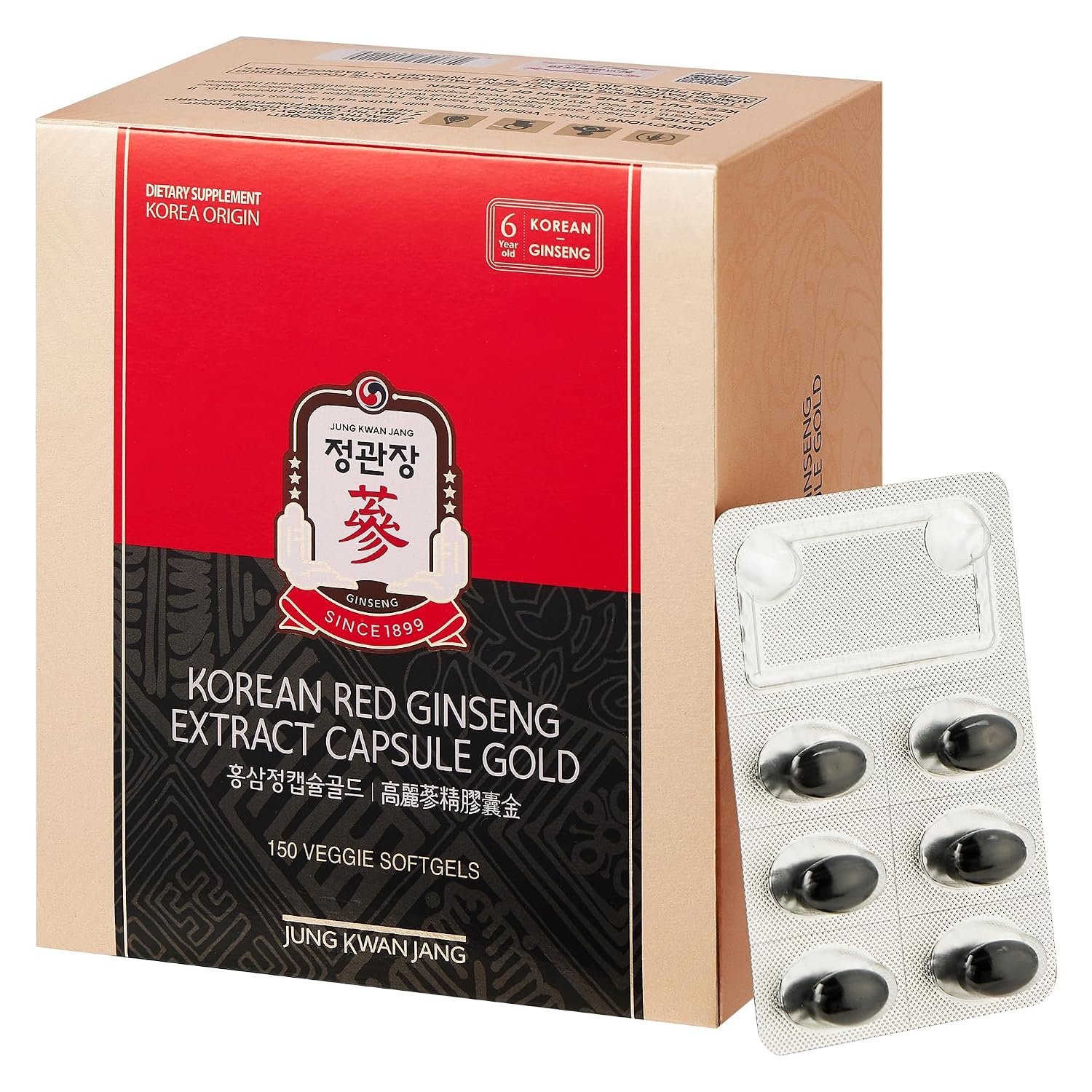
KGC JungKwanJang Korean Red Ginseng Extract Capsule Gold
Best for: Clinical-grade sourcing and consistency
The reference brand behind much of the human red ginseng research. Korea Ginseng Corporation (JungKwanJang, also sold as Cheong Kwan Jang) uses six-year Korean roots, a concentrated ginsenoside-rich red ginseng extract, and an unusually rigorous quality program, delivering 420 mg of Korean red ginseng extract per two-capsule serving in a caffeine-free vegan capsule. For a buyer who wants clinical-grade sourcing and batch-to-batch consistency in true Panax ginseng, it is the most trustworthy pick. The honest trade-offs: it is premium-priced, and the label lists ginsenoside markers (Rg1, Rb1, Rg3) rather than a single standardized percentage.
- The clinical-grade reference brand
- Six-year Korean roots, concentrated extract
- Rigorous in-house quality program
- Caffeine-free vegan capsule
- Premium price
- Lists markers, not one standardized percentage
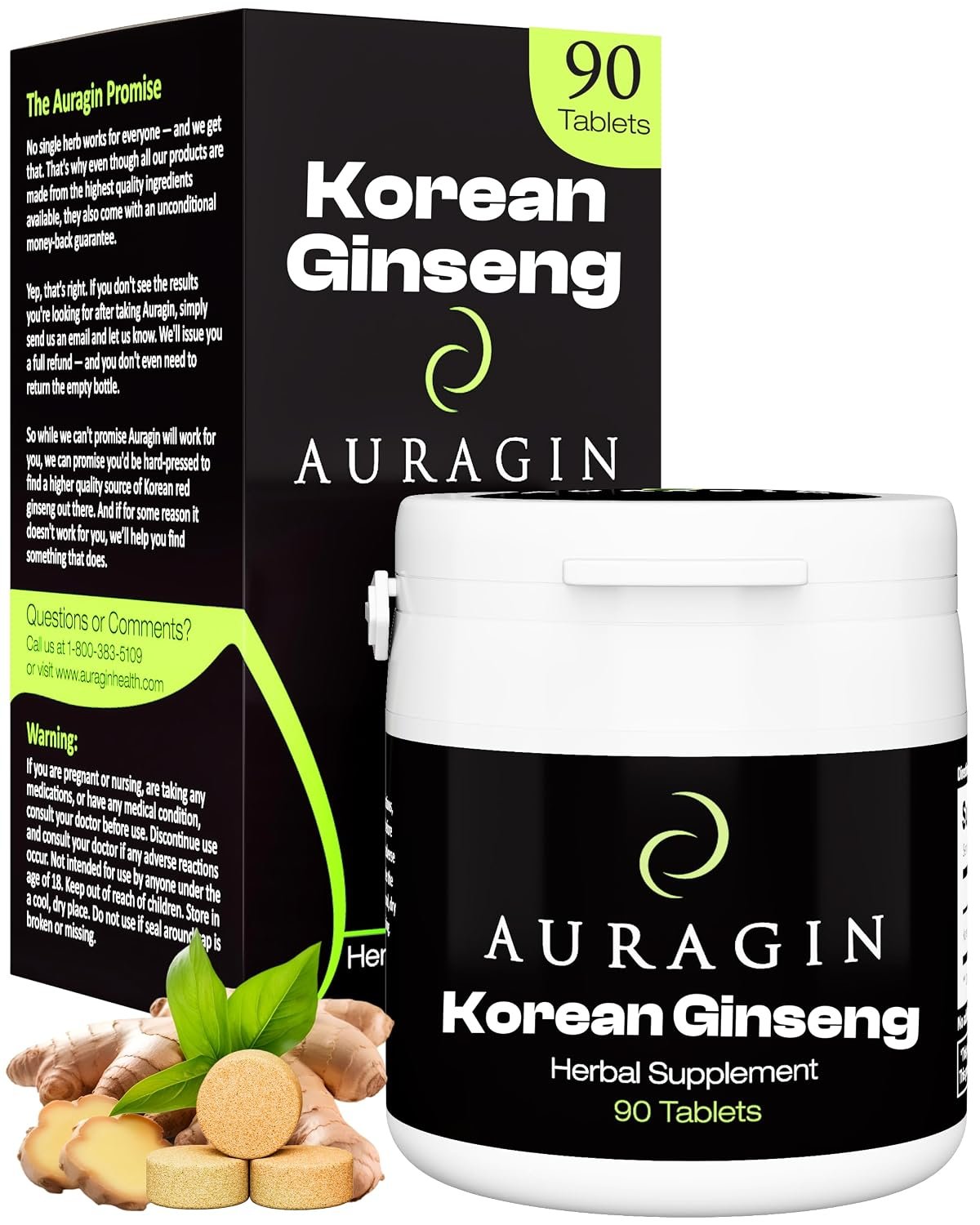
Auragin Authentic Korean Red Ginseng
Best for: A transparent, high ginsenoside percentage
The transparency pick, and the best number on the shelf. Auragin states a minimum 8 percent ginsenoside content, the highest clearly-disclosed figure here, in a single-ingredient, additive-free tablet made in Korea from six-year roots. If you want to know exactly how much active you are getting, this is the most honest label in the lineup, at a mid price. It sits just behind KGC because it publishes no third-party or USP verification of that 8 percent claim, and it is sold only as tablets. On stated potency alone, it is arguably the strongest value.
- Transparent minimum 8 percent ginsenosides
- Single-ingredient, no binders or additives
- Six-year Korean roots
- No published third-party verification
- Tablets only
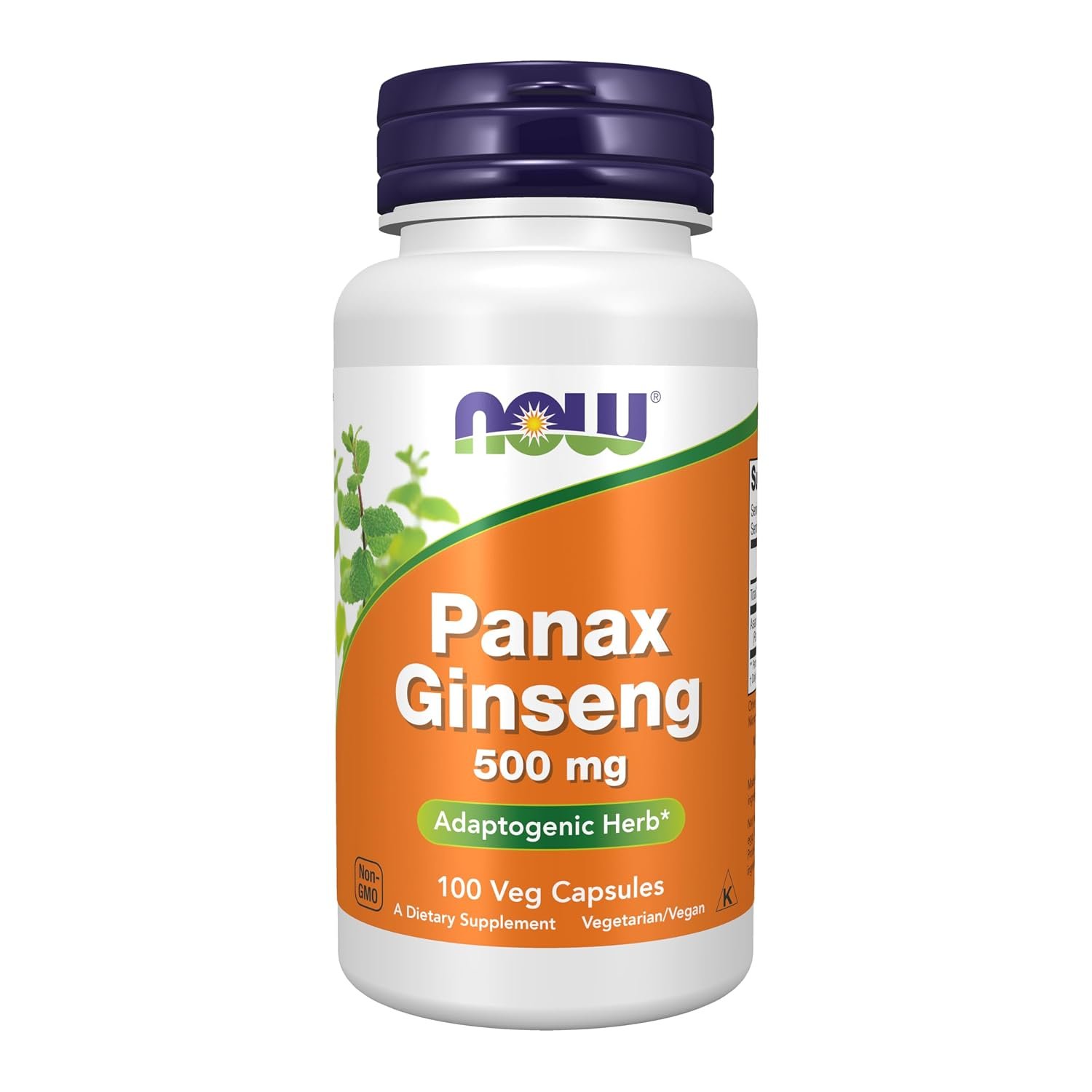
NOW Foods Panax Ginseng 500 mg
Best for: A standardized Asian ginseng at a low price
The value pick from a brand that tests its own material. NOW selects its Panax ginseng root for a minimum 5 percent ginsenoside content and makes it in a UL-audited GMP facility, at a very low price. It is a trustworthy, standardized Asian ginseng for people who want the real thing without paying extract prices. The honest caveats: whole-root powder is less concentrated than a red ginseng extract, so you may take more to feel it, and this is Asian ginseng only, so if you specifically want American ginseng, see the next pick.
- Stated minimum 5 percent ginsenosides
- Trusted GMP manufacturer, in-house testing
- Very low price
- Root powder is less concentrated than an extract
- Asian ginseng only
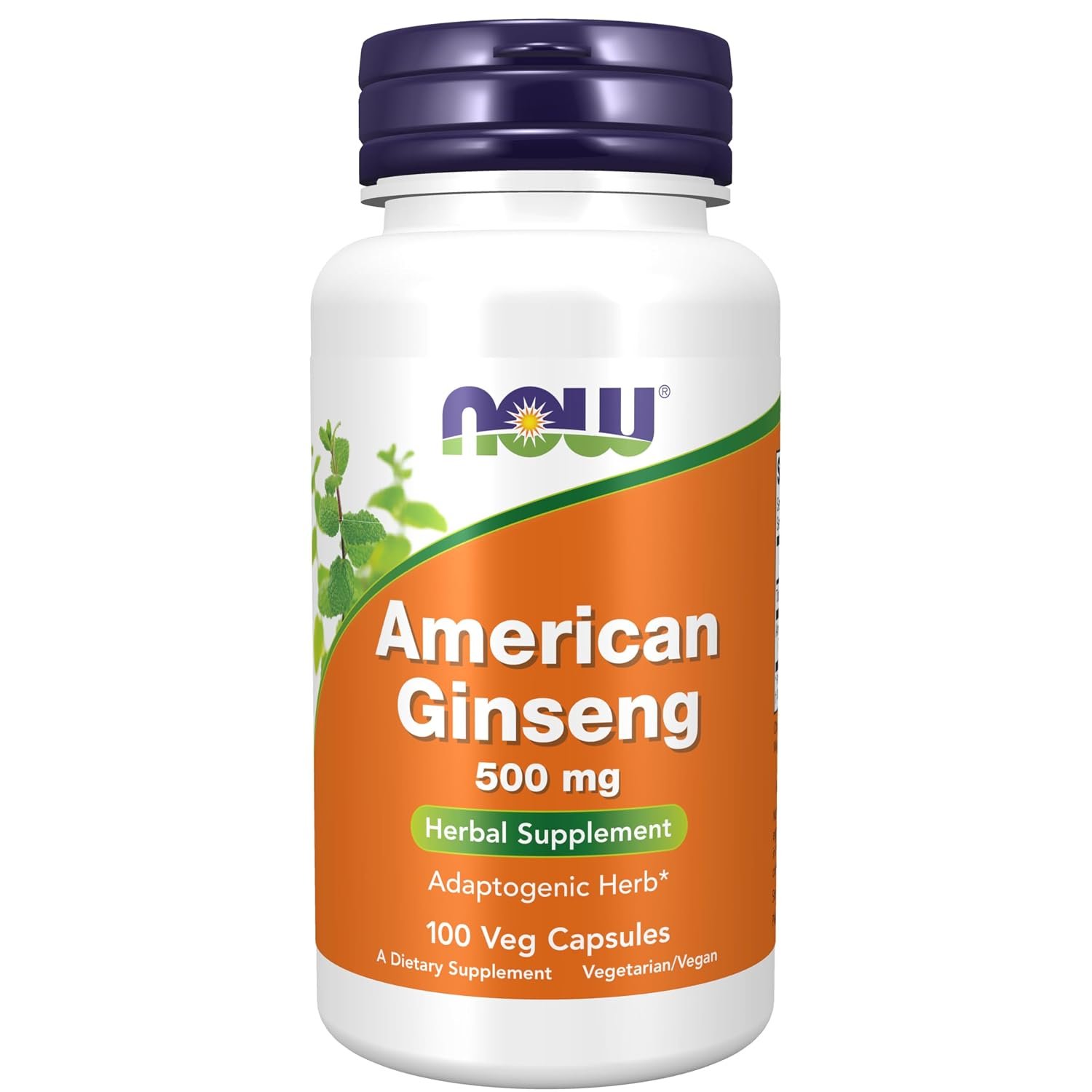
NOW Foods American Ginseng 500 mg
Best for: The species behind the fatigue evidence
The pick if American ginseng is what you want. This is true Panax quinquefolius, the species behind the strongest fatigue trial (Barton 2013), standardized to a minimum 5 percent ginsenosides, from NOW's audited GMP facility at a low price. American ginseng is milder and less stimulating than Korean red, which some people prefer for daytime use, and it has the better blood-sugar data. It ranks just behind the Asian version mainly because it is gentler and the per-capsule dose sits below the multi-gram amounts used in some research, so you may take two.
- True American ginseng (the fatigue-trial species)
- Standardized 5 percent ginsenosides
- Milder, good for daytime, low price
- Milder than Korean red ginseng
- Per-capsule dose below some research amounts
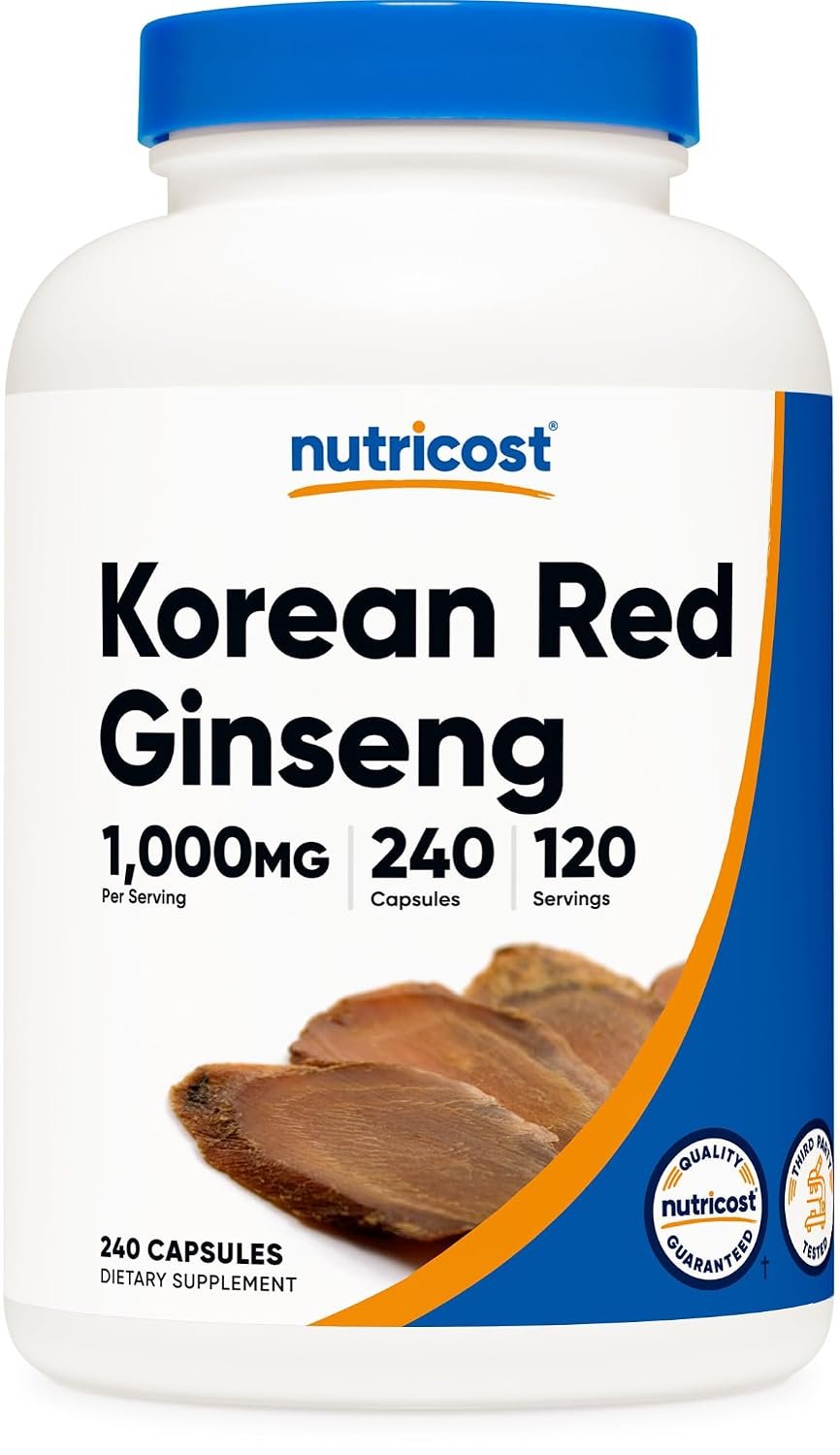
Nutricost Korean Ginseng (Panax) 500 mg
Best for: Facility credentials at a rock-bottom price
The budget pick with strong facility credentials. Nutricost makes its Korean Panax ginseng in an NSF-certified, GMP-compliant, FDA-registered facility with third-party lab testing, and sells a large 240-capsule bottle at a very low cost per serving. If clean manufacturing at the lowest price is your priority, it delivers. It ranks mid-pack for one honest reason: it does not state a ginsenoside percentage, so while the facility is well-credentialed, the actual potency of the root is unverified. Fine as an inexpensive true-Panax option, but you are trusting the root rather than a number.
- NSF-certified GMP facility, third-party tested
- Very low cost, 240-count bottle
- True Korean Panax ginseng
- No ginsenoside standardization stated
- Potency of the root is unverified
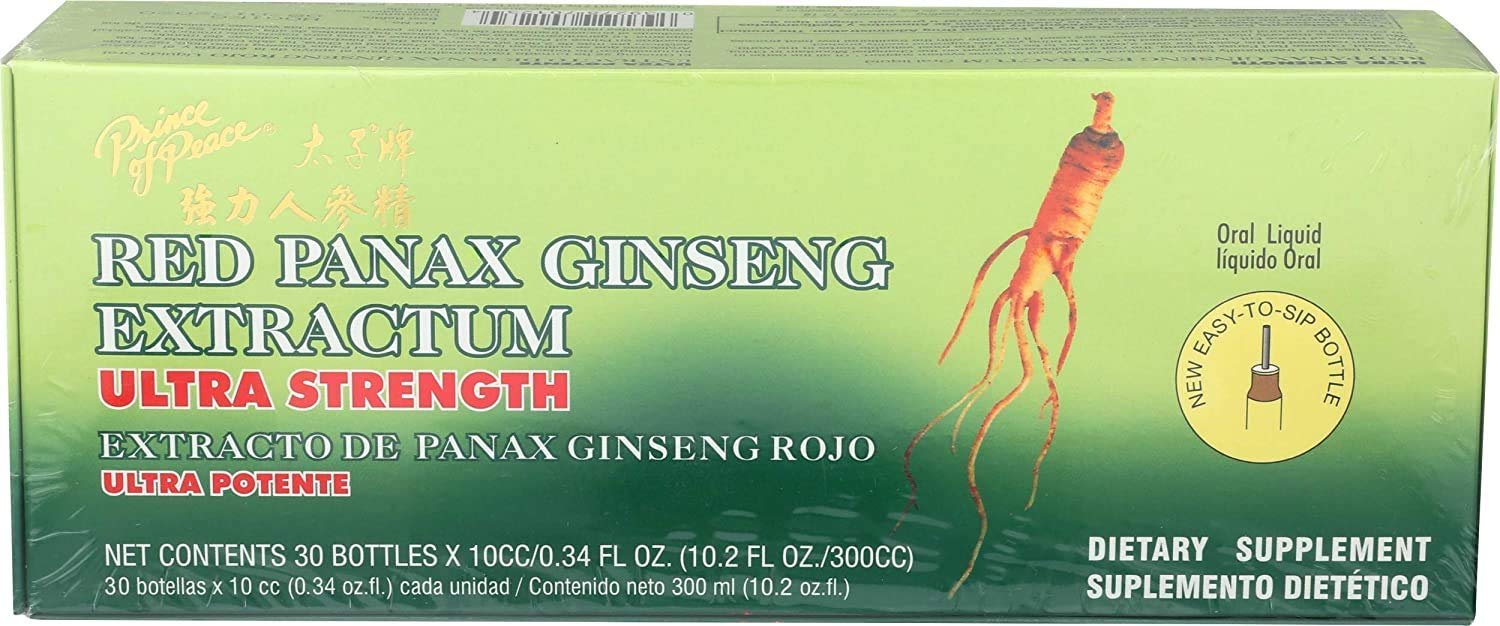
Prince of Peace Red Panax Ginseng Extractum
Best for: A convenient traditional liquid shot
The traditional single-serve liquid, best for convenience over precision. Prince of Peace is an inexpensive, widely available red panax ginseng liquid in single-dose vials, and it is a pleasant way to take ginseng if you like the format. Be clear on what it is: it contains added honey, a small amount of alcohol (under 0.5 percent), and preservatives (sodium benzoate, potassium sorbate), with no stated ginsenoside content and typically low, variable actives. It is a fine traditional pick-me-up, but not the choice if you want a measured, standardized dose. Note the honey means it is not for infants under one year.
- Convenient single-serve liquid vials
- Inexpensive and widely available
- Traditional red panax format
- Added honey, trace alcohol, and preservatives
- No stated ginsenoside content, low actives
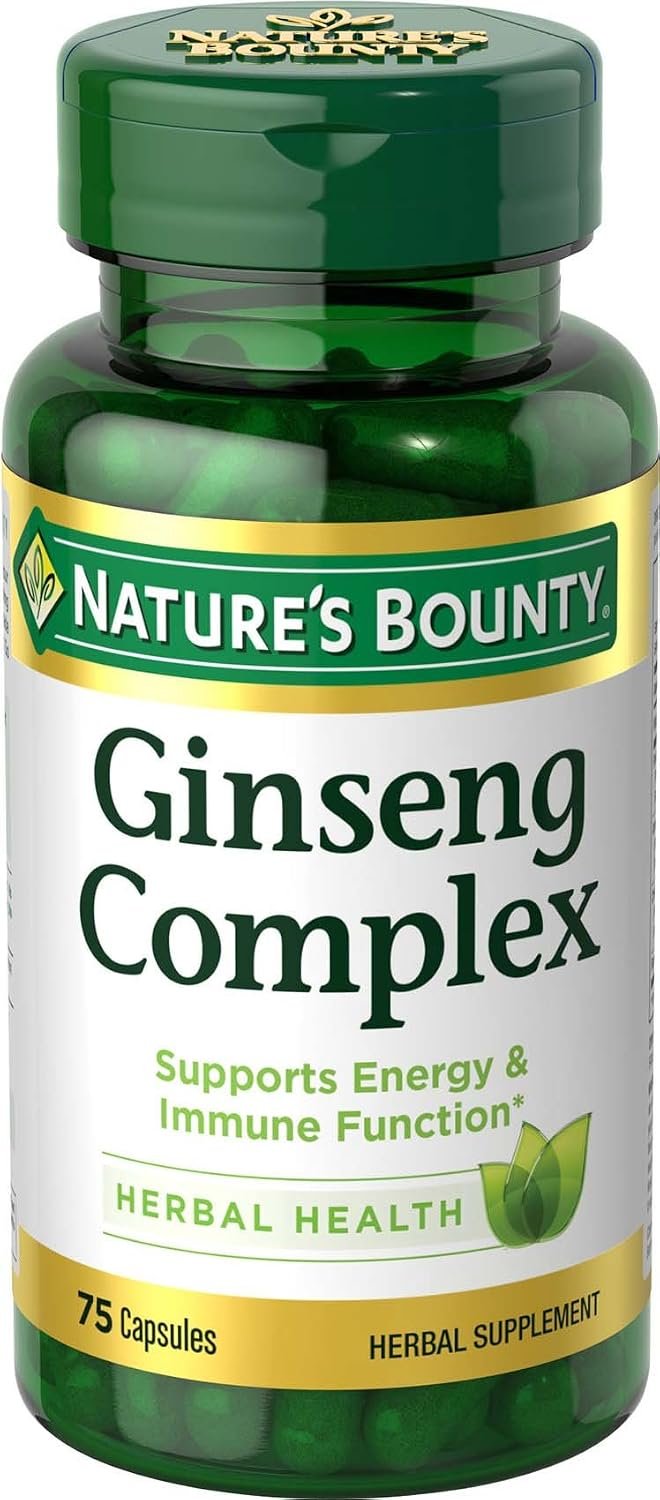
Nature's Bounty Ginseng Complex Plus Royal Jelly
Best for: A cheap, easy-to-find multi-ginseng blend
The drugstore blend, with an allergen you need to know about. Nature's Bounty combines true Panax species (Panax standardized to 2 percent ginsenosides, American to 5 percent, Chinese red to 2 percent) plus B12 and royal jelly, and it is cheap and stocked nearly everywhere. It uses real ginseng, not eleuthero, which is a point in its favor. Two honest cautions drop it to last: it is a proprietary blend where the ginseng dose is diluted, and it contains royal jelly, a bee product that can cause severe allergic reactions in people with bee or pollen allergies or asthma. The label itself carries a bee-allergy warning. Fine if you want a cheap blend and have no bee allergy.
- Uses true Panax species, not eleuthero
- Each ginseng is standardized (2 to 5 percent)
- Inexpensive and widely stocked
- Contains royal jelly (bee-allergy risk)
- Proprietary blend dilutes the ginseng dose
The full lineup, side by side
Read the type and standardization columns first. With ginseng, buying a true Panax species with a disclosed ginsenoside content matters more than the price.
| Product | Type | Form | Standardization | Tested | Best for |
|---|---|---|---|---|---|
| KGC JungKwanJang | Korean red | Capsule extract | Ginsenoside markers | GMP | Clinical-grade pick |
| Auragin | Korean red | Tablet | 8% ginsenosides | Made in Korea | Best stated potency |
| NOW Panax | Asian | Capsule | 5% ginsenosides | GMP | Best value |
| NOW American | American | Capsule | 5% ginsenosides | GMP | Fatigue-trial species |
| Nutricost | Korean | Capsule | None stated | NSF facility, 3rd-party | Tested budget |
| Prince of Peace | Red Panax | Liquid vial | None stated | GMP | Traditional liquid |
| Nature's Bounty | Panax blend | Capsule | 2 to 5% per herb | GMP | Drugstore blend (has royal jelly) |
Prices and specs are read from current listings and can change; confirm the Supplement Facts panel before you buy.
How to choose the right one for you
A few honest priorities make the decision easy:
- If you want the researched, clinical-grade product, KGC JungKwanJang is the reference Korean red ginseng.
- If you want the highest disclosed potency, Auragin states 8 percent ginsenosides in a clean single-ingredient tablet.
- If you want value, NOW Panax or American ginseng gives you a standardized 5 percent product cheaply.
- If you prefer milder, daytime use, American ginseng is gentler and has the fatigue and blood-sugar data.
- Whatever you pick, confirm it is a true Panax species, mind the drug interactions, cycle it, and avoid it in pregnancy.
If your goal is steady energy, our energy without caffeine guide covers the wider field, and for focus see our best nootropic supplements.
Frequently asked questions
Is Korean red ginseng the same thing as Panax ginseng?
Yes. Red ginseng is Panax ginseng that has been steamed and dried, and white ginseng is the same species air-dried. Both are true ginseng.
Is Siberian ginseng (eleuthero) real ginseng?
No. Eleuthero (Eleutherococcus senticosus) and ashwagandha (sometimes called Indian ginseng) are different plants that contain no ginsenosides, so they should not be bought as ginseng. Check the Latin name on the label.
What is a typical ginseng dose?
Labels and research commonly use about 200 to 400 mg of a standardized extract, or 1 to 2 g of dried root, per day. Standardized products list a ginsenoside percentage so you can compare potency.
Korean (Asian) versus American ginseng, which should I pick?
Korean red ginseng is the more stimulating, warming type often used for energy, while American ginseng is milder and has the strongest fatigue trial plus some blood-sugar data. Choose by your goal.
Are there side effects or drug interactions?
Ginseng can cause insomnia, jitteriness, or headache and may lower blood sugar, and it can interact with warfarin, MAOI antidepressants, stimulants, and diabetes medicines. Ask your clinician if you take any of these, and avoid it in pregnancy and breastfeeding.
Should I cycle ginseng or take it every day?
Many people take it for a few weeks and then take breaks rather than using it continuously, which may reduce overstimulation and tolerance. There is no single official schedule, so follow the label and your clinician.
The bottom line
The most important decision with ginseng is buying the real plant. Only true Panax counts, so ignore anything sold as Siberian or Indian ginseng. KGC JungKwanJang is the clinical-grade Korean red ginseng, Auragin has the most transparent potency at 8 percent ginsenosides, and NOW Panax and American ginseng are the standardized value picks, with American being the milder, fatigue-supported option. Keep expectations moderate, remember ginseng is stimulating with real drug interactions, cycle it rather than taking it forever, and avoid it in pregnancy. Buy a true Panax species with a disclosed ginsenoside content and you are doing ginseng right.