Sea moss went from a Caribbean folk remedy to a TikTok "92-mineral superfood" in about two years, and the supplement aisle filled up just as fast. Here is the honest starting point: strip away the hype and sea moss is a red seaweed that provides iodine, soluble fiber, and some trace minerals, with very little rigorous human evidence behind the marketed benefits. That changes what "best" means. Because seaweed soaks up whatever is in its water (including arsenic, lead, and mercury) and because its iodine content is high and wildly unpredictable, the thing that actually separates a good sea moss product from a risky one is third-party testing and transparency, not brand or price. So this ranking leads with testing and honesty, and it debunks the myth before it recommends anything.
The short story: MaryRuth's Organic Sea Moss is the pick to beat because it carries the strongest independent testing in the category, but before you buy any sea moss, read the box below, because the real story here is safety, not superpowers.
Read this first: the myth, and the two real risks
The "92 of the body's 102 minerals" claim is marketing, not science. It traces to a vague, decades-old seaweed factoid, not to any analysis of a sea moss supplement, and your body does not need 92 supplemental minerals anyway. What sea moss reliably provides is iodine, fiber, and some trace minerals, and the human evidence for the immune, thyroid, skin, weight, and libido claims is minimal.
Risk 1: iodine overload. Sea moss can carry very high and unpredictable iodine, and both too much and too little iodine disrupt the thyroid. A batch can swing from trivial to well past the 1,100 mcg adult upper limit. If you are pregnant, have a thyroid condition (Hashimoto's, Graves', nodules), or take thyroid medication, talk to your doctor before using sea moss, and be extra cautious with bladderwrack blends, which add even more iodine.
Risk 2: heavy metals. Because seaweed concentrates arsenic, lead, and mercury, an untested product is a genuine gamble. A published Certificate of Analysis (COA) or verified third-party heavy-metal testing is the thing that actually protects you, which is why it drives this ranking.
The short version
- Best tested: MaryRuth's, the only Clean Label Project Certified pick, screened for 200+ contaminants.
- Best capsule with a public COA: Double Wood, pure wildcrafted Chondrus crispus.
- Testing beats hype: pick a product with real heavy-metal and iodine testing, not the loudest label.
- Know the risks: unpredictable iodine (thyroid) and heavy metals are the real story, and the health claims are largely unproven.
How we ranked them
Because the benefits are unproven and the risks are real, safety and honesty did the deciding here, not popularity. We weighed four things:
- Third-party testing. Verified heavy-metal (and ideally iodine) testing, especially a published or on-request Certificate of Analysis, is the single most important factor.
- Transparency. Species named (sea moss as Chondrus crispus or Gracilaria), sourcing stated, and doses fully disclosed.
- Sensible form and iodine load. Pure sea moss is easier to judge than a bladderwrack blend that stacks on more iodine.
- Clean label and value. No junk fillers, no undisclosed mega-dose iodine, fair price.
Scores are our editorial assessment on a five-point scale and run lower than our other rankings on purpose, because the category's evidence is thin. Prices are approximate and change often.
The 7 best sea moss supplements
Tap any product to jump straight to its full review.
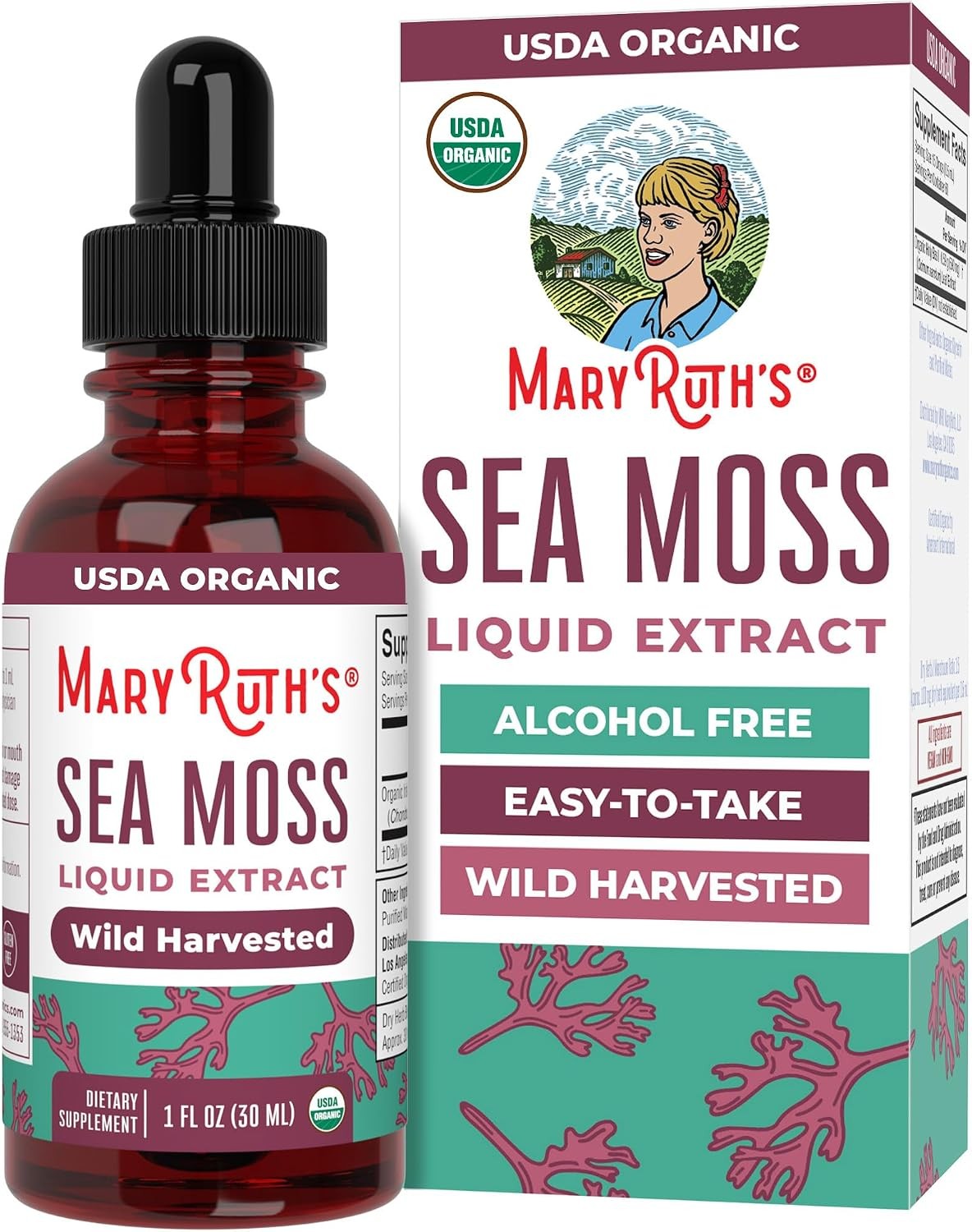
MaryRuth's Organic Irish Sea Moss Liquid Drops
Best for: The strongest independent heavy-metal testing you can buy
The one that treats testing as the whole point. MaryRuth's is Clean Label Project Certified, independently screened for more than 200 contaminants including arsenic, lead, and mercury, which is the strongest heavy-metal verification in this category by a distance. It names the species (Chondrus crispus), states it is wild harvested, and is USDA Organic, vegan, and sugar-free, and the controlled liquid serving keeps iodine exposure modest. If safety and transparency are your priorities (and for sea moss they should be), this is the clear winner. The honest caveat: a dropper delivers less sea moss per dose than a capsule, so it is a gentle daily addition rather than a high-dose product, and it costs more per milligram.
- Clean Label Project Certified (200+ contaminants)
- Species and wild-harvest sourcing disclosed
- USDA Organic, vegan, sugar-free
- Controlled serving keeps iodine modest
- Lower dose per serving than capsules
- Pricier per milligram
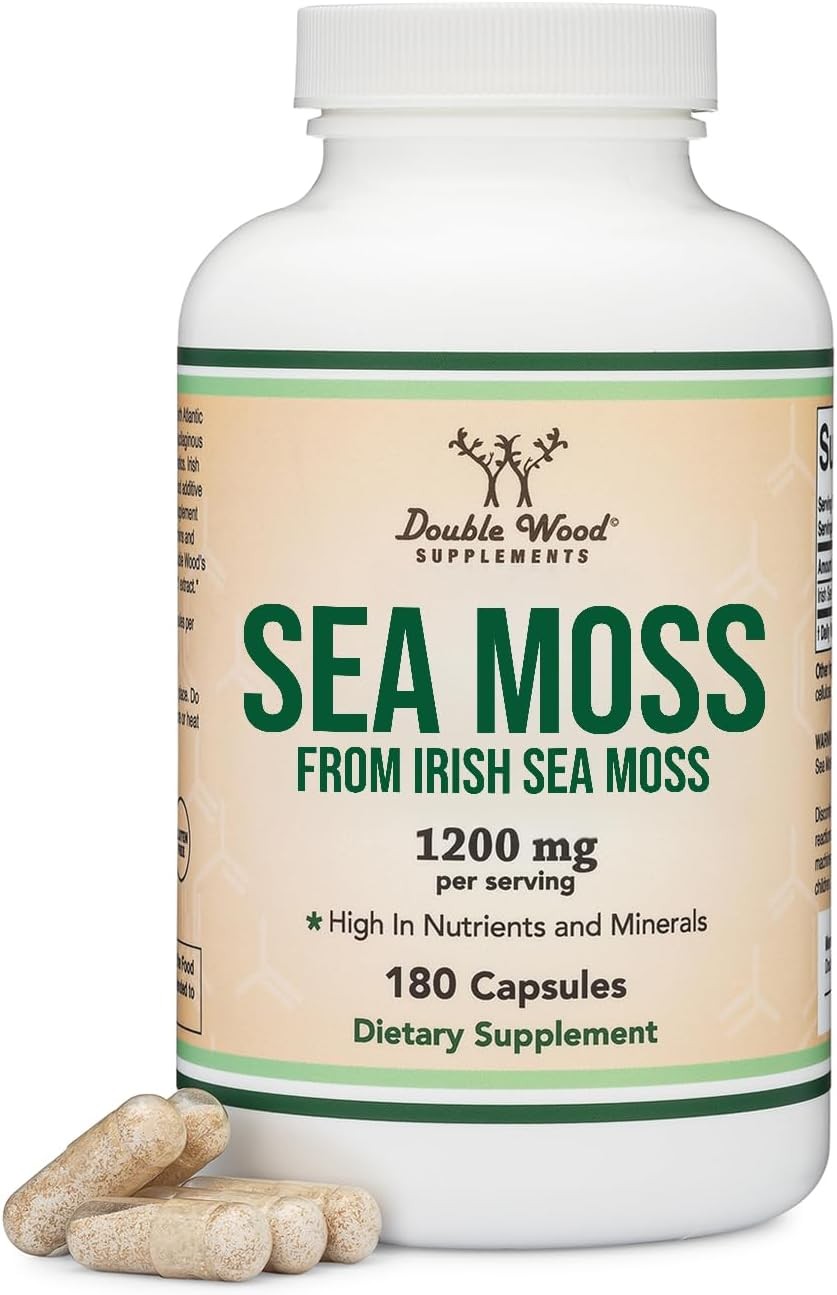
Double Wood Irish Sea Moss Capsules
Best for: A pure capsule from a brand that actually publishes its COAs
The best capsule for people who want to see the paperwork. Double Wood publishes Certificates of Analysis and third-party testing results, tests for heavy metals and microbes in the USA, and names its single-species, wildcrafted Chondrus crispus on the label, with no bladderwrack or burdock fillers. Actually being able to read the COA is rare in this category and is exactly what should drive the decision. It sits just behind MaryRuth's because the Clean Label Project certification is a stronger independent standard. The honest note: like most sea moss brands, its marketing leans on "superfood" mineral language the evidence does not fully support, and it does not quantify iodine per capsule.
- Publishes COAs (rare here)
- Pure single-species, wildcrafted C. crispus
- Heavy-metal and microbial tested in the USA
- Marketing overstates "superfood" minerals
- Iodine per capsule not quantified
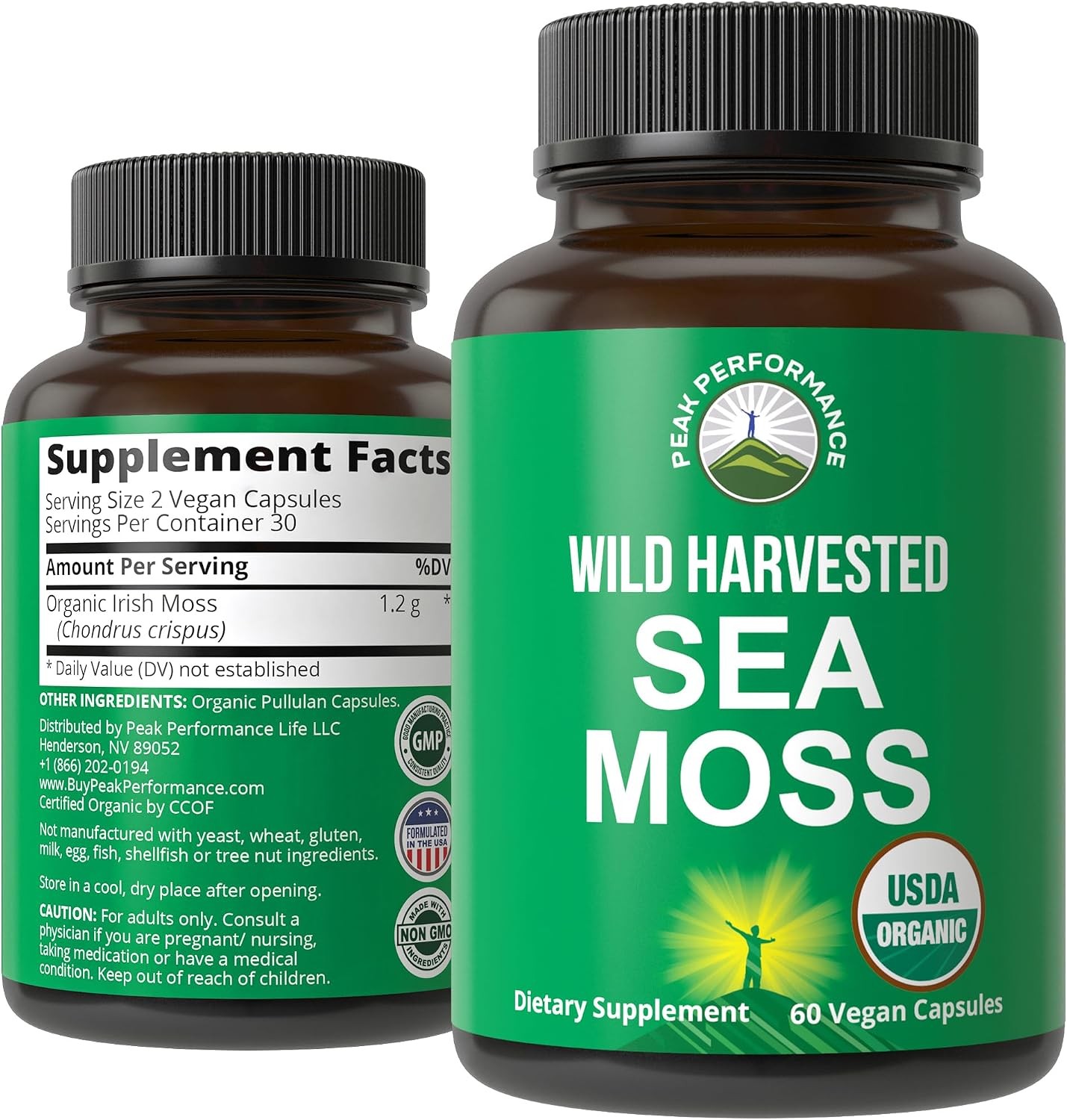
Peak Performance Organic Sea Moss Capsules
Best for: Pure single-species sea moss with no filler herbs
A clean, pure option that is upfront about what it is not. Peak Performance is single-species, wild-harvested Chondrus crispus, explicitly filler-free (it calls out bladderwrack and burdock as cheap add-ins it avoids), and free of soy, gluten, and dairy, and it states it is third-party tested by a US lab. That is a solid, honest profile. It lands at three, though, because unlike our top two it does not publish a COA, so the testing is claimed rather than verifiable, and it costs a little more than Double Wood for the same 1,200 mg. A good pure pick if you trust the brand's word on testing.
- Pure single-species, wild-harvested
- Filler-free, clean allergen profile
- Third-party testing stated
- No publicly posted COA to verify testing
- Slightly pricier for the same dose
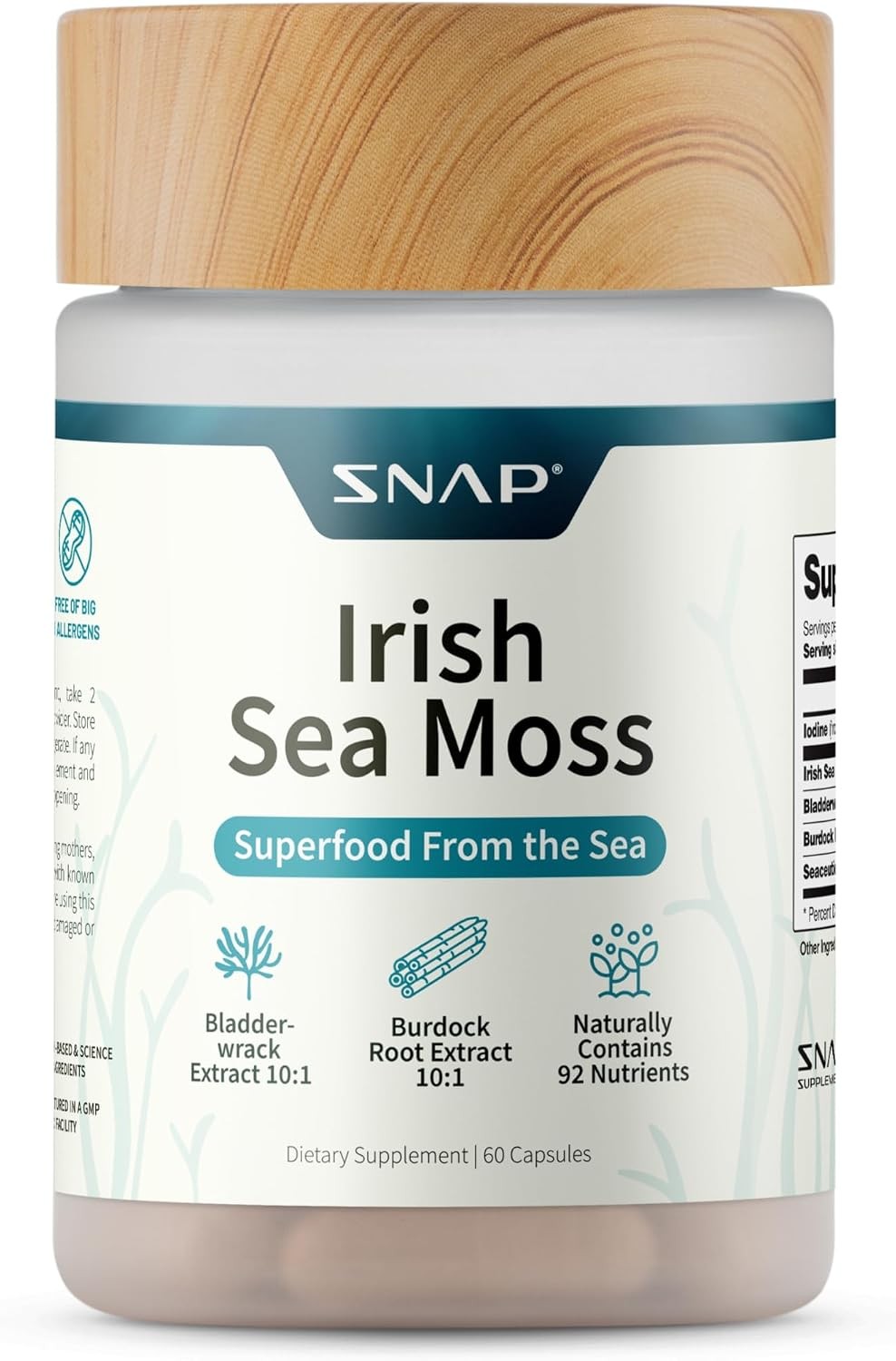
Snap Supplements Sea Moss + Bladderwrack + Burdock
Best for: The classic trio blend, done with full dose transparency
The best-executed version of the popular sea moss trio. Snap combines sea moss, bladderwrack, and burdock root and does the two things most blends do not: it is third-party tested for heavy metals, purity, and potency, and it discloses every ingredient dose instead of hiding them in a proprietary blend, keeping added iodine sensible. If you specifically want the trio format, this is the transparent way to get it. The honest catch that keeps it mid-pack is inherent to the format: bladderwrack stacks even more iodine on top of the sea moss, which raises the thyroid caution, and it is the priciest per capsule here.
- Heavy-metal, purity, and potency tested
- Fully disclosed doses, no proprietary blend
- Restrained added iodine
- Bladderwrack adds more iodine (thyroid caution)
- Priciest per capsule; species not named
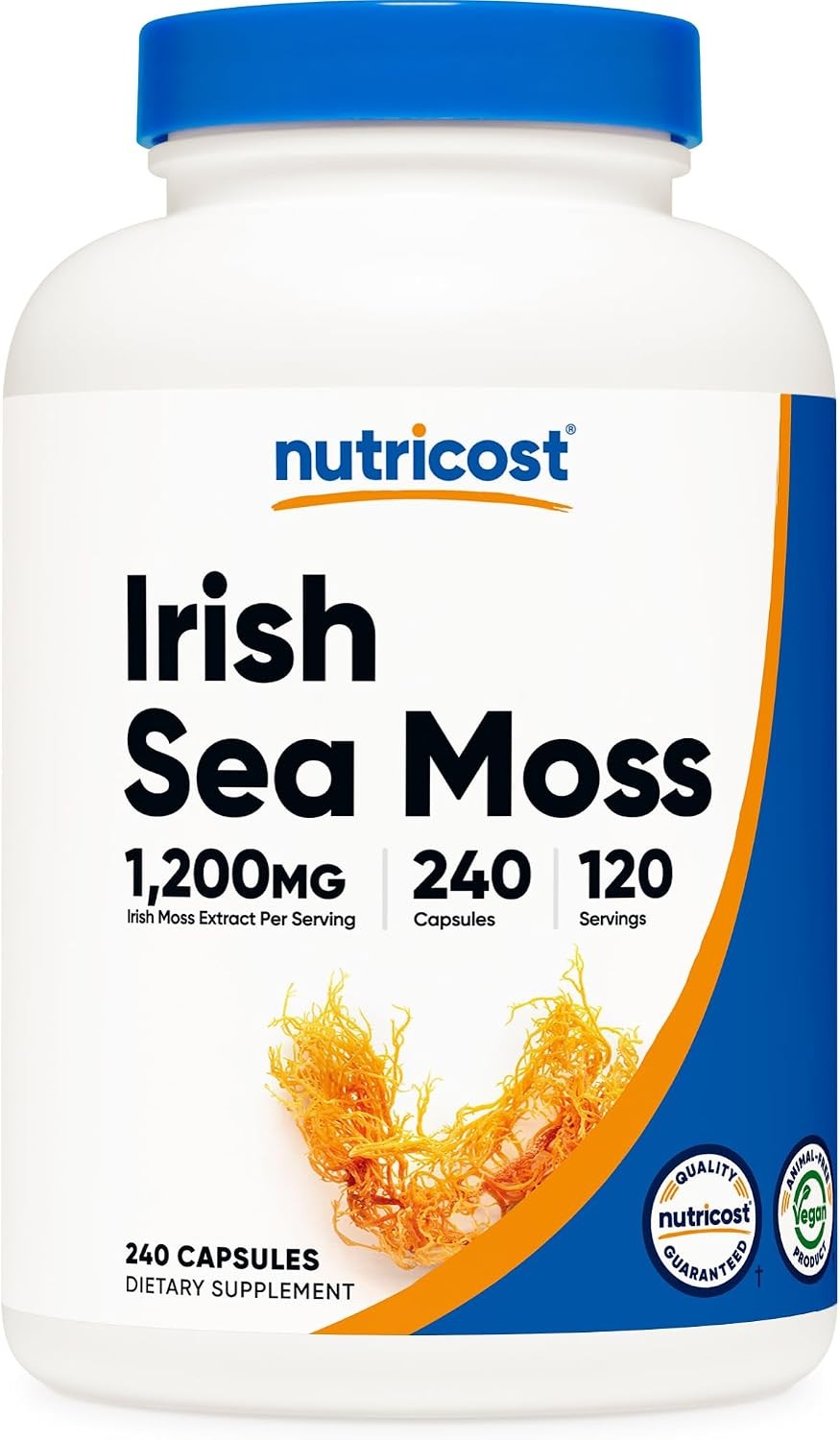
Nutricost Irish Sea Moss Extract
Best for: The most servings per dollar, with real lab infrastructure
The value pick, with a transparency asterisk. Nutricost offers 120 servings for a low price from a brand with genuine testing infrastructure (an ISO-17025-accredited third-party lab and an NSF-certified facility). On paper the quality program is legitimate. The reason it drops to five is a real transparency issue for a category where testing is the point: multiple buyers report that Nutricost declines to release the actual COA on request, citing proprietary concerns, and the label does not clearly name the species or sourcing. Credible testing you cannot see is weaker than testing you can, so it is a fair-value pick rather than a top one.
- Excellent value (120 servings)
- NSF-certified facility, accredited lab program
- Large, established brand
- Reportedly will not release the COA
- Species and sourcing not disclosed
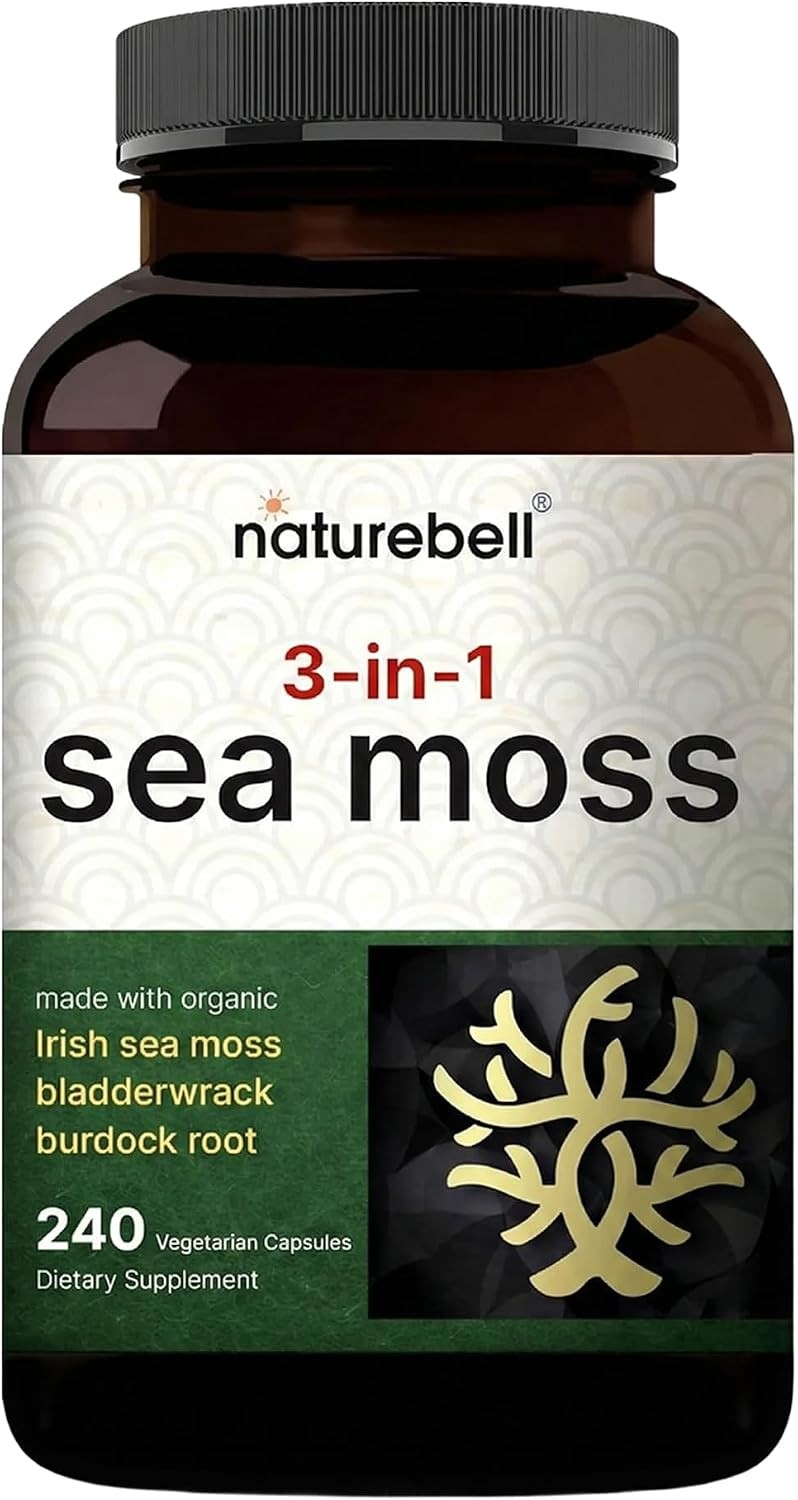
NatureBell 3-in-1 Sea Moss
Best for: A high-count trio blend on a budget
A high-value trio, but thin on documentation. NatureBell offers a big 240-count sea moss, bladderwrack, and burdock blend with organic supporting herbs and a clean allergen profile (non-GMO, gluten, soy, and dairy free) at a low price, and it states it is third-party tested. If you want a lot of the popular trio for a little money, it delivers. It ranks near the bottom because it does not publish a COA, does not quantify iodine, and does not name the species, and, as with any bladderwrack blend, it stacks additional iodine that raises the thyroid caution. Fine as a budget option if you accept the missing paperwork.
- Large 240-count value
- Organic supporting herbs, allergen-friendly
- Third-party testing claimed
- No published COA, iodine unquantified
- Bladderwrack adds iodine; species not named
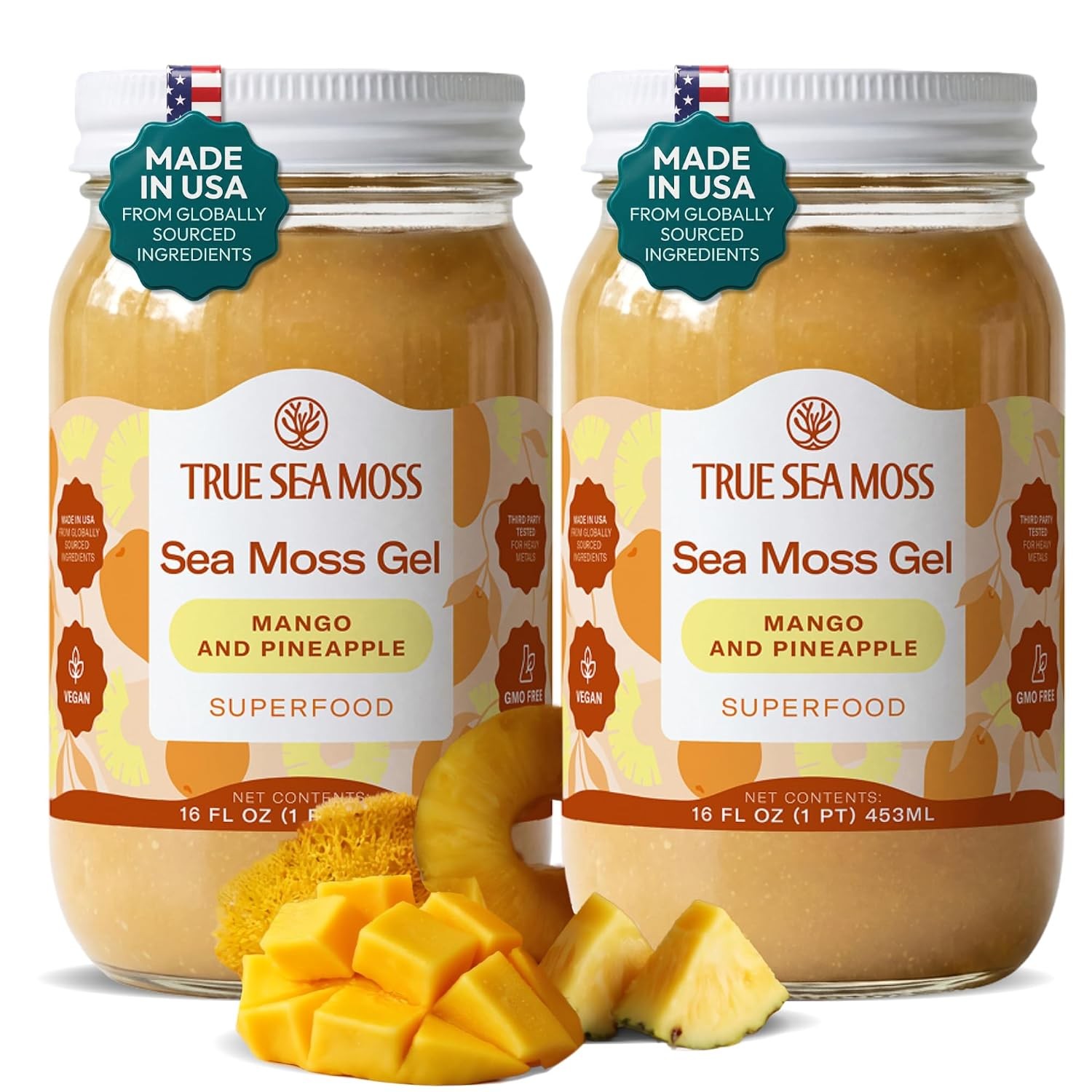
TrueSeaMoss Wildcrafted Sea Moss Gel
Best for: A ready-to-eat gel, if you buy a recent, post-upgrade jar
The category's most popular gel, included with a real safety caveat you should know. TrueSeaMoss is a genuine ready-to-eat wildcrafted gel that provides a Certificate of Analysis on request and says every flavor is routinely heavy-metal tested, which is better documentation than most gels offer. But honesty requires the headline: TrueSeaMoss had a 2024 voluntary FDA recall over botulism-risk processing concerns. The company states it upgraded its facilities and that jars produced from January 2026 onward are verified safe, so if you buy it, check the manufacture date and choose a recent jar. Add that it contains fruit and sugar, needs refrigeration, and does not name the species, and it lands last, useful for gel fans who buy carefully, not a first recommendation.
- True ready-to-eat gel, no capsules
- Heavy-metal tested, COA on request
- Wildcrafted, hugely popular format
- 2024 FDA recall (botulism risk), resolved 2026
- Added fruit and sugar, needs refrigeration
- Species not named; COA only on request
The full lineup, side by side
Read the testing and COA columns first. With sea moss, verified heavy-metal testing and a species you can trace matter far more than the milligram number or the marketing.
| Product | Form | Testing | Pure or blend | Best for |
|---|---|---|---|---|
| MaryRuth's Sea Moss Drops | Liquid drops | Clean Label Project (200+ toxins) | Pure | Best tested / transparent |
| Double Wood Sea Moss | Capsule | Public COAs; HM + microbial | Pure | Best capsule with COA |
| Peak Performance Sea Moss | Capsule | 3rd-party (claimed, no public COA) | Pure | Pure wildcrafted capsule |
| Snap Sea Moss + Bladderwrack | Capsule | HM / purity / potency tested | Blend (trio) | Transparent blend |
| Nutricost Sea Moss | Capsule | ISO-17025 / NSF facility (COA withheld) | Pure | Best value |
| NatureBell 3-in-1 | Capsule | 3rd-party (claimed; no public COA) | Blend (trio) | Budget trio |
| TrueSeaMoss Gel | Gel | HM tested, COA on request (recall history) | Blend (+ fruit) | Gel fans (check date) |
"HM" = heavy metals. Prices and testing claims are read from current listings and brand sources and can change; confirm before you buy.
How to choose the right one for you
For a trendy product with thin evidence, the smart approach is simple:
- Lead with testing. A published or on-request COA and heavy-metal testing (MaryRuth's, Double Wood) should outrank brand or price every time.
- Prefer pure over blends if you have any thyroid concern, since bladderwrack blends stack extra iodine.
- Match the format to your life. Capsules are easy and consistent; gels are traditional but need refrigeration and more care.
- Start low and skip any product that mega-doses iodine or hides its doses in a proprietary blend.
Most of all, keep your expectations honest: sea moss is a fiber-and-iodine seaweed, not a proven cure for anything, a theme we cover across the wider category in our look at sea moss and TikTok supplement trends. If your real interest is thyroid or iodine, read our thyroid supplements guide first, because with iodine, more is not better.
Frequently asked questions
Does sea moss actually do anything?
Honestly, the rigorous human evidence is thin. Sea moss is a real source of iodine and soluble fiber and contains some trace minerals, but the marketed claims (immune, thyroid, skin, weight, libido) rest mostly on lab or animal data and the mineral content of seaweed generally, not on controlled trials of sea moss supplements in people. Treat it as a nutrient-containing food, not a proven remedy.
Is the 92-minerals claim true?
No. That number is a marketing legend, not the result of testing any actual sea moss product. Sea moss's meaningful contributions are iodine, fiber, and a handful of trace minerals, your body has no need for 92 supplemental minerals, and no reputable analysis backs the figure.
Is sea moss safe for the thyroid, and how much iodine is in it?
It depends entirely on the batch, which is the problem. Sea moss can range from a little iodine to well above the 150 mcg adult daily requirement, potentially past the 1,100 mcg upper limit, and both excess and deficiency harm the thyroid. If you are pregnant, have a thyroid disorder, or take thyroid medication, do not start sea moss or bladderwrack blends without your doctor's approval, and prefer products that state or test their iodine content.
Sea moss capsules vs gel: which is better?
Neither is inherently better; it is a trade-off. Capsules are convenient, shelf-stable, and easier to dose consistently, and pure single-species capsules make testing straightforward. Gels are the traditional whole-food form and blend into smoothies, but they usually need refrigeration, often add fruit and sugar, spoil faster, and carry more processing and food-safety risk. Whichever you choose, testing matters more than the format.
Can sea moss contain heavy metals?
Yes, that is the core safety issue. Seaweed absorbs and concentrates arsenic, lead, mercury, and cadmium from its water, so contamination is a genuine possibility in an untested product. This is exactly why a published Certificate of Analysis or verified third-party heavy-metal testing should be your first filter, ahead of brand or price.
Who should avoid sea moss?
Anyone pregnant or breastfeeding, anyone with a thyroid condition or taking thyroid medication, people on blood thinners (seaweed can contain vitamin K and affect clotting), and anyone with a shellfish or seaweed sensitivity should avoid it or clear it with a clinician first. Everyone else should start low, pick a tested product, and skip mega-dose or unlabeled-iodine formulas.
The bottom line
Sea moss is a case where the honest guide and the hype point in opposite directions. The "92 minerals" story is a myth, the health claims are largely unproven, and the genuine considerations are unpredictable iodine and heavy-metal contamination, which makes testing the whole game. MaryRuth's wins on the strength of its Clean Label Project certification, Double Wood is the best capsule because it actually publishes COAs, and Peak Performance is a clean pure option. The blends (Snap, NatureBell) add iodine you should be cautious with, Nutricost is a fair value undercut by COA secrecy, and the popular TrueSeaMoss gel is fine only if you buy a recent, post-recall jar. Choose on testing, keep the dose low, mind your thyroid, and treat sea moss as a seaweed, not a superpower.