Calcium looks like the simplest supplement on the shelf, but the form on the label decides how well it works and how it sits with your gut, and the number on the front is often larger than it should be for a single dose. The two things that actually matter are the form (citrate is the more forgiving default; carbonate is cheaper but needs food and stomach acid) and the cofactors that make calcium useful and safe, namely vitamin D3 for absorption and vitamin K2 to help steer calcium into bone. This guide ranks the best calcium supplements on exactly that, and it is honest about something the category glosses over: most people should get calcium from food first, and more is not better.
The short story: NOW Calcium Citrate is the smart all-rounder, a well-absorbed citrate at a controlled per-tablet dose with vitamin D and magnesium, at a fair price. But before you buy anything, read the box below, because with calcium how much you take and how you split it matter more than which brand you choose.
Read this first: how to actually use calcium
Food first, supplement only to fill the gap. Aim for a total calcium intake (diet plus supplement) of about 1,000 to 1,200 mg a day, with an upper limit around 2,000 to 2,500 mg. Dairy, fortified plant milks, tofu, canned sardines and salmon with bones, and leafy greens all count, so most people only need a supplement to cover what food misses, and many need far less than a full tablet provides.
Do not megadose. Excess supplemental calcium is linked to kidney stones, and some studies suggest possible cardiovascular concerns from high-dose calcium pills (a signal not seen with calcium from food). Split doses to about 500 mg or less at a time for best absorption, and space larger amounts a few hours apart.
Pair it, and time it right. Take calcium with vitamin D for absorption and ideally K2 to direct it toward bone. Take carbonate with food; citrate can be taken any time. If you have kidney disease, a history of stones, or take other medications, check with your clinician first.
The short version
- Best overall: NOW Calcium Citrate, well-absorbed citrate with D3 and magnesium at a great price.
- Best complete bone stack: AlgaeCal Plus, plant calcium with D3, K2, and magnesium in one.
- Form beats brand: citrate absorbs anytime and is gentler; carbonate is cheaper but needs food.
- Do not megadose: keep each dose near 500 mg and hit your daily target, not more.
How we ranked them
Because form and dosing drive how well calcium actually works, those did most of the deciding, ahead of the number on the label. We weighed four things:
- Form and absorption. Citrate (anytime, gentler) and well-absorbed chelates rank above carbonate, which needs food and acid. Calcium forms are not interchangeable.
- Sensible per-dose amount. Products with per-pill doses near 500 mg or less absorb more efficiently and are easier to split.
- Cofactors. Built-in vitamin D3, and ideally K2 and magnesium, add real value for bone support.
- Testing and value. USP Verified, NSF, or documented cGMP, and cost per serving.
Scores are our editorial assessment on a five-point scale. Prices are approximate and change often.
The 7 best calcium supplements
Tap any product to jump straight to its full review.
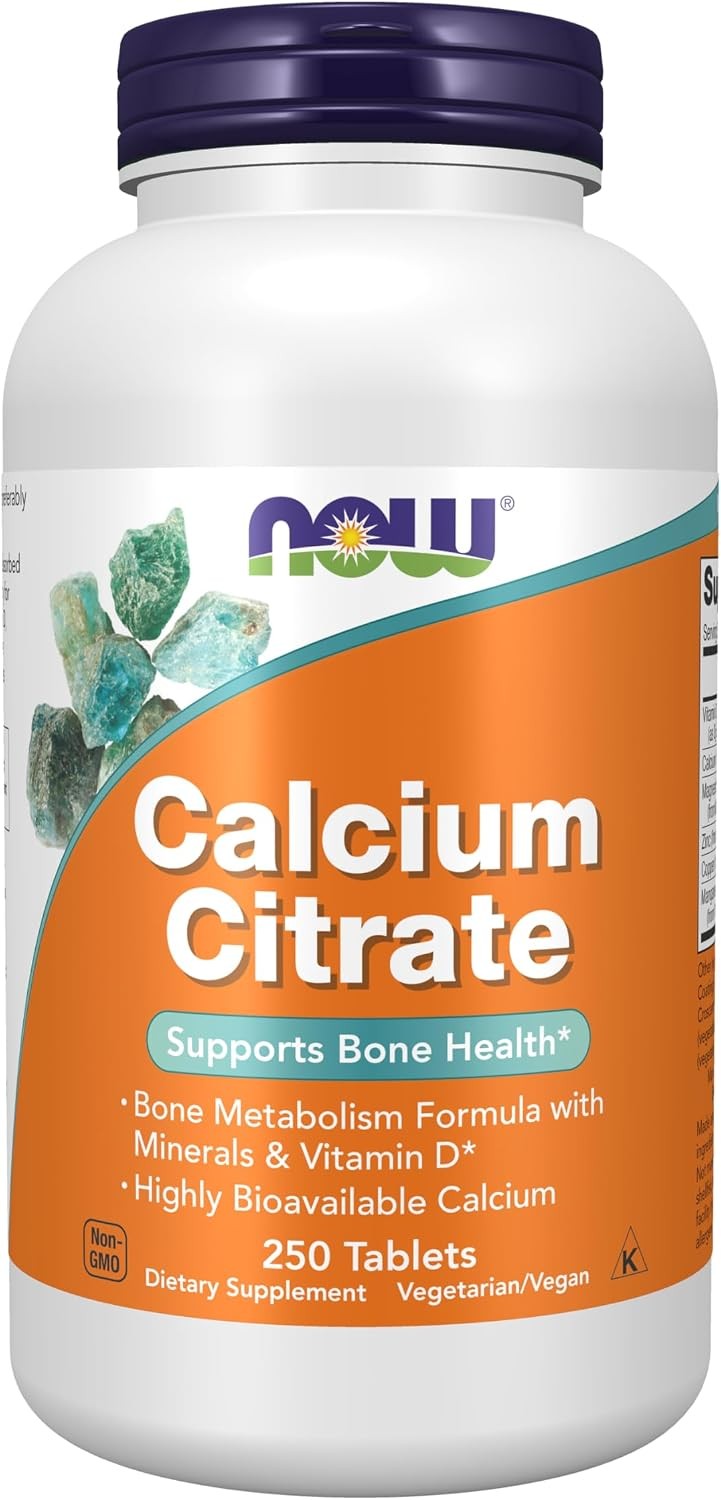
NOW Foods Calcium Citrate with Vitamin D
Best for: A well-absorbed citrate with cofactors at a fair price
The sensible all-rounder. NOW gives you true calcium citrate that absorbs with or without food, in a 300 mg-per-tablet dose that makes it easy to keep each serving within the ideal absorption window, plus vitamin D and a useful 300 mg of magnesium and trace minerals, all from a cGMP facility at an excellent price. For most people who genuinely need a calcium supplement, this checks the important boxes without overcharging. The honest gaps: there is no vitamin K2, and the 400 IU of D3 is modest if vitamin D is your main goal, in which case add a dedicated D supplement.
- Citrate absorbs anytime, gentle on the gut
- 300 mg per tablet keeps doses absorption-friendly
- Adds magnesium and trace minerals
- Excellent value
- No vitamin K2
- Modest 400 IU vitamin D
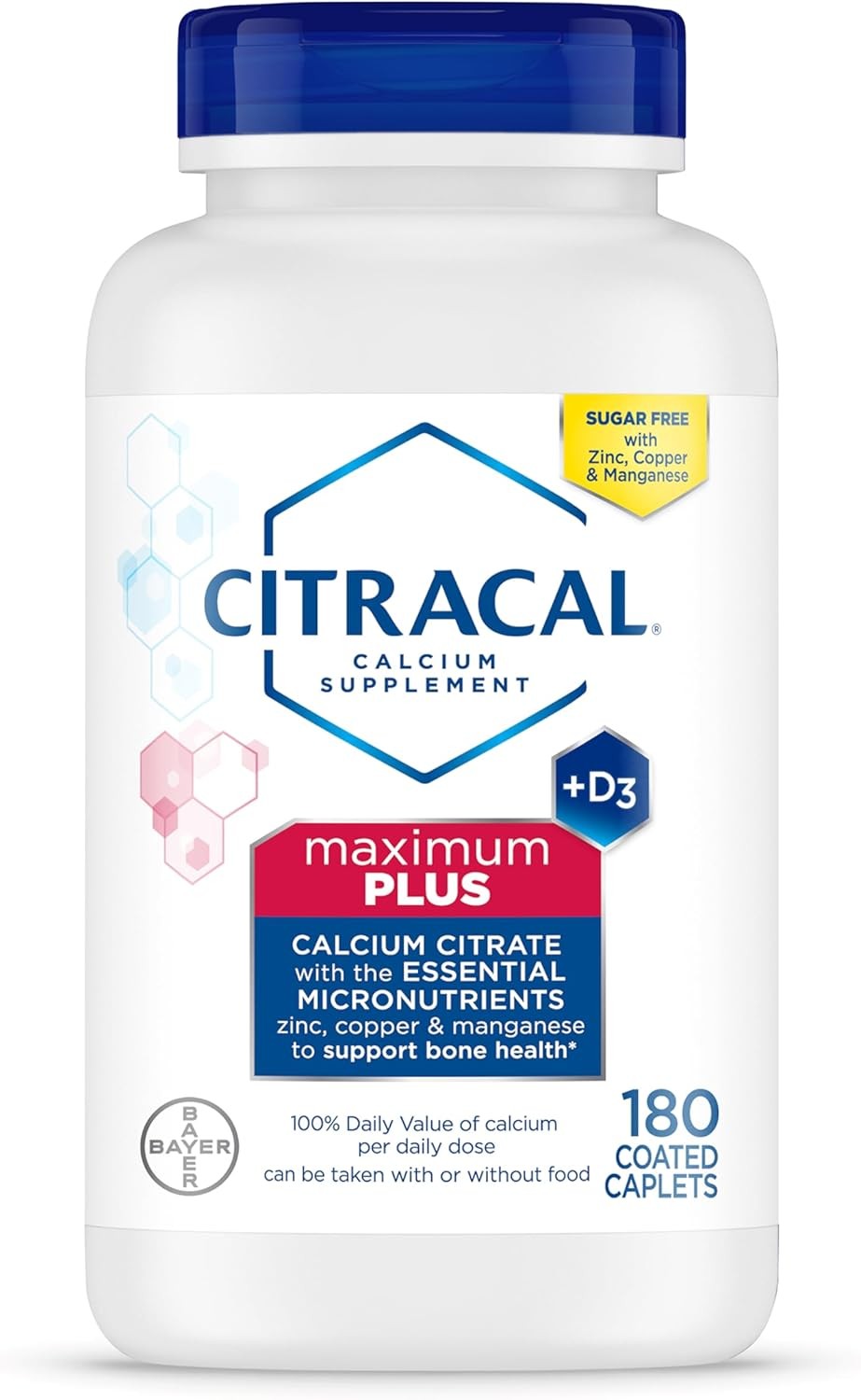
Citracal Maximum Plus Calcium Citrate + D3
Best for: The trusted citrate default with strong D3
The category benchmark and the name most pharmacists reach for. Citracal Maximum Plus is pure calcium citrate at a controlled 250 mg per caplet, so a two-caplet serving lands right around the ideal 500 mg absorption window, and it pairs a strong 1,000 IU of D3 with bone-support trace minerals like magnesium and boron. It absorbs anytime and is gentle on the gut. It sits a hair behind our value pick only because it costs slightly more per serving and, like most mainstream calcium, skips vitamin K2. A safe, well-formulated default.
- Citrate, anytime, gentle
- Strong 1,000 IU D3 plus trace minerals
- Per-caplet dose stays absorption-friendly
- Widely trusted brand
- No vitamin K2
- Caplets are fairly large
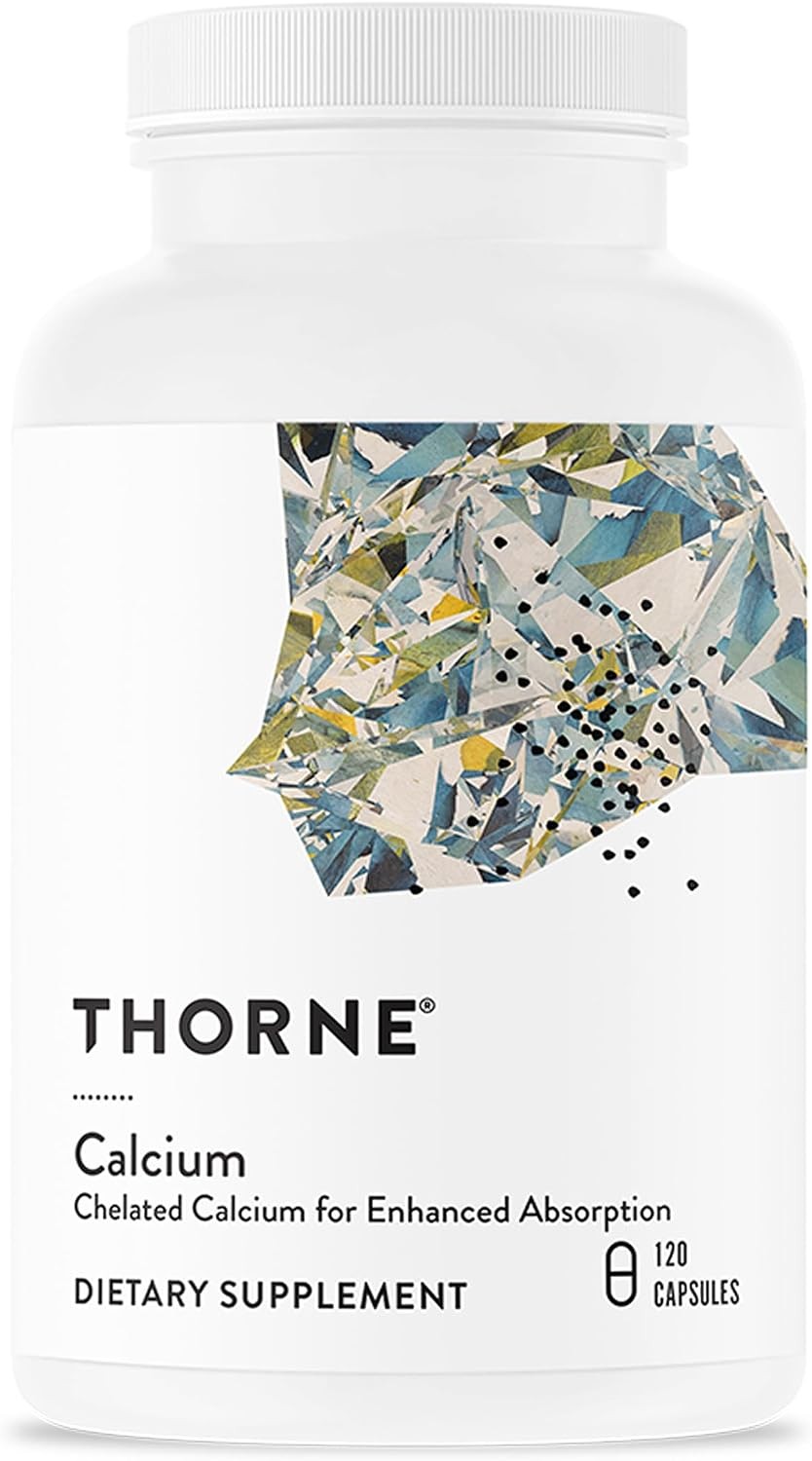
Thorne Calcium (DiCalcium Malate)
Best for: Cleanest testing and full control over your dose
The purist's pick, and the most rigorously tested here. Thorne uses a well-absorbed chelated dicalcium malate at 250 mg per capsule, with the highest quality-control tier in this lineup (multiple rounds of testing and a large NSF Certified for Sport portfolio) and no fillers. Because it is calcium-only by design, you control the exact amount and add your own D3 and K2 to suit, which is ideal if you already take a vitamin D or a bone stack. The trade-offs that keep it at three: no built-in cofactors, and a higher price per milligram than the mainstream tablets.
- Exceptional testing and purity (NSF, 4x cGMP)
- Well-absorbed malate, no fillers
- 250 mg per capsule for easy control
- No built-in D3, K2, or magnesium
- Pricier per milligram
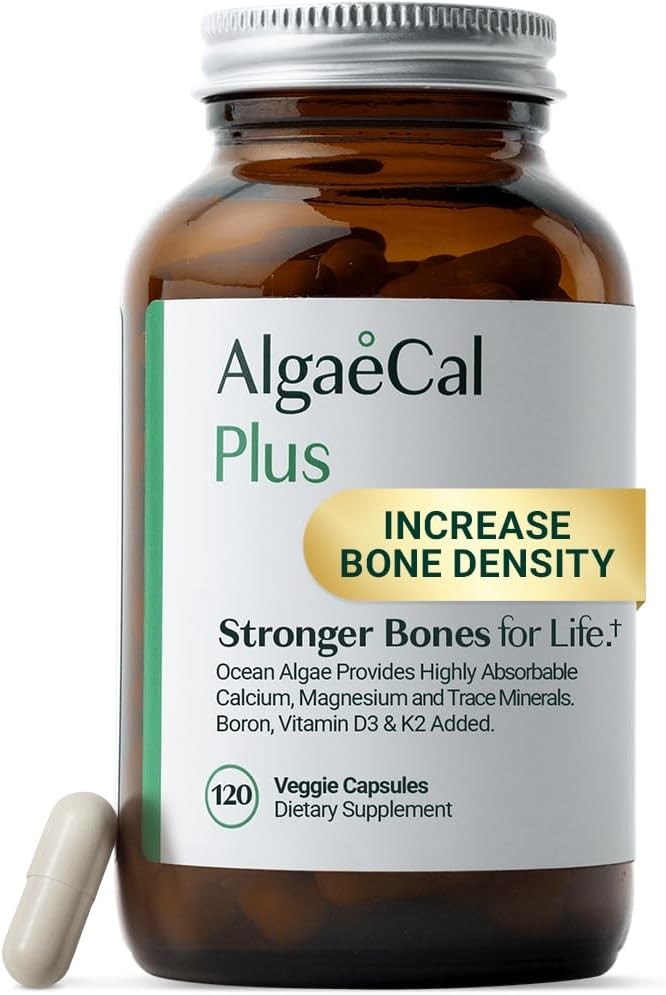
AlgaeCal Plus
Best for: Everything for bone support in one plant-based product
The most complete formula here, in one plant-based product. AlgaeCal is whole-food red-algae calcium that bundles the entire bone stack: D3, K2 as MK-7, and a generous 350 mg of magnesium, plus boron and trace minerals, with a low per-capsule calcium that keeps absorption efficient. If you want one product that covers the cofactors rather than assembling them yourself, this is it, and it is vegan-friendly. The honest reasons it is not higher: it is by far the most expensive per serving, it is four capsules a day, and the premium outruns the strength of the bone-outcome evidence.
- Full bone stack: D3, K2 (MK-7), and magnesium
- Low per-capsule calcium absorbs efficiently
- Plant-based, vegan-friendly
- Most expensive per serving
- Four capsules a day
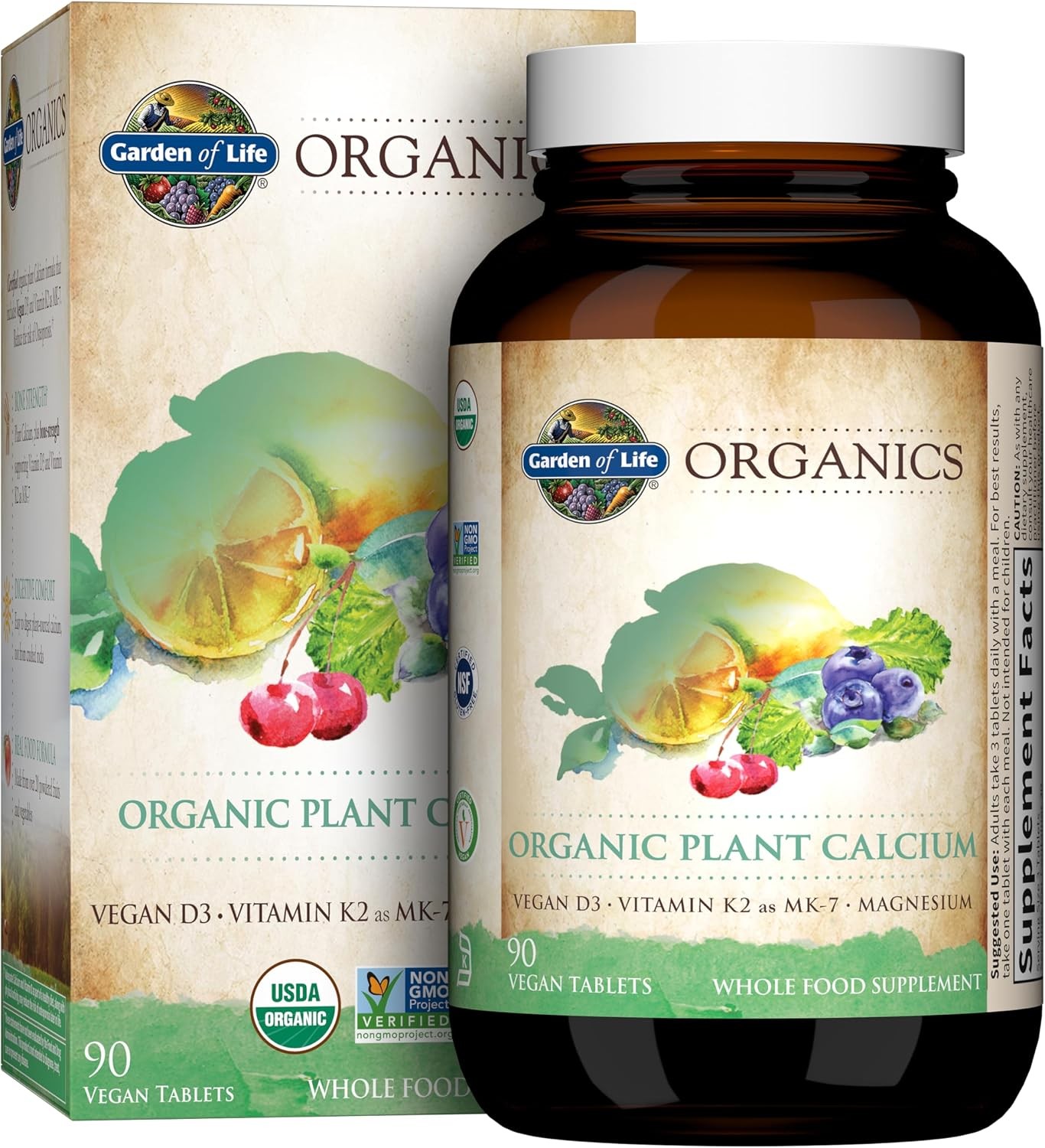
Garden of Life mykind Organics Plant Calcium
Best for: A certified-organic, whole-food vegan option
The cleanest-label whole-food choice. Garden of Life's mykind Organics is USDA Organic, Non-GMO plant calcium with vegan D3 and K2 built in, free of magnesium stearate, titanium dioxide, and the usual additives, at a sensible per-tablet dose. If certified-organic and vegan matter to you, it is the nicest formula in that niche and still includes the important cofactors. It lands mid-pack because its magnesium is low next to AlgaeCal, it is a premium price, and it is three tablets a day. A great fit for a specific preference rather than an outright value.
- USDA Organic, vegan, with D3 and K2
- Free of stearate, titanium dioxide, common additives
- Sensible per-tablet dose
- Low magnesium versus AlgaeCal
- Premium price, three tablets a day
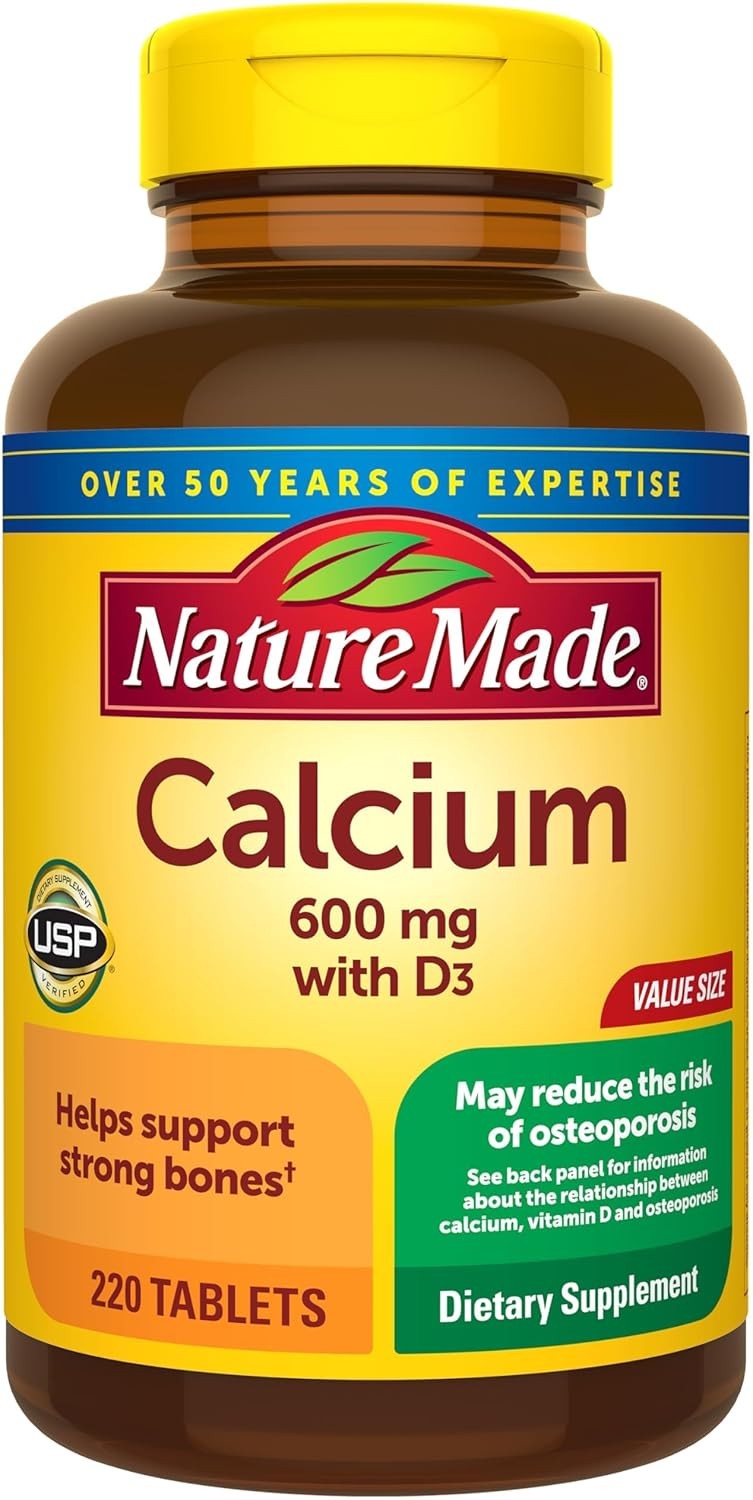
Nature Made Calcium 600 mg + D3
Best for: A verified label at a rock-bottom price, taken with food
The verified budget option, with a form caveat. Nature Made Calcium 600 is the only USP Verified product in this lineup, an independent guarantee of identity, potency, and purity, and it is remarkably cheap with a big 220-count bottle. If a verified seal at the lowest price is the priority, this delivers. The honest downsides are all about the form: it is calcium carbonate, so it must be taken with food and is more likely to cause gas or constipation, and its 600 mg in a single tablet is above the ideal per-dose absorption window, so splitting or a citrate is better for sensitive users.
- USP Verified for label accuracy
- Rock-bottom price, big 220-count
- Simple one-tablet dosing
- Carbonate: take with food, more GI upset
- 600 mg exceeds ideal per-dose window
- No K2 or magnesium
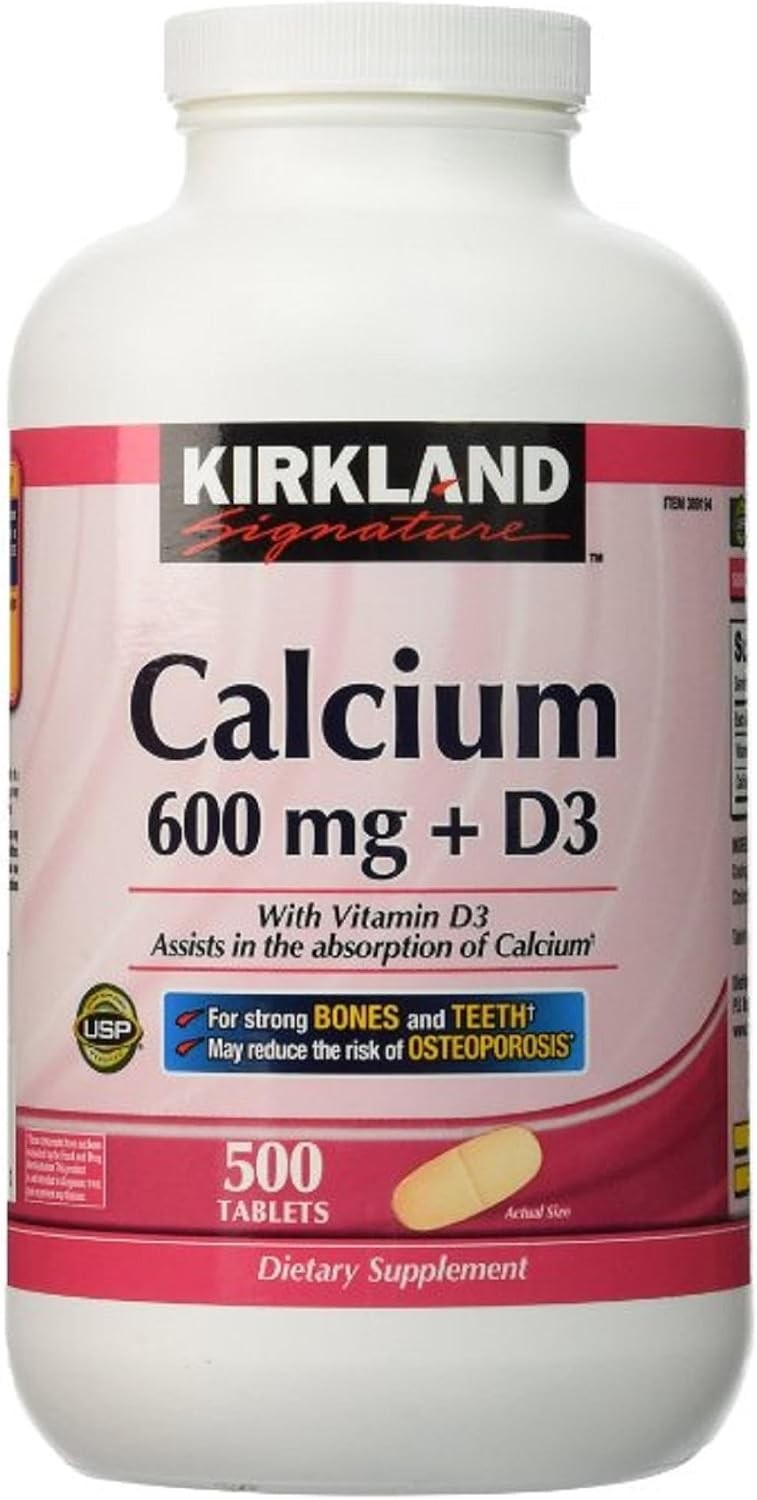
Kirkland Signature Calcium 600 mg + D3
Best for: The lowest cost per pill, in bulk, with meals
The warehouse-value pick for cost-focused buyers. Kirkland's calcium is USP Verified carbonate at the lowest cost per pill here, in a 500-count bottle that lasts many months. If price is the deciding factor and you will reliably take it with meals, it does the job with a quality seal. It ranks last for the same reasons as any 600 mg carbonate: it needs food to absorb, tends to cause more constipation and gas, the single 600 mg dose is above the ideal window, and there is no K2 or magnesium. Fine as a plain, cheap gap-filler, not a premium bone formula.
- Lowest cost per serving, huge 500-count
- USP Verified
- Simple dosing
- Carbonate: with food, more GI upset
- 600 mg above ideal per-dose window
- No K2 or magnesium, large tablets
The full lineup, side by side
Read the form column first, then the cofactors. With calcium, an absorbable form and a sensible dose matter more than the milligram number on the front.
| Product | Form | Elemental Ca | Cofactors | Tested | Best for |
|---|---|---|---|---|---|
| NOW Calcium Citrate | Citrate | 300 mg/tab | D 400, Mag 300 | cGMP | Best overall value |
| Citracal Maximum Plus | Citrate | 250 mg/caplet | D3 1,000, trace | cGMP | Trusted citrate benchmark |
| Thorne Calcium | Malate | 250 mg/cap | none (Ca-only) | NSF / 4x cGMP | Cleanest, most tested |
| AlgaeCal Plus | Plant/algae | 720 mg/serving | D3 1,600, K2 100, Mag 350 | 3rd-party | Complete bone stack |
| Garden of Life mykind | Plant/algae | 800 mg/serving | D3 1,000, K2 80, Mag 60 | USP Organic, Non-GMO | Organic / vegan |
| Nature Made 600 + D3 | Carbonate | 600 mg/tablet | D3 400 | USP Verified | Verified value (with food) |
| Kirkland 600 + D3 | Carbonate | 600 mg/tablet | D3 400 | USP Verified | Cheapest bulk (with food) |
Note: "USP Organic" above refers to USDA Organic certification. Prices and specs are read from current listings and can change; confirm the Supplement Facts panel before you buy.
How to choose the right one for you
A few honest priorities make the decision easy:
- If you want the best default, a citrate like NOW or Citracal absorbs anytime, is gentle, and includes vitamin D.
- If you are older or on acid-reducers (PPIs), choose citrate specifically, since carbonate needs stomach acid to absorb.
- If you want the full bone stack in one bottle, AlgaeCal or Garden of Life bundle D3 and K2 with the calcium.
- If you want the cleanest testing and to control your own dose, Thorne is calcium-only and NSF-tested.
- If price is everything and you will take it with meals, Nature Made or Kirkland carbonate is USP Verified and cheap.
Whatever you choose, remember the two rules from the top: keep each dose near 500 mg, and hit your daily target rather than exceeding it. For the wider bone picture beyond calcium, see our guide to bone health supplements beyond calcium, and if vitamin D is really your gap, our best vitamin D supplements guide.
Frequently asked questions
Calcium citrate vs carbonate: which is better?
Calcium citrate absorbs well with or without food and is gentler on the stomach, making it a good default, particularly for older adults, people on acid-reducing medications, or anyone prone to constipation. Calcium carbonate is cheaper and more concentrated but needs to be taken with food and adequate stomach acid to absorb, and it more commonly causes gas or constipation.
How much calcium do I need?
Most adults do well with a total of about 1,000 to 1,200 mg a day from food and supplements combined, staying under roughly 2,000 to 2,500 mg a day. Count what you already eat, because dairy, fortified plant milks, tofu, canned fish with bones, and greens usually leave only a small gap to fill with a supplement.
Do I even need a calcium supplement?
Often not. If your diet already includes regular dairy or fortified calcium-rich foods, you may be at or near your target without a pill. Supplements are most useful for people who eat little dairy, follow a vegan diet without fortified foods, or have been told their intake is low, and even then only enough to fill the gap.
Should I take calcium with vitamin D and K2?
Vitamin D helps your body absorb calcium, so pairing them is sensible and most calcium supplements already include D3. Vitamin K2 is thought to help direct calcium into bone rather than soft tissue, so a D3 plus K2 combination is a reasonable choice for people focused on bone support.
Can too much calcium be harmful?
Yes, more is not better. Consistently high supplemental calcium is linked to kidney stones, and some research suggests possible cardiovascular concerns from high-dose calcium pills, a signal not seen with calcium from food. Stay within your daily target, and split larger amounts rather than taking one big dose.
When is the best time to take calcium?
Take calcium carbonate with food so stomach acid can help absorb it, while calcium citrate can be taken any time, with or without meals. Either way, keep each dose to about 500 mg or less of elemental calcium and space larger daily amounts a few hours apart, since the body absorbs small doses more efficiently.
The bottom line
Calcium is a category where the smart move is often to take less, not more, and to care about form over the big number on the label. NOW Calcium Citrate is the sensible all-rounder, Citracal the trusted citrate benchmark, and Thorne the cleanest, most-tested pick for people who want to control their own dose. AlgaeCal and Garden of Life bundle the full bone stack for a premium, while Nature Made and Kirkland are the USP-verified budget carbonates if you take them with food. Get most of your calcium from food, fill only the gap, pair it with vitamin D and ideally K2, and keep each dose modest, and you will be doing calcium better than the label ever suggests.