Joint supplements are a multi-billion-dollar category built on hope and habit. Walk the aisle and you will see the same giant tubs of glucosamine and chondroitin that your grandparents bought, next to flashy "advanced" formulas that pack ten ingredients into one tablet, most of them at doses too small to matter. The honest picture is messier than the marketing: some of these ingredients have real human evidence, some have surprisingly little, and the best-studied newcomer is one most people have never heard of.
That is what this ranking rewards. We favored ingredients with credible human trials over tradition, clinically meaningful doses over label decoration, and independent testing over claims. We also split the field by how it works, because "joint pain" is not one problem: some ingredients calm inflammation, others feed cartilage, and the right pick depends on which kind of pain you have. If you want the deeper science on each ingredient rather than the products, pair this with our guide to the best supplements for joint health. Here are the seven worth your money, and exactly who each is for.
The short version
- Best overall: Nutricost UC-II Collagen. The strongest modern evidence, a tiny 40 mg dose, excellent value.
- Best for inflammation: Doctor's Best Curcumin C3 + BioPerine. Ibuprofen-level pain relief in trials, for pennies.
- Fastest relief: Pure Encapsulations Boswellia AKBA. Some benefit reported in as little as 1 to 2 weeks.
- Most verified classic: Kirkland Glucosamine + Chondroitin, one of the rare USP Verified joint products.
- Manage expectations: most joint supplements are slow. Give any pick 8 to 12 weeks before you judge it.
How we ranked them
Joint supplements are easy to sell and hard to judge, so we leaned on five hard filters:
- Real evidence. Does the active ingredient have credible human trials in joint pain or osteoarthritis, and how strong (and how independent) are they?
- A mechanism that makes sense. Does it actually target cartilage, inflammation, or both, rather than just sounding joint-related?
- Clinically useful dose. The amount studies actually used, not a sprinkle added for the label.
- Independent testing. Third-party verification (USP, NSF, Informed Choice, published COAs) that what is on the label is in the bottle.
- Value and onset. Cost per serving, and how long until you can fairly judge whether it works.
Scores are our editorial assessment on a five-point scale, not customer ratings. Note the order: it reflects our read of the overall evidence and value, not popularity. The newer, better-evidenced UC-II collagen and the anti-inflammatory botanicals rank above the classic glucosamine-chondroitin combo, even though that combo still outsells them all.
The 7 best joint supplements
Tap any product to jump straight to its full review.
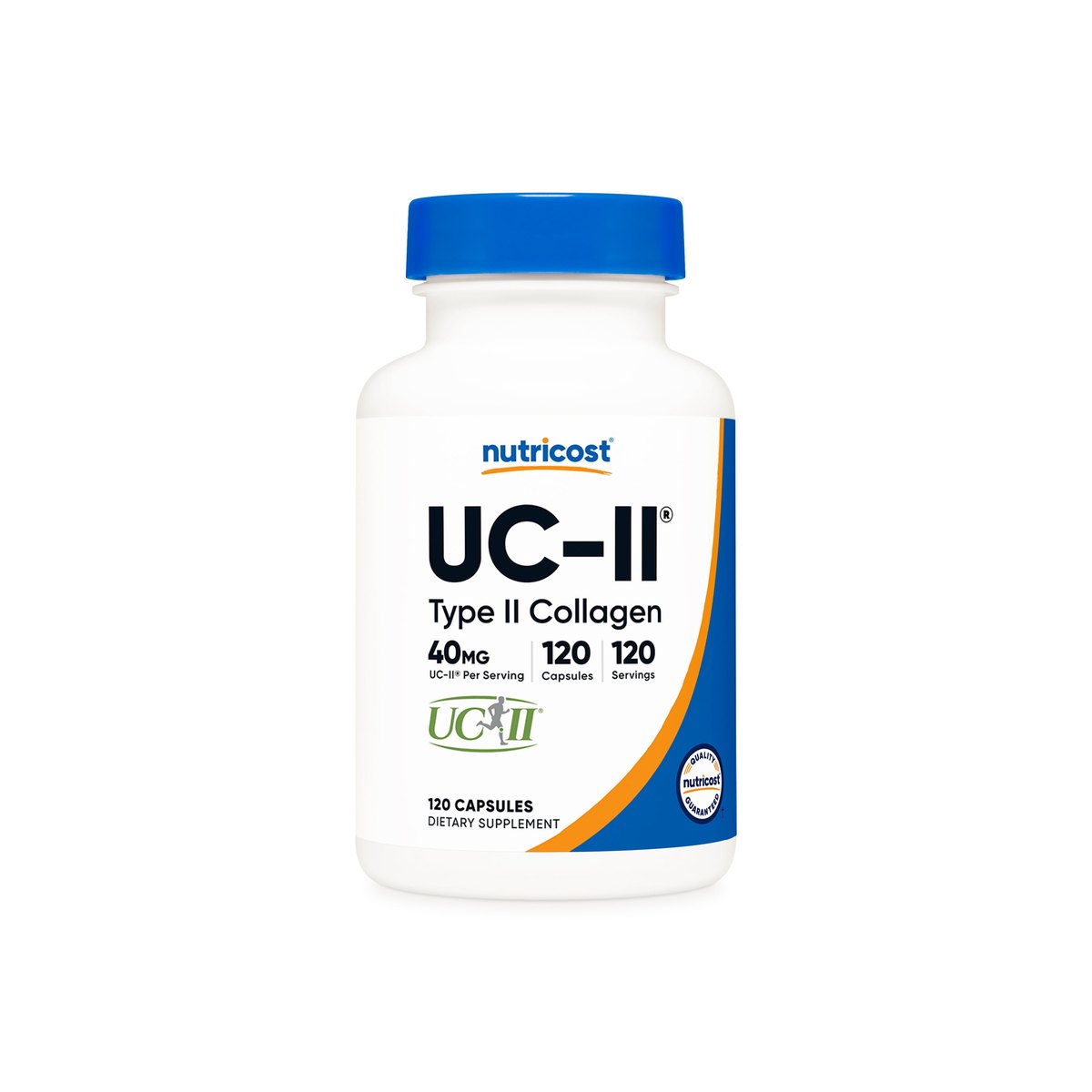
Nutricost UC-II Undenatured Type II Collagen
Best for: the best evidence-to-effort cartilage support
The most interesting joint ingredient of the last decade, and our top pick on the evidence-to-effort ratio. Undenatured type II collagen does not work as a building block. It works through oral tolerance: a tiny 40 mg daily dose appears to retrain the immune system to stop attacking joint cartilage. In a head-to-head trial, UC-II reduced knee-osteoarthritis WOMAC scores roughly twice as much as glucosamine plus chondroitin over 90 days, and a separate 191-person knee trial beat both that combo and placebo. Nutricost delivers the exact studied 40 mg dose, one capsule a day, third-party tested in an NSF-GMP facility, for about thirty cents. The honest caveats: it is slow (give it 8 to 12 weeks), it is chicken-derived (not vegan), and it does nothing for same-day pain.
- Strongest modern evidence; beat glucosamine + chondroitin head-to-head
- Tiny 40 mg dose, one capsule a day
- Third-party tested, NSF-GMP, and great value
- Slow: give it 8 to 12 weeks to judge
- Chicken-derived, so not vegan
- Does nothing for same-day pain
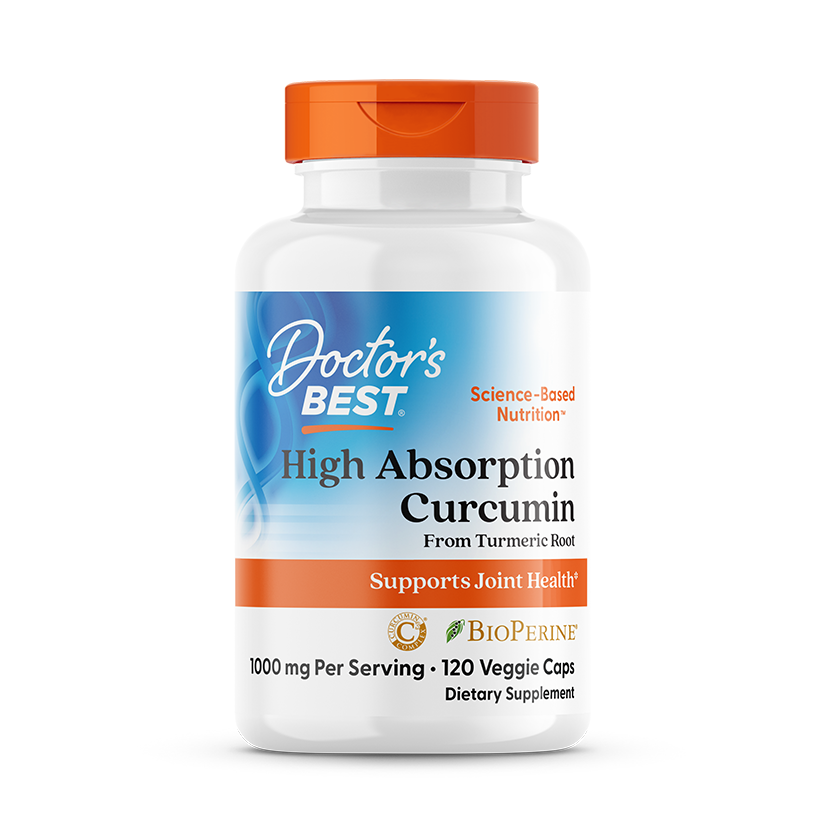
Doctor's Best High Absorption Curcumin C3 + BioPerine
Best for: taming inflammatory joint pain
If your joints are driven by inflammation, this is the most evidence-backed botanical you can buy. Curcumin, the active in turmeric, has randomized trials in knee osteoarthritis where it eased pain and stiffness about as well as ibuprofen, with a gentler stomach profile. The problem with plain turmeric is that almost none of it is absorbed, which is why this product matters: Doctor's Best uses the clinically studied C3 Complex (standardized to 95 percent curcuminoids) paired with BioPerine black-pepper extract to boost uptake. At roughly eighteen cents a serving it is also the best value here. Two honest cautions: the piperine that aids absorption can also change how some medications are metabolized, and curcumin has a mild blood-thinning effect.
- Trials comparable to ibuprofen for knee OA pain
- Clinically studied C3 Complex + BioPerine for absorption
- Best value on this list (~$0.18 a serving)
- Plain turmeric is poorly absorbed without piperine
- BioPerine can alter how some drugs are metabolized
- Mild blood-thinning; possible GI upset
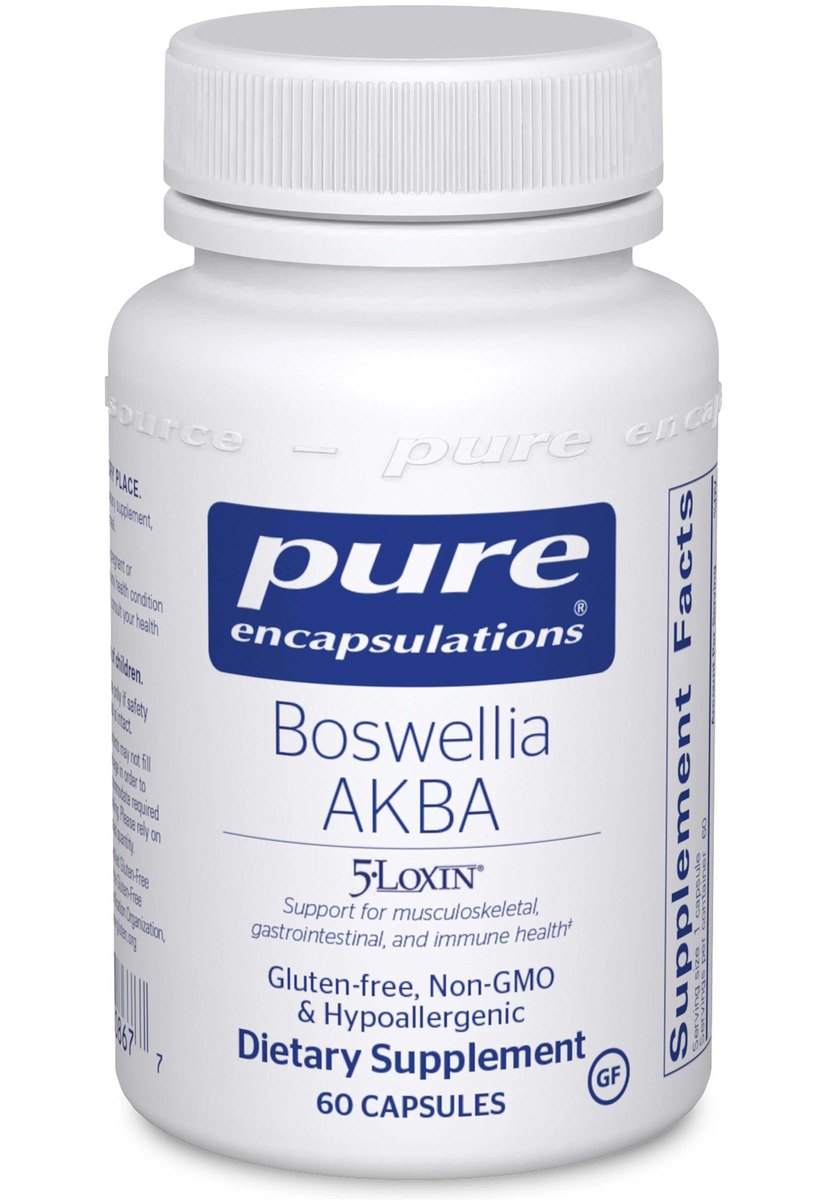
Pure Encapsulations Boswellia AKBA
Best for: the fastest noticeable relief
The pick when you want to feel something this week, not next season. Boswellia serrata (frankincense) works through a different anti-inflammatory pathway than turmeric or NSAIDs, blocking the 5-LOX enzyme, and the standardized 5-LOXIN extract used here has trials showing meaningful pain and function gains in knee osteoarthritis, with some benefit reported as early as day 7. Pure Encapsulations standardizes to 30 percent AKBA (the most active boswellic acid) at 100 mg, in an NSF-GMP, third-party-tested, vegan capsule. It is pricier than the giant glucosamine tubs and its evidence base is smaller, but for fast, clean relief it earns its spot.
- Among the fastest onset here (benefit by ~1 to 2 weeks)
- Standardized 5-LOXIN, 30% AKBA, vegan
- NSF-GMP and third-party tested
- Smaller evidence base than glucosamine or curcumin
- More expensive per serving
- Can cause mild GI upset
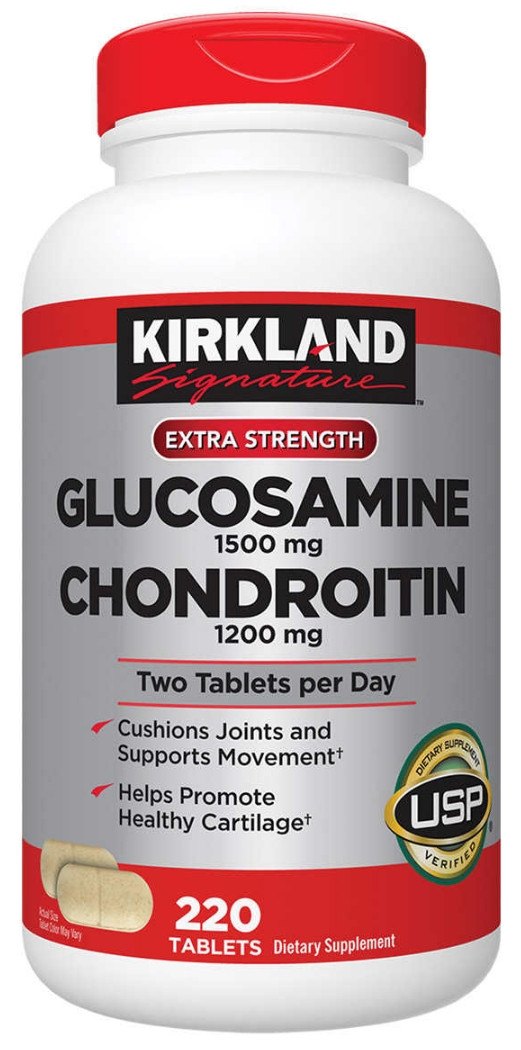
Kirkland Signature Glucosamine + Chondroitin
Best for: classic osteoarthritis support, independently verified
The old standby, and the most rigorously verified product on this list. Glucosamine and chondroitin are cartilage building blocks, and while the evidence is genuinely mixed (the big NIH-funded GAIT trial found no benefit overall, though the larger MOVES trial later matched the combo to the drug celecoxib for moderate-to-severe knee pain), they remain the most-studied joint supplement of all. What sets this Kirkland version apart is the rare USP Verified seal, meaning an independent lab confirmed the label is accurate, real reassurance in a category full of underfilled products. It is cheap per serving and an easy 3-month trial. Caveats: it is slow, the pills are large, it is shellfish-derived, and it uses the glucosamine HCl form rather than the better-studied sulfate.
- Most-studied joint supplement, and USP Verified (rare)
- Very affordable for a 110-day supply
- Low-risk, well-tolerated classic to trial
- Evidence is mixed (GAIT found no overall benefit)
- Slow (2 to 3 months), and the pills are large
- Shellfish-derived; HCl, not the better-studied sulfate
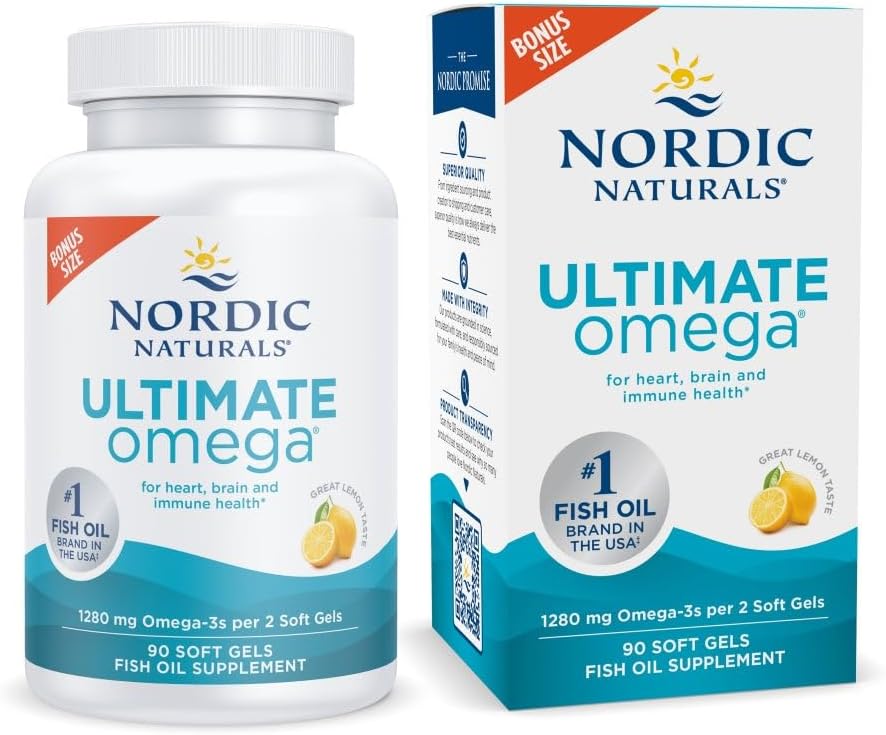
Nordic Naturals Ultimate Omega
Best for: a foundational anti-inflammatory base
Not a joint supplement in the narrow sense, but a foundational anti-inflammatory worth building on, especially if your pain is inflammatory. Omega-3s (EPA and DHA) have their strongest joint evidence in rheumatoid arthritis, where fish oil has been shown to reduce morning stiffness and tender joints; the data for ordinary osteoarthritis is weaker. Nordic Naturals Ultimate Omega is a premium, third-party-tested triglyceride-form oil delivering 1,280 mg of omega-3s per two-softgel serving, in a lemon flavor that minimizes fishy burps. It pairs well with any pick above. Caveats: the OA evidence is modest, it is fish-derived, and at higher doses omega-3s have a blood-thinning effect.
- Strong anti-inflammatory evidence (best for RA stiffness)
- High-potency triglyceride form, third-party tested
- Stacks well with any cartilage-focused pick
- Evidence is weaker for osteoarthritis than for RA
- Fish-derived; possible mild fishy aftertaste
- Blood-thinning effect at higher doses
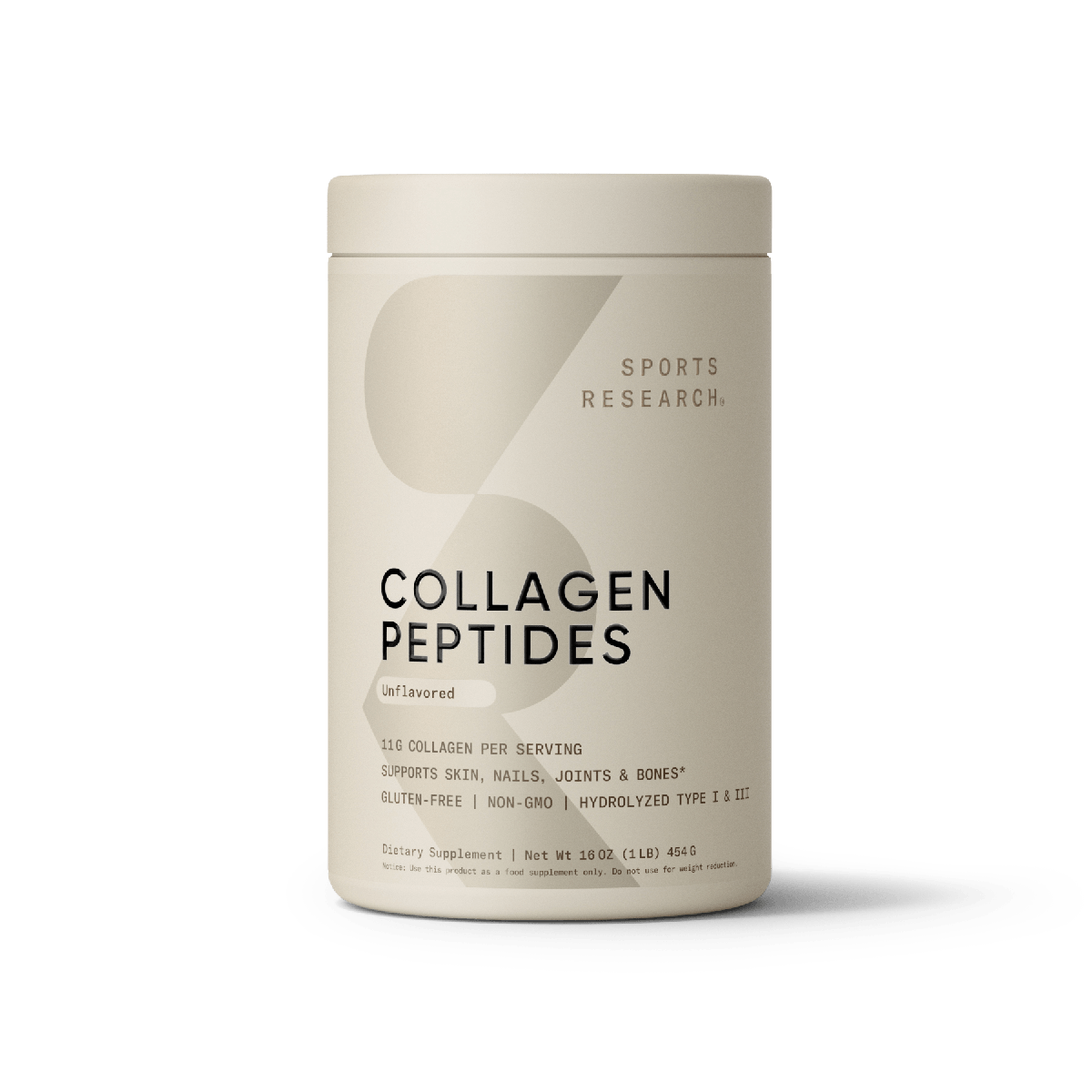
Sports Research Collagen Peptides
Best for: active people and whole-body connective tissue
The pick for active people whose joints ache from training rather than arthritis. Hydrolyzed collagen peptides give the body amino acids for connective tissue, and the most-cited trial followed 147 athletes for 24 weeks and found less activity-related joint pain on collagen than placebo. Sports Research delivers 11 g of grass-fed type I and III peptides per scoop, third-party tested and Informed Choice certified (a plus for drug-tested athletes), unflavored to mix into coffee or a shake. Be realistic: it is the slowest pick (think 3 to 6 months), the joint evidence is modest and weakest for true osteoarthritis (the type I and III here support tendons and skin more than cartilage), and it is a powder, not a pill.
- Trial evidence for activity-related joint pain in athletes
- 11 g grass-fed peptides, Informed Choice certified
- Mixes into any drink; also supports skin and nails
- Slowest to act (3 to 6 months)
- Joint evidence is modest and weakest for OA
- Powder scoop, not a convenient capsule
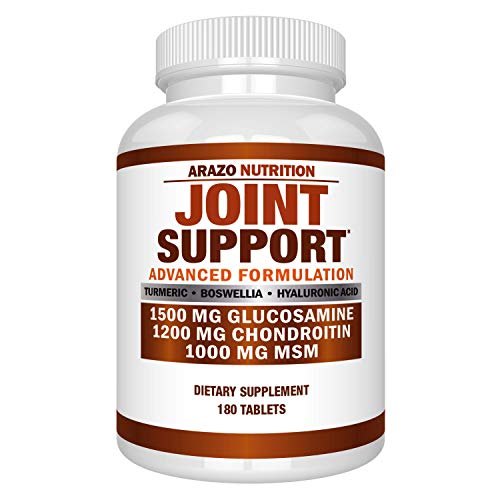
Arazo Nutrition Joint Support
Best for: one-tablet convenience across mechanisms
If you would rather take one tablet than build a stack, this is the most popular all-in-one, and a decent value at around forty cents a serving. It combines glucosamine, chondroitin and MSM at their commonly studied doses with smaller amounts of turmeric, boswellia and hyaluronic acid. The honest problem is that the botanicals are there more for the label than for effect: the turmeric (100 mg) and boswellia (100 mg) sit far below the doses used in the trials that made those ingredients worth taking, so you are really buying a glucosamine-chondroitin-MSM product with a botanical garnish. It is third-party tested and GMP-made, but you cannot adjust any single dose, and it is shellfish-derived.
- Convenient single tablet across several mechanisms
- G, C and MSM at commonly studied doses; good value
- Third-party tested, GMP, and hugely popular
- Turmeric and boswellia are under-dosed vs trials
- You cannot tune any individual ingredient
- Shellfish-derived; the G + C evidence is mixed
The full lineup, side by side
The fastest way to read this table: decide whether your pain is inflammatory (reach for an anti-inflammatory) or wear-and-tear (reach for a cartilage-focused option), then match the rest to your patience and your budget.
| Product | Type | Key actives | Onset | Tested | Servings | ~ Price / serving |
|---|---|---|---|---|---|---|
| Nutricost UC-II | Cartilage | UC-II 40 mg | 8-12 wk | NSF-GMP, 3rd-party | 120 | $0.30 |
| Doctor's Best Curcumin | Anti-inflam | C3 1,000 mg + BioPerine | 4-8 wk | Non-GMO, 95% | 120 | $0.18 |
| Pure Encaps Boswellia AKBA | Anti-inflam | 5-LOXIN 100 mg (30% AKBA) | 1-2 wk | NSF-GMP, 3rd-party | 60 | $0.55 |
| Kirkland Glucosamine + Chondroitin | Cartilage | 1,500 / 1,200 mg | 2-3 mo | USP Verified | 110 | $0.26 |
| Nordic Naturals Ultimate Omega | Anti-inflam | 1,280 mg EPA + DHA | 8-12 wk | 3rd-party, TG-form | 45 | $0.65 |
| Sports Research Collagen | Cartilage | 11 g peptides (I & III) | 3-6 mo | Informed Choice | 41 | $0.66 |
| Arazo Joint Support | Combo | G / C / MSM + botanicals | wks-mo | GMP, 3rd-party | 60 | $0.40 |
"G / C" = glucosamine and chondroitin. Prices are approximate per-serving estimates from current Amazon pack sizes and change often. Onset is how long studies typically ran before a benefit appeared, so treat it as the minimum fair trial, not a guarantee.
How to choose the right one for you
First, match it to your kind of joint pain
"Joint pain" is really two problems, and the best ingredient depends on which you have. If your joints are hot, swollen, or stiff in the morning, that is inflammatory, and an anti-inflammatory (curcumin, boswellia, or omega-3) is the smarter first move. If your joints are achy, creaky, or worn from age or osteoarthritis, a cartilage-focused option (UC-II, glucosamine and chondroitin, or collagen) makes more sense. Our deeper joint-health ingredient guide walks through the mechanisms in detail.
Mind the onset, and be patient
Joint supplements are not painkillers; most work slowly by changing the joint environment over weeks. Boswellia is the exception, with relief possible in one to two weeks, and curcumin lands in the middle at four to eight. The cartilage-focused options (UC-II, glucosamine, collagen) need two to three months or more. Whatever you pick, commit to a fair 8-to-12-week trial before deciding it does not work, and stop if you feel nothing after that.
Look for independent testing
Joint supplements are notorious for underfilled bottles, so a third-party seal matters more here than in most categories. A USP Verified mark (like Kirkland's), an NSF-GMP facility, Informed Choice certification, or published certificates of analysis all tell you an outside lab checked what is actually in the product. It is one of the few signals that cuts through the marketing.
Single ingredient or all-in-one?
All-in-one "advanced" formulas are convenient, but they share a flaw: to fit everything in one tablet, the botanicals are usually under-dosed, sitting well below the amounts that worked in trials. If you want to know what is actually helping, start with one well-dosed single ingredient that matches your pain type. Reach for an all-in-one only when convenience matters more than getting every ingredient to its clinical dose. The same logic applies to proprietary blends, which hide doses entirely.
Check the safety details that apply to you
Most joint supplements are well tolerated, but a few cautions matter. Glucosamine and the all-in-one are shellfish-derived, a concern if you have a shellfish allergy. Omega-3, curcumin, and boswellia all have a mild blood-thinning effect, which matters if you take anticoagulants or are heading for surgery. And persistent or worsening joint pain deserves a real medical evaluation, not just a supplement.
Frequently asked questions
What is the best joint supplement?
For most people the best-evidenced single pick is undenatured type II collagen (UC-II). At just 40 mg a day it has outperformed glucosamine plus chondroitin head-to-head for knee osteoarthritis in trials. The right choice depends on your pain, though: for inflammatory joint pain, curcumin or boswellia have the best evidence; glucosamine and chondroitin are the classic option for osteoarthritis; and collagen peptides suit active people. In general, a single well-dosed ingredient beats an under-dosed all-in-one.
Do glucosamine and chondroitin actually work?
The evidence is genuinely mixed. The large NIH-funded GAIT trial found no benefit over placebo for most people, while the later MOVES trial found the combination worked about as well as the drug celecoxib for moderate-to-severe knee pain. They are among the most-studied joint supplements, are well tolerated, and are inexpensive, so a two-to-three-month trial is reasonable, but manage expectations and choose a verified product such as one with a USP seal.
What is the fastest-acting joint supplement?
Boswellia (frankincense), standardized to AKBA, is the fastest here, with some trials reporting noticeable relief in as little as one to two weeks. Curcumin tends to work over four to eight weeks. The cartilage-focused options (UC-II, glucosamine and chondroitin, collagen) are slow and need two to three months. There is no instant joint supplement, so consistency matters more than any single dose.
How long do joint supplements take to work?
It depends on the mechanism. Anti-inflammatory ingredients are faster: boswellia in one to two weeks, curcumin in four to eight. Structural, cartilage-focused ingredients are slow: UC-II and omega-3s take roughly 8 to 12 weeks, and glucosamine, chondroitin and collagen peptides can take two to three months or more. Give any joint supplement a fair 8-to-12-week trial before deciding it does not work.
Is UC-II better than glucosamine and chondroitin?
In the head-to-head trials done so far, yes. A 2009 study found undenatured type II collagen reduced knee-osteoarthritis symptoms about twice as much as glucosamine plus chondroitin, and a 2016 trial again favored UC-II. The catch is that UC-II has a much smaller body of research, so the comparison rests on a few studies rather than decades of data. It is our top pick, but it is newer evidence.
Are joint supplements safe?
The ones here are generally well tolerated. The main cautions: glucosamine and the all-in-one are shellfish-derived (an allergy concern), and omega-3s, curcumin and boswellia all have mild blood-thinning effects, so they matter if you take anticoagulants or are near surgery. As always, talk to your doctor before starting if you are pregnant or nursing, take medication, or have a health condition.
The bottom line
The joint aisle runs on tradition and hype, but a few products earn their place. For most people, UC-II collagen is the smartest starting point: the strongest modern evidence, a tiny dose, and low cost. If your pain is inflammatory, curcumin and boswellia have the best botanical evidence (and boswellia works fastest). Glucosamine and chondroitin remain a reasonable, well-verified classic for osteoarthritis, omega-3 is a foundational anti-inflammatory to build on, and collagen peptides suit active people, while the all-in-one trades clinical doses for convenience. Whatever you choose, match it to your kind of pain, favor independently tested products, and give it a full 8 to 12 weeks. No capsule replaces movement, strength training, and a healthy weight, which remain the most powerful things you can do for your joints.