Krill oil is the premium cousin of fish oil, and the marketing leans hard on two real advantages: its omega-3s come bound to phospholipids, and it carries a dose of the antioxidant astaxanthin that fish oil lacks. Both are genuine. What the labels rarely make obvious is the catch: a 1,000 mg krill softgel often contains only a fraction of the EPA and DHA you would get from a fish-oil softgel, and you pay several times more per milligram of omega-3. This guide ranks the best krill oil supplements on what actually matters, the omega-3 you truly absorb, phospholipid and astaxanthin content, real third-party testing and sustainability, and price, and it is honest about when fish oil is simply the smarter buy.
The short story: Sports Research Antarctic Krill Oil is the best pick for most people, because it is the only product here with a genuine third-party seal and published batch reports, from sustainable Aker Superba2 krill, in a single daily softgel. From there, each product wins a specific job, from the highest phospholipids to the most astaxanthin to the smallest pill.
The short version
- Best overall: Sports Research, the only krill oil here with a real third-party seal (IKOS) and just one softgel a day.
- Krill vs fish oil: krill's omega-3 is phospholipid-bound and may absorb a touch better, but you get far less EPA and DHA per softgel and pay much more per milligram. For raw omega-3 value, fish oil wins.
- Read the EPA and DHA line, not the krill milligrams: a 1,000 mg krill softgel may contain only about 90 to 240 mg of actual omega-3.
- Shellfish allergy: avoid. Krill is a crustacean. Omega-3s mildly thin the blood, so ask your doctor if you take anticoagulants.
How we ranked them
Every product here is real Antarctic krill oil from a reputable supplier, so testing, the dose actually delivered, and value did the deciding. We weighed five things:
- Third-party testing and sustainability. A real, independent seal (IKOS for krill) and MSC or Friend of the Sea sourcing rank highest, honestly separated from brand-tested and in-house claims. See how to read a label.
- Omega-3 delivered. The actual EPA and DHA per serving, not the headline krill milligrams.
- Phospholipids and astaxanthin. Krill's two genuine differentiators versus fish oil.
- Pill burden and form. Softgels per serving, size, and capsule material (we flag fish-gelatin shells).
- Value. Cost per serving, and honestly per milligram of omega-3.
Scores are our editorial assessment on a five-point scale, not customer ratings. Per-serving prices are approximate and change often.
The 7 best krill oil supplements
Tap any product to jump straight to its full review.
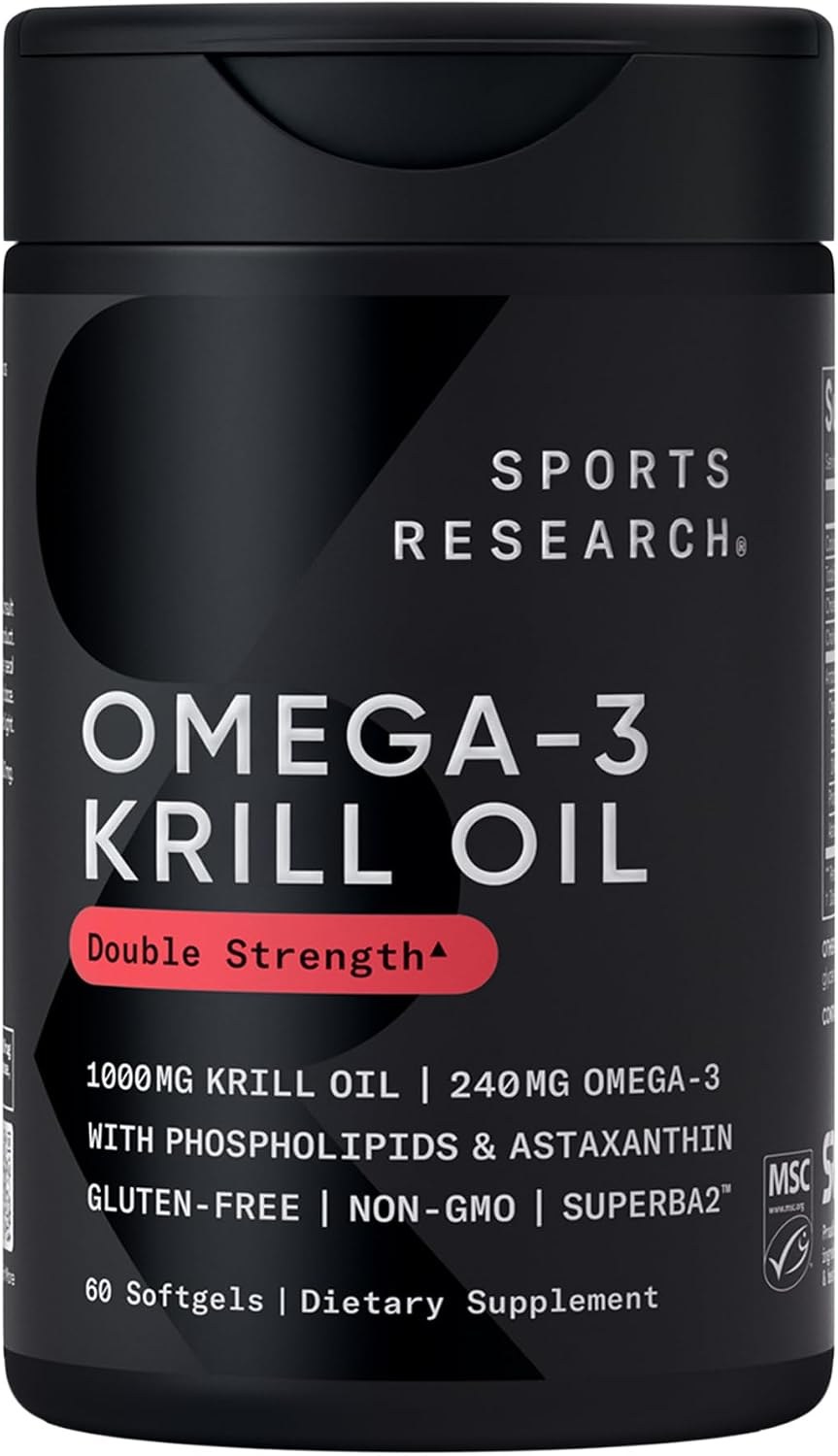
Sports Research Antarctic Krill Oil 1000 mg
Best for: A genuinely third-party-verified krill oil, one a day
The honest winner. Sports Research delivers a full 240 mg of omega-3 from a single Antarctic krill softgel (Aker Superba2), and it is the only pick here with a real third-party seal: IKOS, the krill-specific standard from Nutrasource, with published per-batch reports, plus MSC-certified sustainable sourcing and added astaxanthin and choline. For most people who want verified krill oil without juggling pills, this is the one. The honest caveat is the one that applies to the whole category: even this leading product gives you far less EPA and DHA per dollar than a good fish oil.
- Only real third-party seal here (IKOS, published lots)
- One softgel for 240 mg omega-3
- Aker Superba2, MSC sustainable
- Includes astaxanthin and choline
- Pricey per mg of omega-3 (as all krill is)
- One large softgel to swallow
- Astaxanthin lower than Mercola or Viva
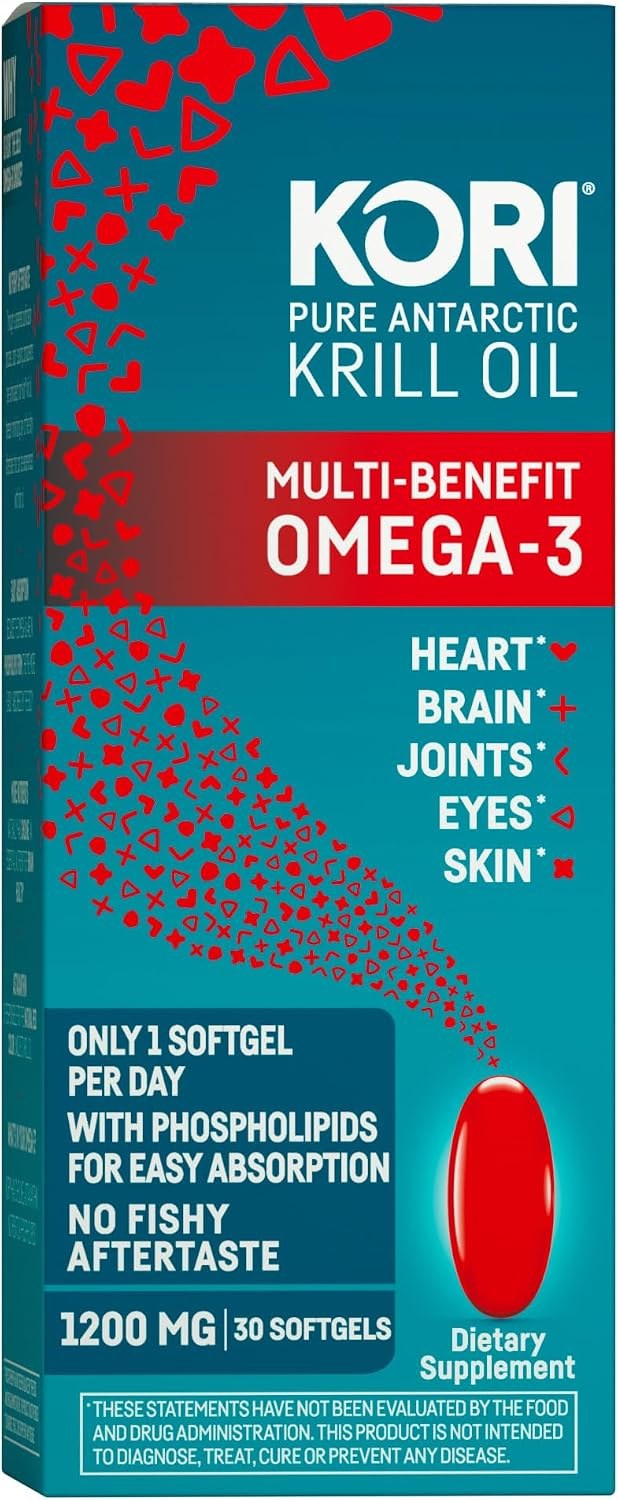
Kori Krill Oil 1200 mg
Best for: A widely available one-softgel krill oil
The mainstream one-a-day. Kori packs the highest phospholipid load here (480 mg) into a single 1,200 mg softgel of Aker Superba krill, and you can find it in any drugstore. The honest mark against it is transparency: Kori lists only a combined 250 mg of EPA plus DHA and does not break out the two on the label (the split shown above is the brand's stated typical ratio, not a label value), and it carries no published third-party seal. Good, convenient krill, a little short on disclosure.
- Highest phospholipids here (480 mg)
- One softgel a day, plus choline
- Sold everywhere, mainstream and trusted
- Does not disclose separate EPA and DHA
- No published third-party seal
- Modest astaxanthin
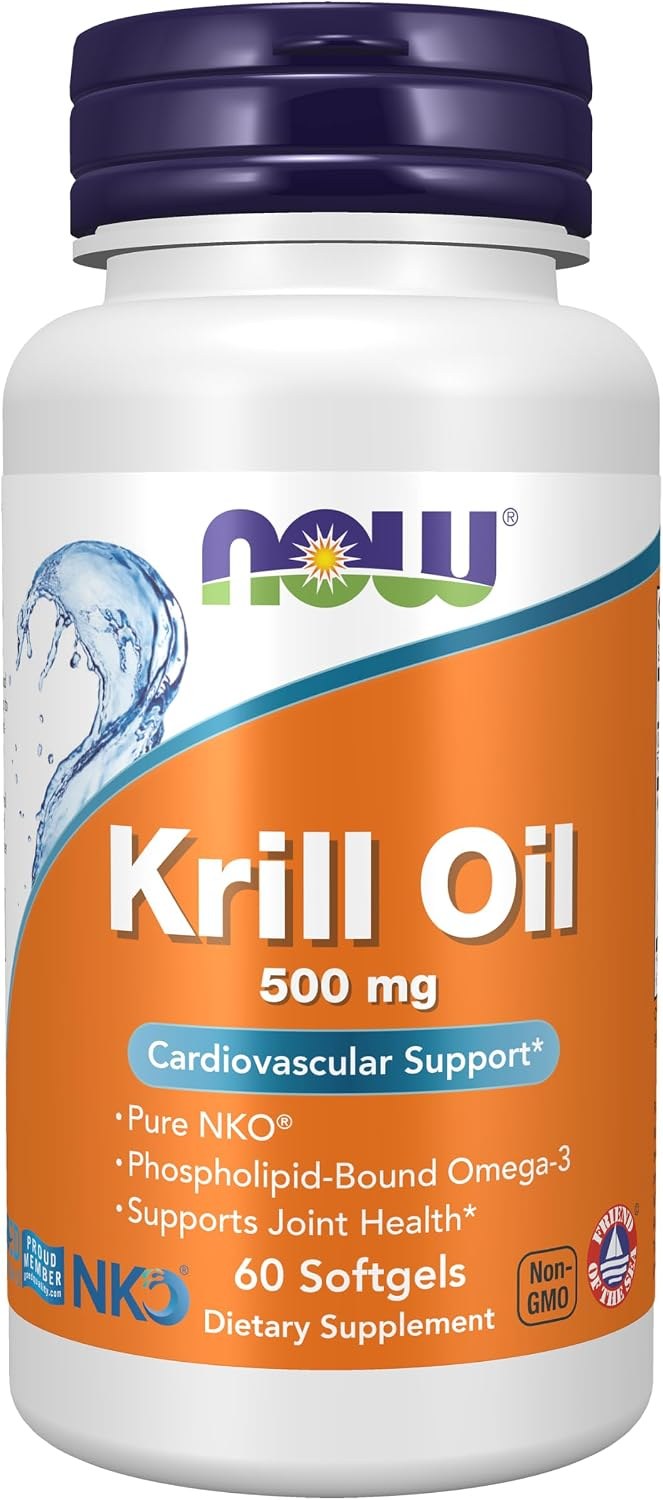
NOW Foods Neptune Krill Oil
Best for: The original Neptune (NKO) krill oil
The authentic NKO pick. NOW uses genuine Neptune Krill Oil (NKO), the original branded krill material, and pairs strong numbers (450 mg phospholipids, a healthy 360 mcg astaxanthin) with NOW's well-regarded in-house testing at a fair price. The trade-offs are honest: it takes two softgels to reach a 250 mg omega-3 serving, and NOW relies on its own GMP and analytical program rather than an external seal like IKOS.
- Authentic Neptune (NKO) krill oil
- Strong phospholipids plus 360 mcg astaxanthin
- Trusted maker at a fair price
- Two softgels per serving
- In-house testing, not an external seal
- Smaller softgels mean a higher pill count
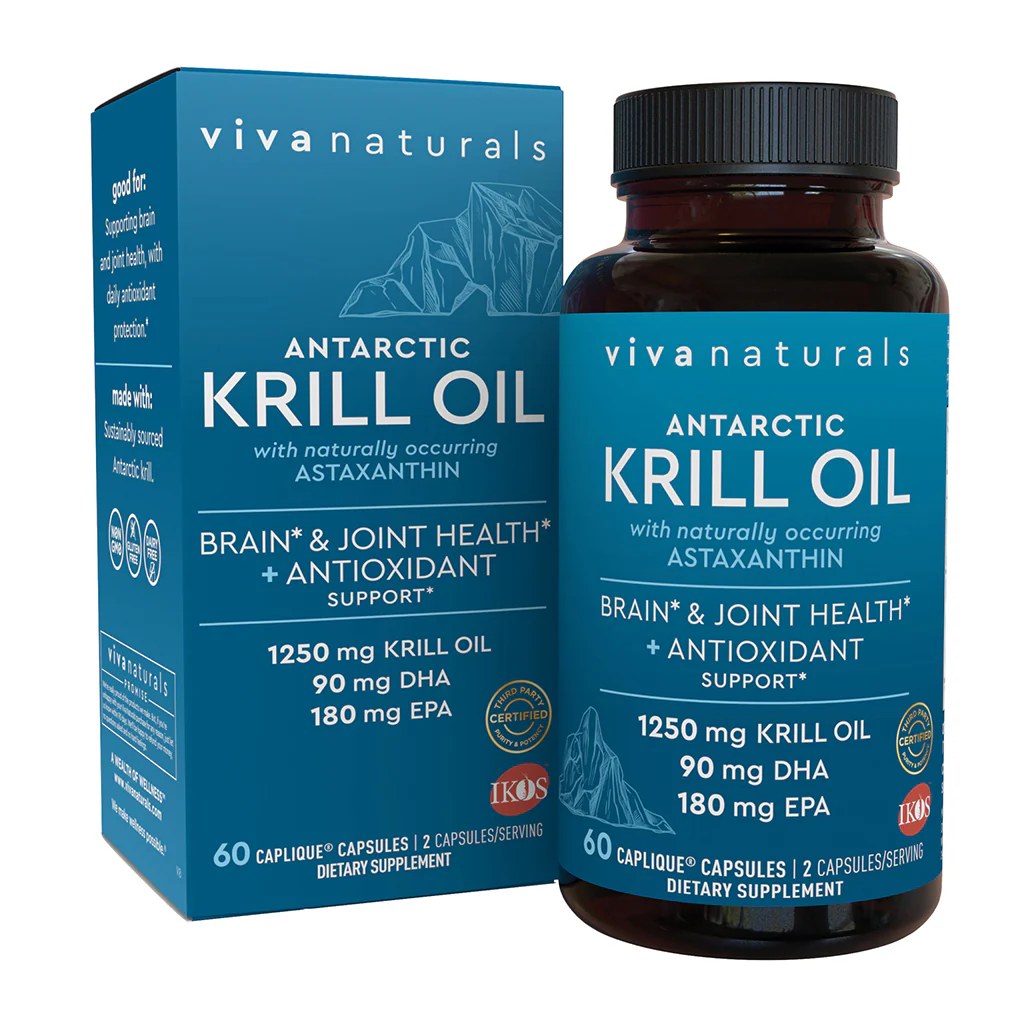
Viva Naturals Antarctic Krill Oil 1250 mg
Best for: The most omega-3 and phospholipids per dose
The high-dose option. Viva Naturals gives you the most of everything here per serving, 330 mg of omega-3, 575 mg of phospholipids, and 1.6 mg of astaxanthin, from Aker Superba krill, in a no-fishy-burp Caplique capsule. Two honest cautions keep it mid-pack: the capsule shell is made from tilapia and basa fish gelatin, so it adds a fish allergen on top of the shellfish, and it is among the priciest per serving with no published third-party seal.
- Most omega-3 (330 mg) and phospholipids (575 mg) here
- 1.6 mg astaxanthin
- No-fishy-burp Caplique capsule
- Capsule uses fish gelatin (added fish allergen)
- Premium price per serving
- No published third-party seal
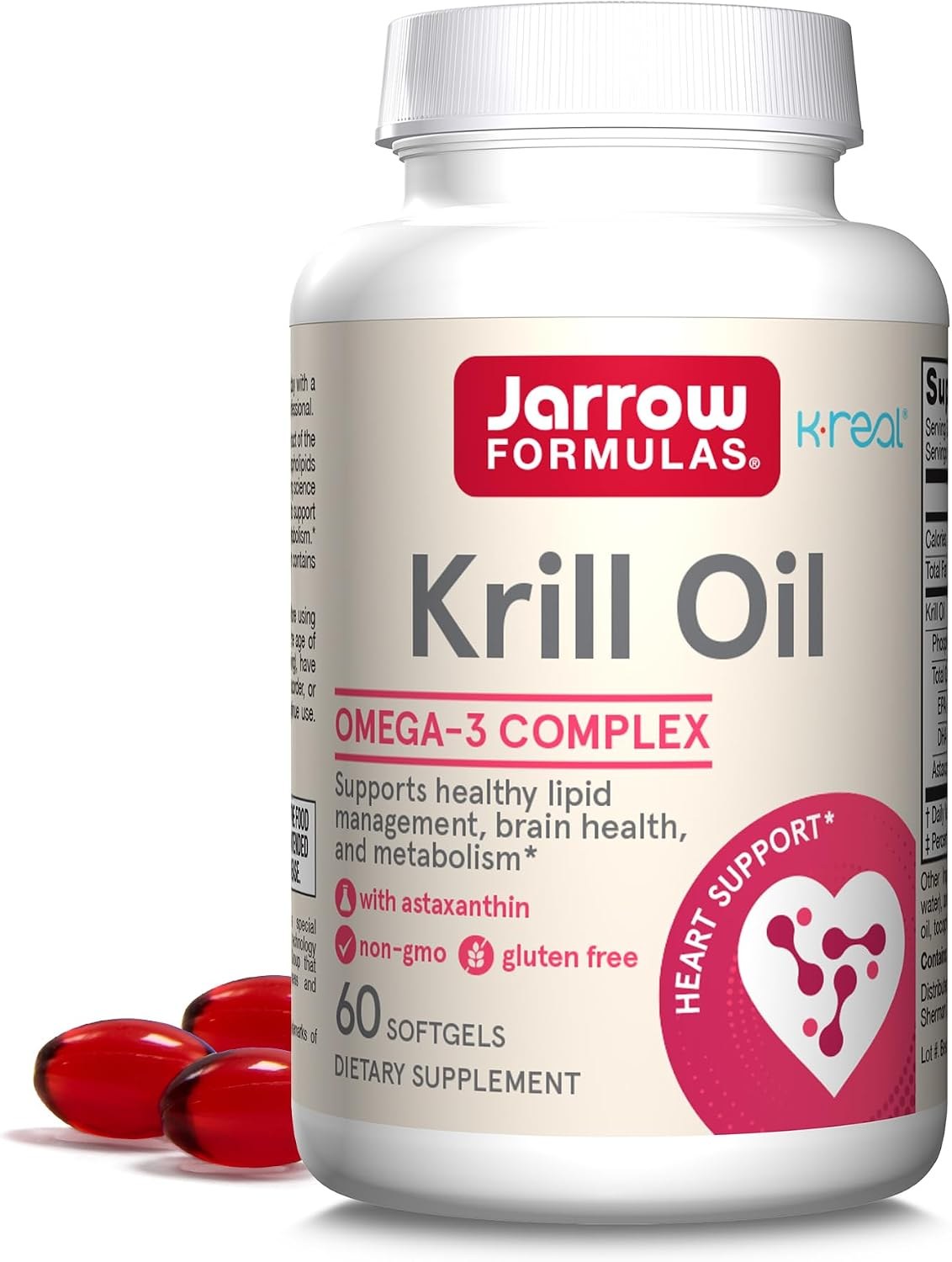
Jarrow Formulas Krill Oil
Best for: Friend of the Sea, Rimfrost-sourced krill
The sustainability-forward pick. Jarrow uses K-REAL krill from Rimfrost, which is both MSC and Friend of the Sea certified, and rounds the formula out with a rosemary and tocopherol antioxidant blend. It is a reputable, well-made product. The honest notes: the label emphasizes a 700 mg phospholipid-omega-3 complex rather than a clear discrete phospholipid number (so treat the 280 mg above as approximate), the sustainability seal is a sourcing credential rather than a finished-product purity seal, and it takes two softgels.
- Rimfrost K-REAL, MSC + Friend of the Sea
- Antioxidant-stabilized (rosemary, tocopherols)
- Reputable, transparent brand
- Discrete phospholipid mg not clearly labeled
- Sourcing cert, not a purity seal
- Two softgels per serving
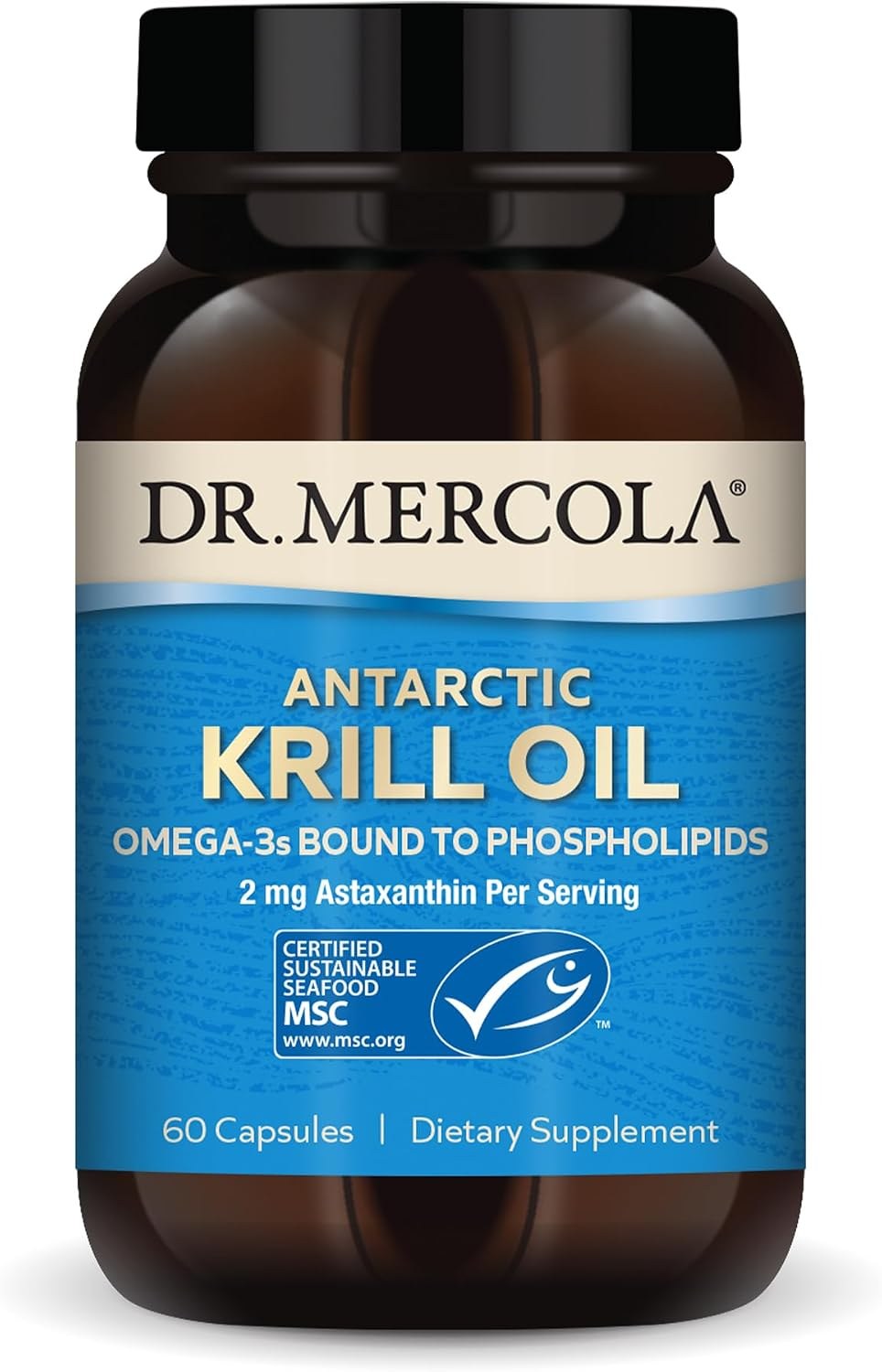
Dr. Mercola Antarctic Krill Oil
Best for: The most astaxanthin per serving
The astaxanthin pick. Mercola's krill oil carries the most astaxanthin here by far, 2 mg per serving, alongside 400 mg of phospholipids and added choline, from MSC-certified Antarctic krill. If the astaxanthin antioxidant is what draws you to krill, this delivers the most of it. The honest reality keeps it near the bottom of a strong field: it has the lowest total omega-3 of the two-capsule products (220 mg), the highest cost per milligram of omega-3, a fish-gelatin capsule, and no external seal.
- Most astaxanthin here (2 mg)
- Solid 400 mg phospholipids plus choline
- MSC-certified sourcing
- Lowest omega-3 of the two-cap group
- Worst cost per mg of omega-3
- Fish-gelatin capsule (added fish allergen)
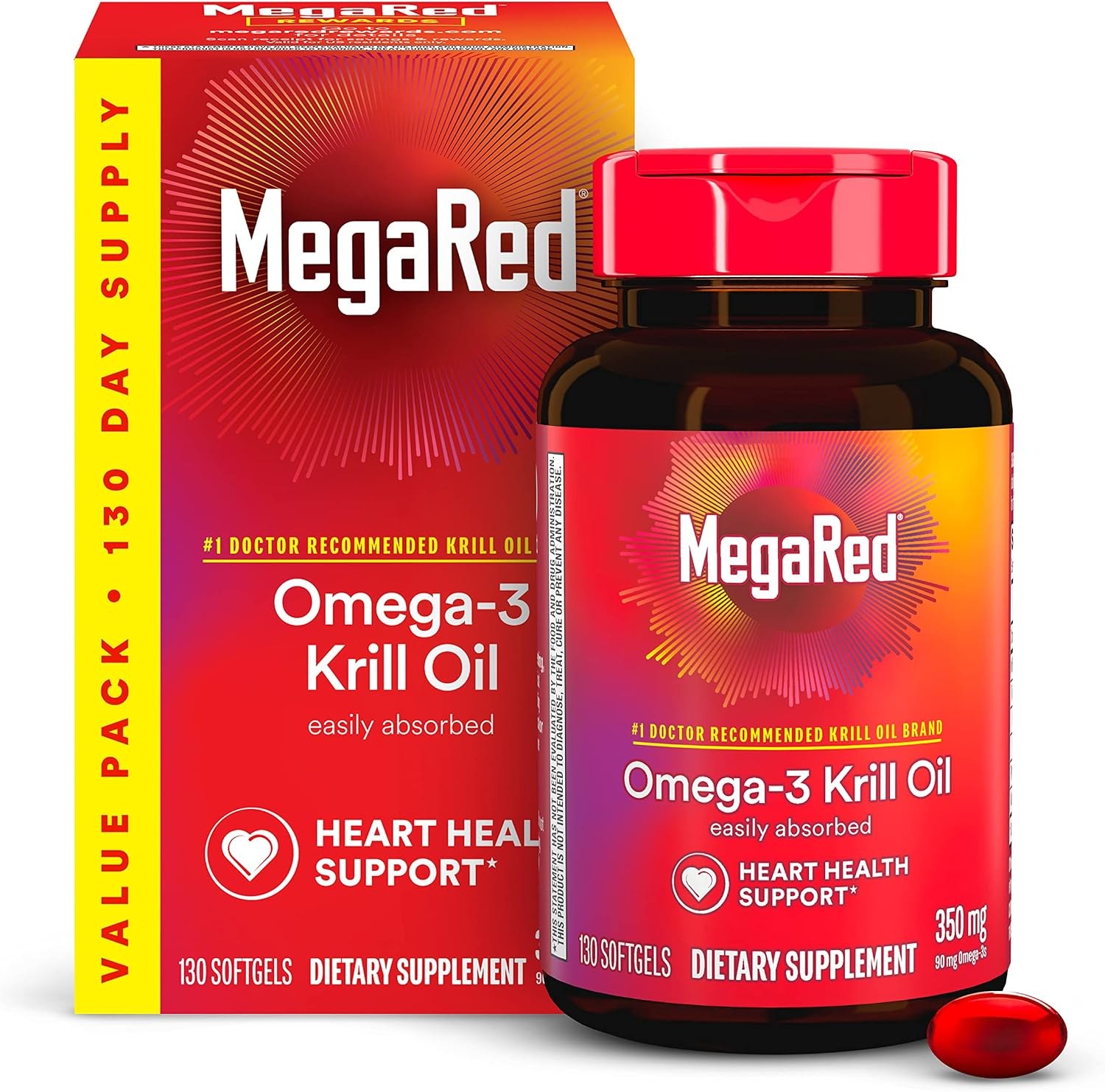
MegaRed Krill Oil 350 mg
Best for: A tiny, cheap softgel with no burps
The small-and-simple option. MegaRed is the mainstream drugstore krill oil: a tiny, easy-to-swallow softgel of Aker Superba krill at the lowest price per softgel here. If you want a gentle daily top-up with no fishy burps and no big pill, it does that. The honest catch is the dose: at just 90 mg of omega-3 per softgel, you would need two or three to match the others, which erases the price advantage and makes it an inefficient way to buy omega-3.
- Tiny, easy-to-swallow softgel
- Cheapest per softgel here
- Widely available in drugstores
- Very low omega-3 (90 mg per softgel)
- Lowest astaxanthin here
- Inefficient per mg of omega-3
The full lineup, side by side
The single most useful column is omega-3 per serving, the real EPA plus DHA you absorb. Notice how little that number is next to a typical fish-oil softgel, and weigh the phospholipids, astaxanthin, and seal from there.
| Product | Omega-3 (EPA+DHA) | Phospholipids | Astaxanthin | Testing / sourcing | ~ Price / serving |
|---|---|---|---|---|---|
| Sports Research | 240 mg | 400 mg | 1 mg | IKOS verified, MSC | $0.47 |
| Kori | 250 mg | 480 mg | 120 mcg | Brand tested, MSC | $0.67 |
| NOW Neptune | 250 mg | 450 mg | 360 mcg | In-house GMP | $0.73 |
| Viva Naturals | 330 mg | 575 mg | 1.6 mg | Brand tested | $1.00 |
| Jarrow | 250 mg | ~280 mg | 240 mcg | Friend of the Sea | $0.83 |
| Dr. Mercola | 220 mg | 400 mg | 2 mg | Brand tested, MSC | $1.00 |
| MegaRed | 90 mg | 130 mg | 17 mcg | Brand tested, MSC | $0.23 |
All are sustainably sourced (MSC or Friend of the Sea). A krill softgel carries far less EPA and DHA than a fish-oil softgel, so read this line, not the krill milligrams. Prices are approximate and change often.
How to choose
Read the EPA and DHA line, not the krill milligrams
The big number on the front of a krill bottle (1,000 mg, 1,200 mg, 1,250 mg) is the weight of the krill oil, not the omega-3 in it. The figure that matters is the combined EPA and DHA, which in this lineup runs from about 90 mg to 330 mg per serving. Compare products, and compare krill to fish oil, on that number.
Decide whether you actually want krill over fish oil
Krill's real edges are the phospholipid form, the built-in astaxanthin, a smaller pill, and far fewer fishy burps. If those matter to you and you only want a modest omega-3 top-up, krill is a pleasant way to get it. But if your goal is a meaningful omega-3 dose at a sensible price, fish oil delivers several times more EPA and DHA per dollar, and a concentrated fish oil can hit 500 to 1,000 mg in a single softgel.
Trust seals and sustainability
An independent seal such as IKOS (the krill-specific standard) means a third party verified the contents, and MSC or Friend of the Sea certification confirms responsible Antarctic sourcing. In this lineup only Sports Research carries a published IKOS seal; the rest rely on brand or in-house testing, though most use MSC-certified Aker Superba or Friend of the Sea Rimfrost krill.
Mind allergies, medications, and the capsule
Krill is a crustacean, so anyone with a shellfish allergy should avoid it entirely. Because omega-3s mildly thin the blood, talk to your doctor first if you take an anticoagulant or antiplatelet drug, and pause before surgery. And check the capsule: a few products (Viva Naturals, Dr. Mercola) use a fish-gelatin shell, which adds a fish allergen.
Frequently asked questions
Krill oil vs fish oil: which is better?
Neither is universally better. Krill delivers its omega-3s in phospholipid form with built-in astaxanthin and tends to cause fewer fishy burps, but each softgel carries far less EPA and DHA and costs much more per milligram. Fish oil is the more cost-effective way to get a high omega-3 dose. Choose krill for tolerability, the phospholipid form, and the astaxanthin; choose fish oil for dose and value.
Is krill oil actually absorbed better than fish oil?
Research suggests a modest absorption advantage for krill's phospholipid-bound omega-3s, especially at lower doses, but the difference is small and inconsistent across studies. It is not enough to offset how much less EPA and DHA a krill softgel contains, so treat better absorbed as a minor plus, not a reason to expect dramatically more benefit.
How much krill oil should I take?
Most labels suggest one to two softgels daily, providing roughly 90 to 330 mg of EPA plus DHA depending on the product. If your goal is a meaningful omega-3 intake, read the combined EPA and DHA line rather than the headline krill milligrams, and dose to reach your target. Talk to your doctor for an amount that fits your needs.
Can I take krill oil with a shellfish allergy?
No. Krill is a crustacean, so krill oil can trigger reactions in people with shellfish allergies. Avoid it and consider algae oil or a purified fish oil instead. Note that some krill products also use a fish-gelatin capsule, which adds a fish allergen on top of the shellfish.
What is astaxanthin and why does it matter in krill oil?
Astaxanthin is the natural red antioxidant that gives krill oil its color. It helps keep the oil stable against oxidation and is an antioxidant in its own right, a feature standard fish oil does not include. Amounts in this roundup range from about 17 mcg in MegaRed up to 2 mg in Dr. Mercola per serving.
Is krill oil sustainable?
It can be. Antarctic krill harvesting is regulated by CCAMLR with conservative catch limits, and the leading suppliers, Aker BioMarine Superba and Rimfrost K-REAL, are MSC certified, with Rimfrost also Friend of the Sea certified. Look for an MSC or Friend of the Sea seal on the label to confirm responsible sourcing.
The bottom line
Krill oil is a genuinely nice product wrapped in some overselling. For most people who want it, Sports Research is the smart pick: a real third-party seal, sustainable Superba2 krill, and a full omega-3 dose in one daily softgel. Kori and NOW Neptune are excellent one-a-day and NKO options, Viva Naturals packs the most omega-3 per serving, Jarrow leads on sustainable sourcing, Dr. Mercola on astaxanthin, and MegaRed is the tiny, cheap pill. Just keep the fundamentals in mind: read the EPA and DHA line rather than the krill milligrams, and if you need a high omega-3 dose affordably, a good fish oil is still the better value.