Spirulina is the deep blue-green algae that shows up in every wellness smoothie, sold for energy, detox, protein, and general vitality. Some of that is real and some is not, but the most important thing about spirulina is not on the front of the label at all: because it is grown in water and absorbs what is in that water, a poorly-made spirulina can carry genuine toxins. So this is a category where the source matters more than almost anything else. This guide ranks the best spirulina on clean-source testing first, then organic status and value, and it is honest about what the algae actually does.
The short story: Nutrex Hawaii Pure Hawaiian Spirulina is the clean-source benchmark, grown in a controlled Kona culture and batch-tested for the contaminants that matter. But read the box below first, because with spirulina, where it comes from is the whole game.
Read this first: source is everything, and the evidence is modest
The safety headline is contamination. Spirulina absorbs what is in its growing water, so poorly grown or untested batches can carry microcystins (liver toxins) and heavy metals. A clean, batch-tested source with certificates of analysis is the single most important feature, which is why Hawaiian-grown Nutrex sets the benchmark.
What the evidence supports. The strongest signal is for blood lipids: a 2016 meta-analysis (Serban and colleagues) linked spirulina to lower total cholesterol, LDL, and triglycerides, with small trials also showing modest blood-pressure and allergic-rhinitis benefits. Energy and detox claims are weak, and at normal doses spirulina is not a practical complete-protein source.
Who should be careful. Spirulina contains phenylalanine, so people with PKU should avoid it, and because it may stimulate the immune system, those with autoimmune conditions should be cautious. If you are pregnant or take blood thinners, check with a clinician first. Chlorella is a related but different algae.
The short version
- Best overall: Nutrex Hawaii, the clean-source benchmark, batch-tested for microcystins and heavy metals.
- Best value: Nutricost or NOW organic tablets, tested and inexpensive.
- Source beats price. A verified clean source matters more than the lowest cost per gram.
- Set expectations: modest cholesterol and blood-pressure support, not an energy or detox miracle.
How we ranked them
Because contamination is spirulina's real risk, source and testing did most of the deciding. We weighed four things:
- Clean-source testing. Batch testing for microcystins and heavy metals, certificates of analysis, and reputable controlled cultivation rank highest for spirulina.
- Organic certification. USDA Organic adds assurance about growing conditions.
- Convenience and dose. Tablets are easier to dose and mask the taste; powders offer value and flexibility.
- Value. Price per gram alongside third-party or GMP verification.
We ignored energy and detox marketing, since the evidence does not support it. Scores are our editorial assessment on a five-point scale, reflecting product quality, not a promise the ingredient will work for you. Prices are approximate and change often.
The 7 best spirulina supplements
Tap any product to jump straight to its full review.
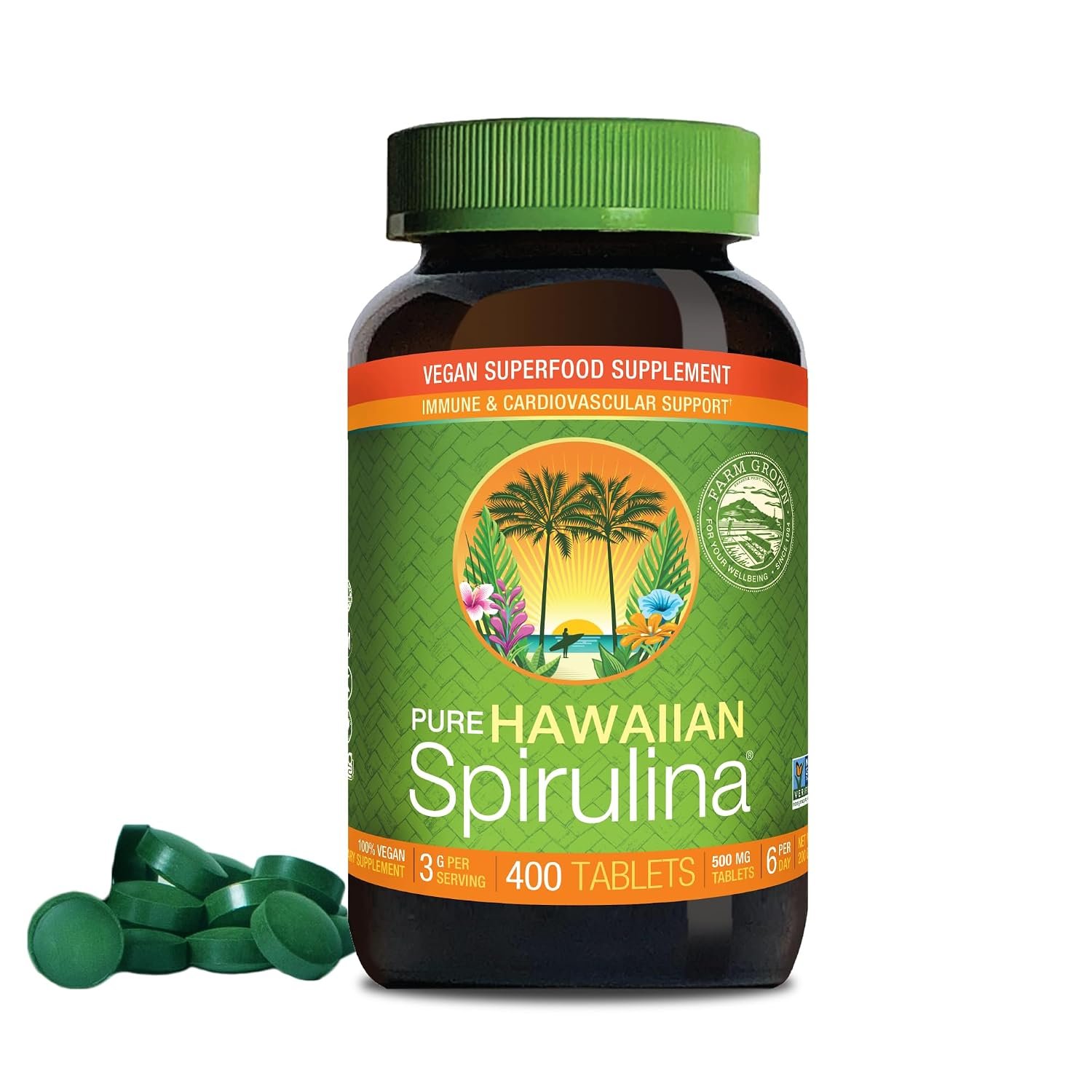
Nutrex Hawaii Pure Hawaiian Spirulina
Best for: The clean-source contamination benchmark
The pick that directly answers spirulina's biggest risk. Nutrex Hawaii is grown in a controlled, freshwater-fed culture in Kona, and the company tests every batch for microcystins and heavy metals and publishes certificates of analysis, which is exactly the assurance this category needs. It is Non-GMO, naturally rich in the blue pigment phycocyanin, and comes as easy-to-dose 500 mg tablets that avoid the strong taste of powders. It costs more per gram than bulk powders, but for a supplement you take daily, a verified clean source is worth it, and that is why it wins.
- Batch-tested for microcystins and heavy metals
- Published certificates of analysis
- Controlled Hawaiian (Kona) cultivation
- Convenient, taste-free tablets
- Costs more per gram than bulk powders
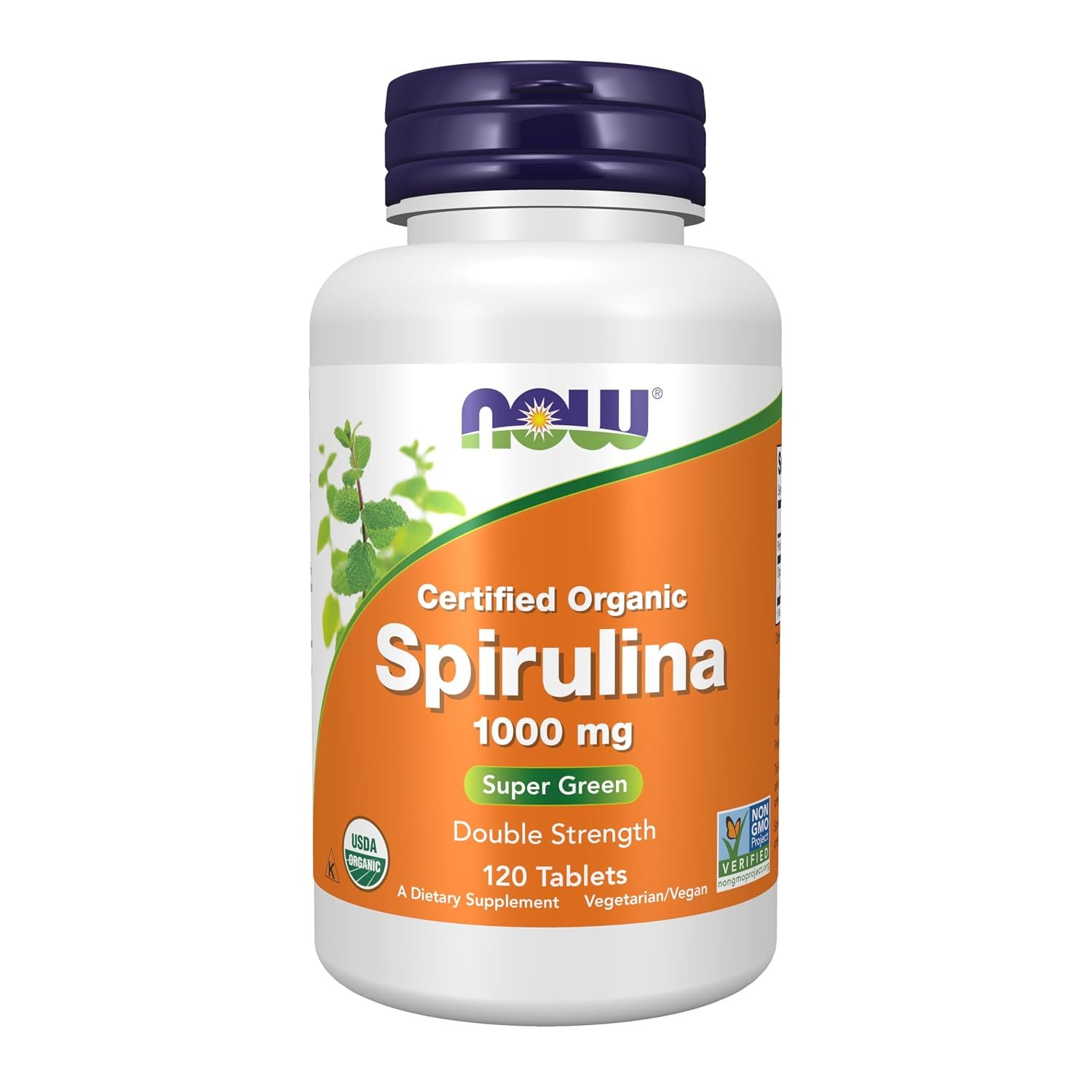
NOW Foods Certified Organic Spirulina 1000 mg
Best for: Organic, in-house-tested tablets at a low price
The best-value trusted brand. NOW's certified organic spirulina comes from a name with extensive in-house GMP lab testing for heavy metals and microbials, USDA Organic and Non-GMO Project Verified, in convenient 1,000 mg double-strength tablets at a low price. For most people who want organic, tested tablets without paying the Hawaiian premium, this is the smart everyday buy. It ranks just behind Nutrex for one honest reason: it is sourced from certified organic ponds abroad rather than one traceable, single-farm operation, so the sourcing is a step less transparent.
- USDA Organic, Non-GMO Verified
- Extensive in-house testing for metals
- Double-strength tablets, low price
- Pooled organic sourcing, less farm-level traceability
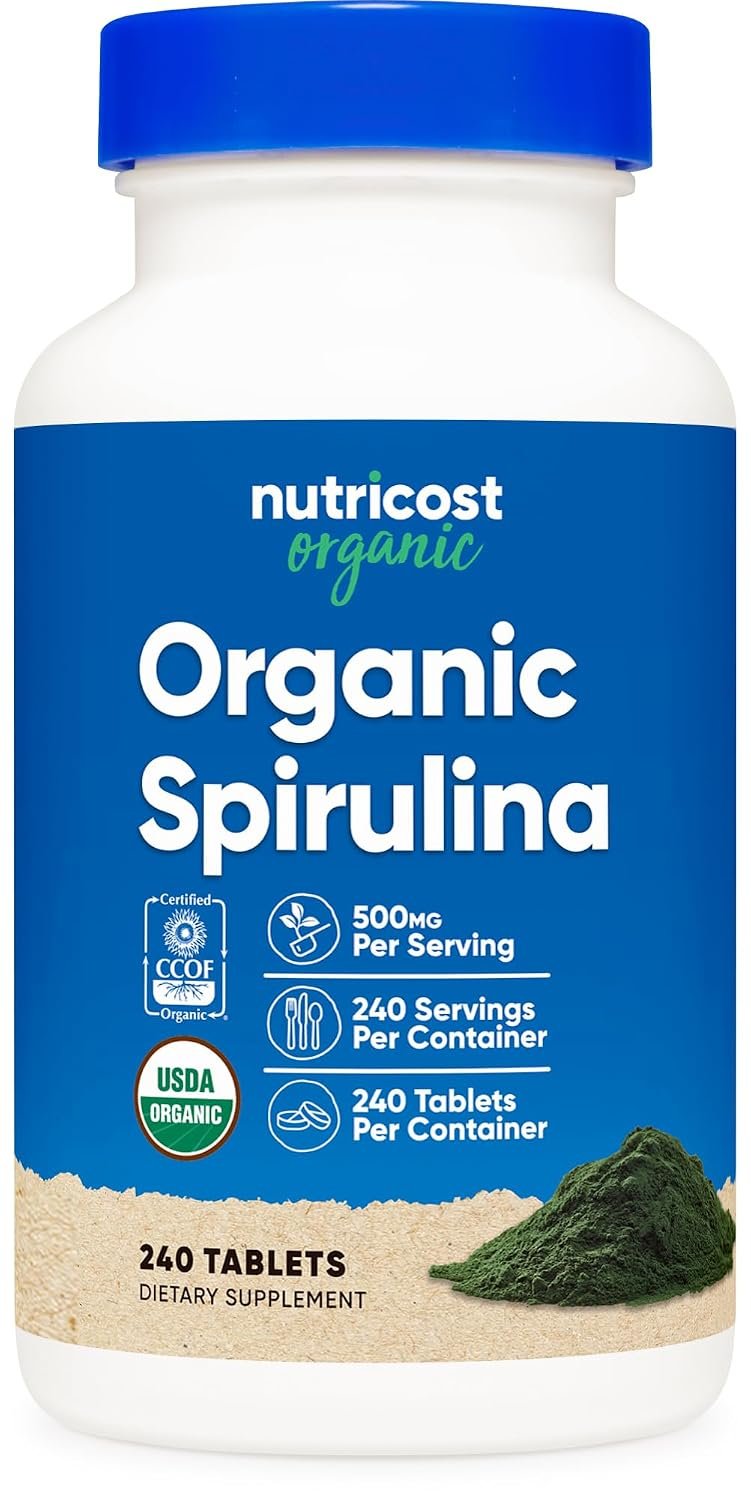
Nutricost Organic Spirulina 500 mg
Best for: Certified organic, tested tablets for the least money
The value winner in tablet form. Nutricost is USDA/CCOF certified organic and third-party tested, made in a GMP-compliant, FDA-registered facility, at a very low cost per serving. It gives you organic, verified spirulina tablets for less than almost anything else, which makes it the sensible everyday pick if the Hawaiian premium is not for you. It ranks third for the same honest reason as NOW: it uses generic pooled organic sourcing with less farm-level transparency than a single-origin Hawaiian brand. Quality is good; the sourcing story is just less specific.
- USDA/CCOF certified organic
- Third-party tested, GMP facility
- Very low cost per serving
- Generic pooled sourcing, less traceability
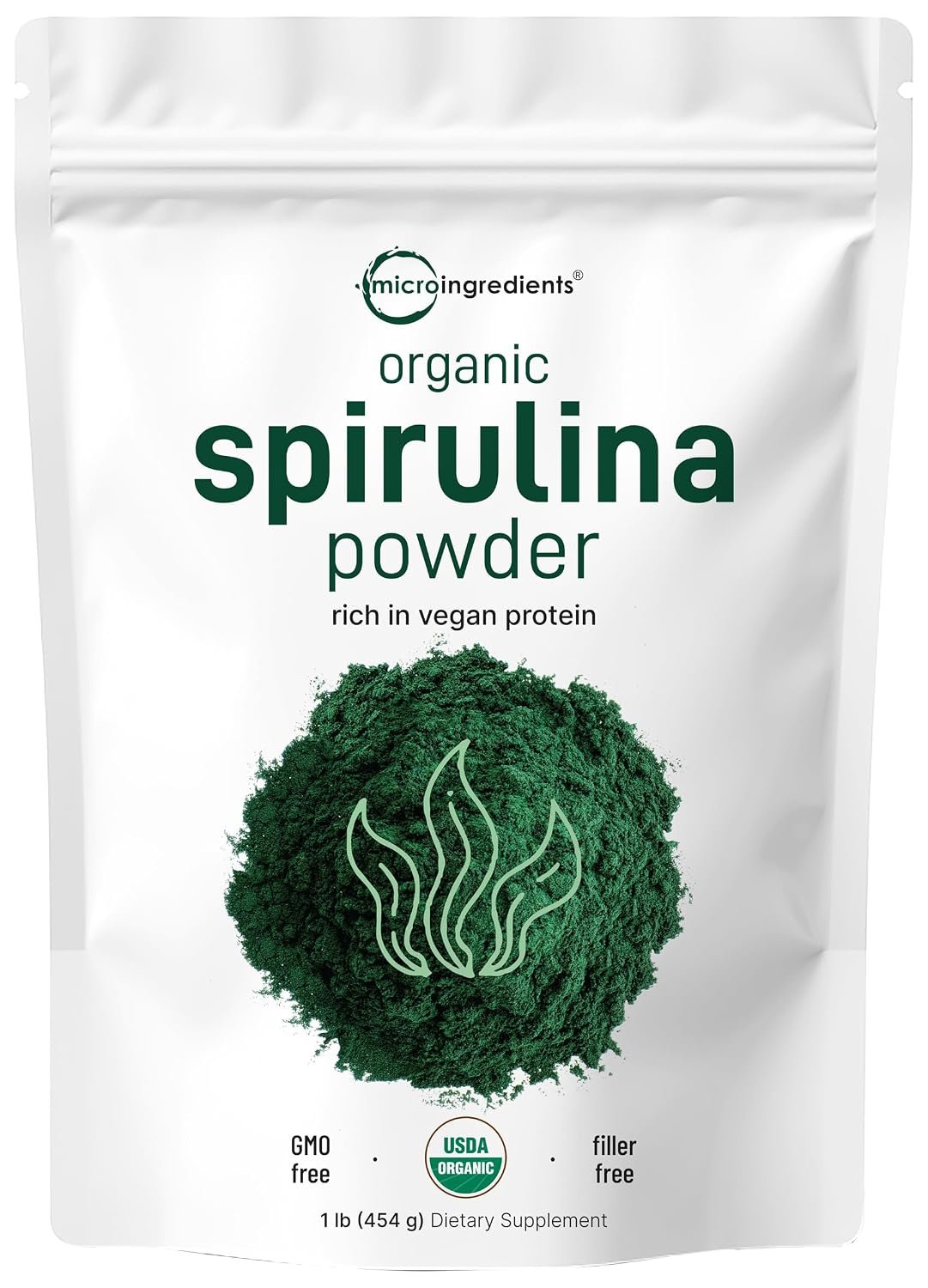
Micro Ingredients Organic Spirulina Powder
Best for: The lowest cost per gram in bulk
The bulk-value powder for regular users. Micro Ingredients is a large 1 lb organic bag at a low cost per gram, USDA Organic, non-irradiated, with third-party testing for heavy metals and microbials, and a scoop included. If you take spirulina daily and want to bring the cost down, buying it as a powder is the cheapest route. Two honest notes keep it mid-pack: the taste and smell are strong, and powder is messier to dose than tablets. One allergy note: the brand discloses this raw organic powder may contain trace micro-shellfish, so shellfish-allergic buyers should skip it.
- Large 1 lb organic bag, low cost per gram
- Third-party tested, non-irradiated
- Scoop included
- Strong taste and smell, messy to dose
- May contain trace micro-shellfish (allergy note)
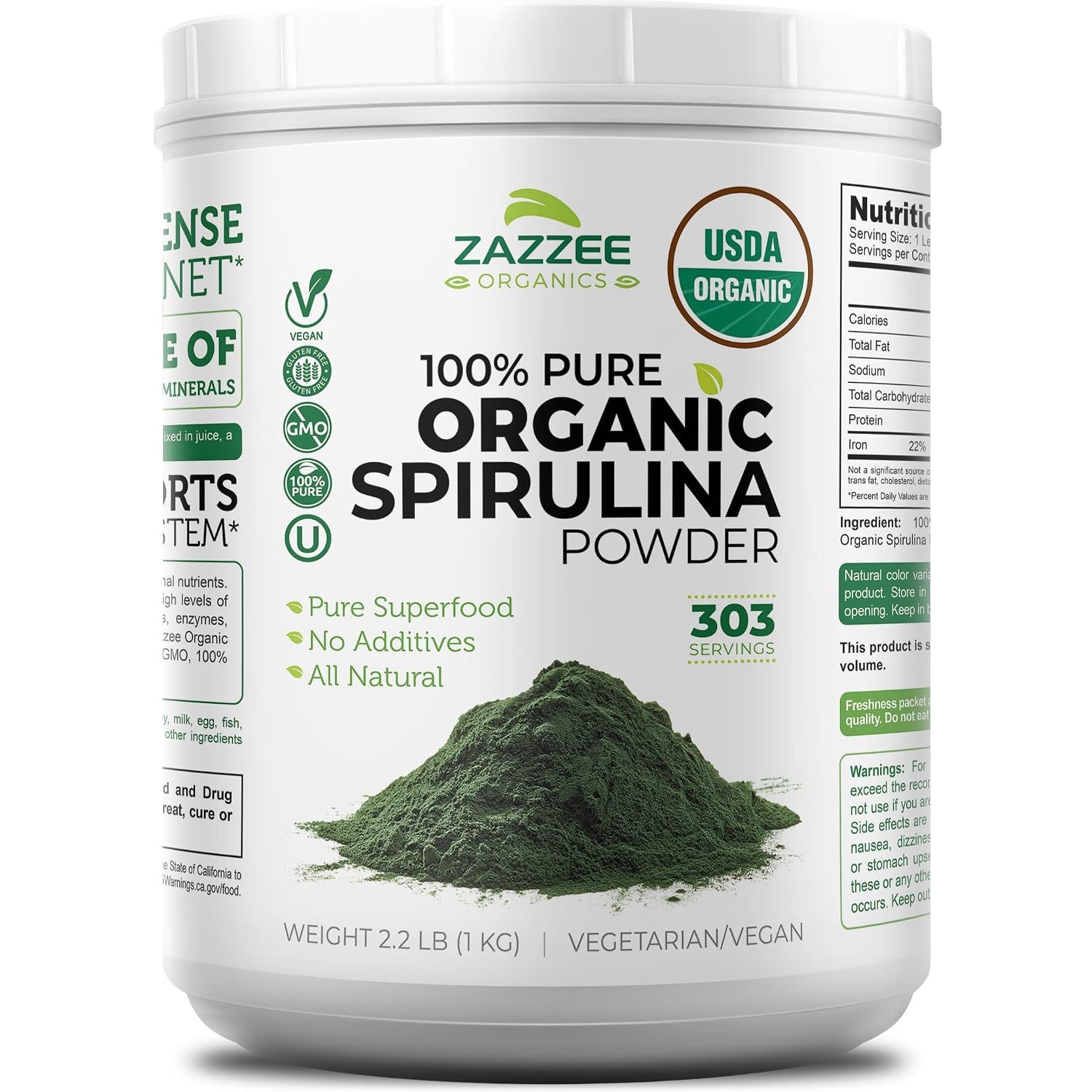
Zazzee USDA Organic Spirulina Powder
Best for: A pure organic powder in a resealable tub
The clean organic powder in the nicest packaging. Zazzee is a pure USDA Organic, certified kosher, non-irradiated powder made in the USA in a resealable wide-mouth container, with a more neutral smell than some, which makes daily scooping pleasant. If you want organic bulk powder and value tidy packaging, it is a good pick. It sits mid-pack because it is pricier than the biggest bulk bags and publishes limited contaminant test detail, so while it is organic and US-made, the specific microcystin and heavy-metal documentation is thinner than the Hawaiian benchmark.
- USDA Organic, kosher, USA-made
- Resealable tub, neutral smell
- Pricier than the biggest bulk bags
- Limited published contaminant testing detail
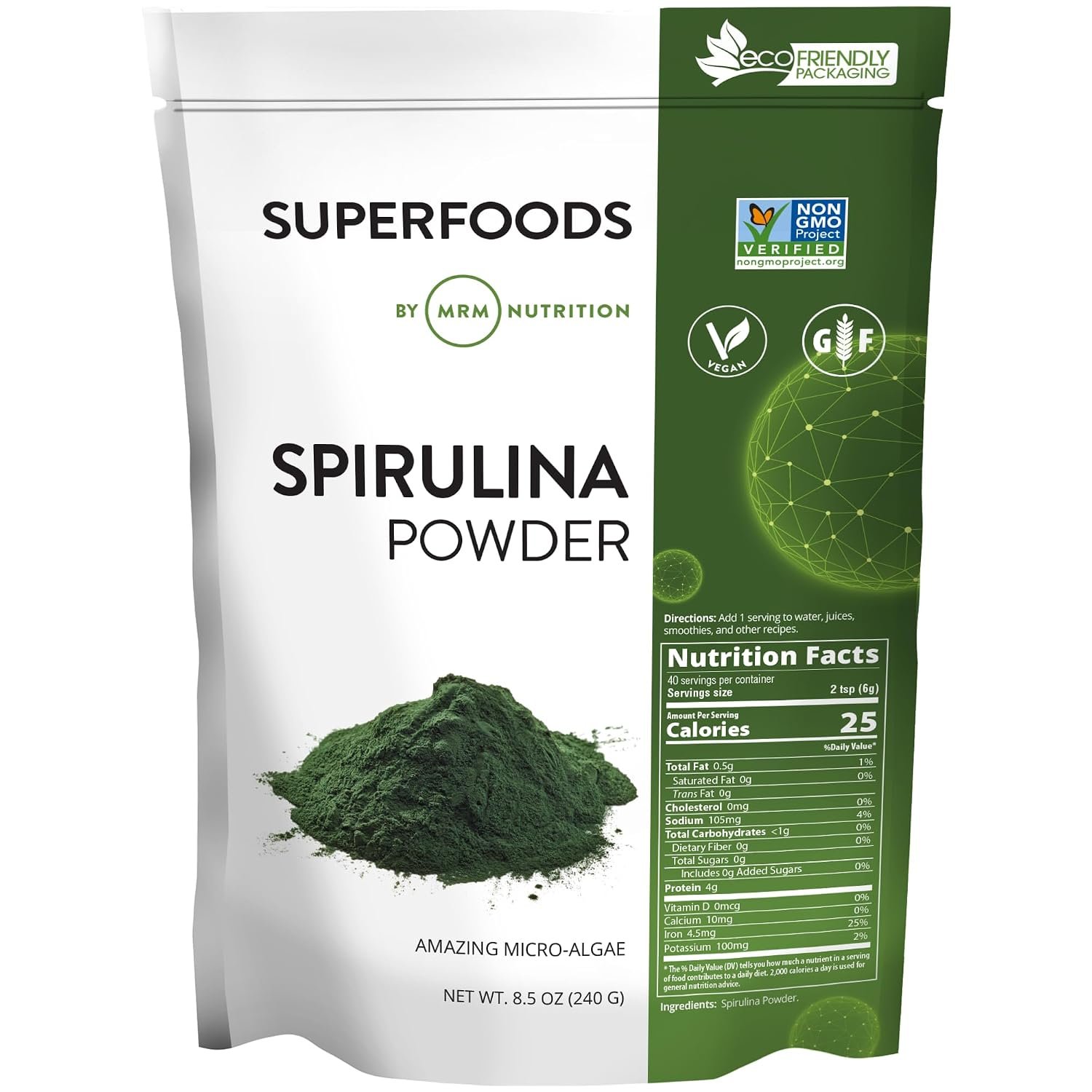
MRM Nutrition Raw Spirulina Powder
Best for: An affordable powder that blends well
The smoothie-friendly budget powder. MRM is an affordable, Non-GMO Project Verified, vegan powder made in a GMP facility that blends smoothly into smoothies, which is its main appeal for people who add spirulina to drinks. It does the job at a good price. It ranks lower on our source-first criteria for two honest reasons: it is not certified organic, and its single-origin sourcing details are limited, so you know it is non-GMO and GMP-made but less about exactly where and how it was grown. Fine for smoothies if the source disclosure is not your priority.
- Non-GMO Verified, vegan, GMP-made
- Blends smoothly into smoothies
- Affordable
- Not certified organic
- Limited single-origin sourcing detail
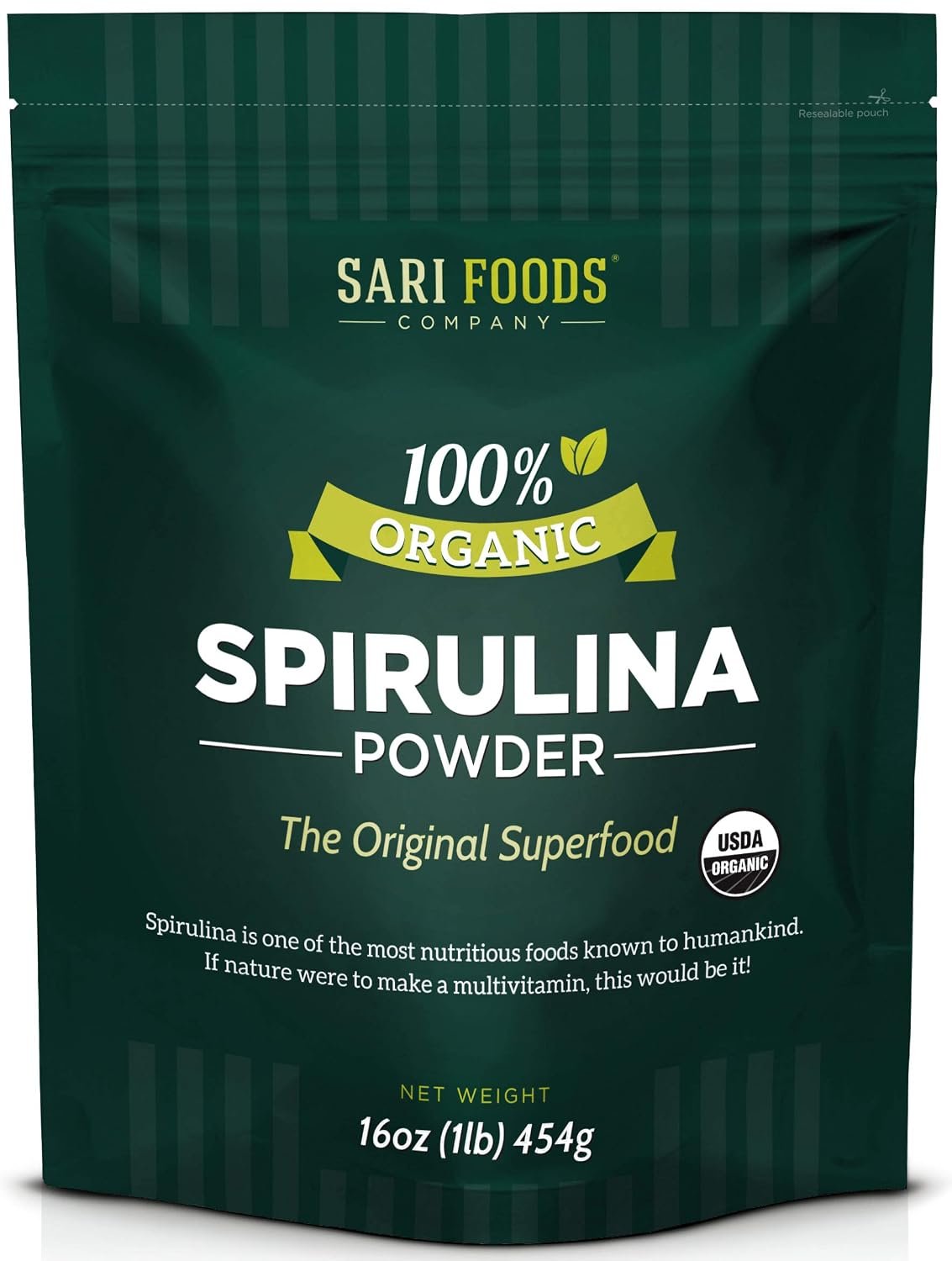
Sari Foods Organic Spirulina Powder
Best for: A clean organic powder marketed on nutrient density
A clean organic powder that leans on nutrient-density marketing. Sari Foods is USDA Organic, non-irradiated, non-GMO, and not solvent-extracted, marketed for its iron, B vitamins, and chlorophyll content, and it is a perfectly clean product. It finishes last on our source-first ranking for two honest reasons: it is a premium price for a powder, and like several powders here it publishes limited public contaminant test data, so the microcystin and heavy-metal documentation is thinner than the tested tablet brands at the top. Good if you specifically want this brand's clean, nutrient-forward positioning.
- USDA Organic, non-irradiated, non-GMO
- Marketed on iron, B vitamins, chlorophyll
- Premium price for a powder
- Limited public contaminant test data
The full lineup, side by side
Read the source and testing columns first. With spirulina, a clean, contamination-tested source is the single most important thing on the label.
| Product | Form | Source | Organic | Testing | Best for |
|---|---|---|---|---|---|
| Nutrex Hawaii | Tablet | Hawaii (Kona) | Non-GMO | Batch COA (metals + toxins) | Cleanest source |
| NOW Foods | Tablet | Organic ponds | USDA | GMP in-house | Best tested value |
| Nutricost | Tablet | Organic | USDA/CCOF | 3rd-party | Best value |
| Micro Ingredients | Powder | Organic | USDA | 3rd-party | Bulk powder (trace shellfish note) |
| Zazzee | Powder | USA-made | USDA | Limited detail | Organic powder, tidy tub |
| MRM | Powder | Non-GMO | No | GMP | Smoothies |
| Sari Foods | Powder | Organic | USDA | Limited detail | Nutrient-dense |
Prices and specs are read from current listings and can change; confirm the Supplement Facts panel before you buy.
How to choose the right one for you
A few honest priorities make the decision easy:
- If clean source is your priority, Nutrex Hawaii is the batch-tested, single-origin benchmark.
- If you want organic tested tablets for less, NOW and Nutricost are excellent value.
- If you take it daily and want the lowest cost, a bulk organic powder like Micro Ingredients wins on price.
- If you add it to smoothies, MRM blends smoothly, and tablets are best if you dislike the taste.
- Whatever you pick, favor a tested source, start low, and skip it if you have PKU or need to be cautious with an autoimmune condition.
For the wider green-supplement picture, see our best greens powders ranking and our honest take on whether greens powders are worth it. If cholesterol is your goal, our supplements for high cholesterol guide covers the fuller field.
Frequently asked questions
Is spirulina safe, and how do I avoid contamination?
Spirulina is generally safe for healthy adults, but poorly grown batches can contain microcystins (liver toxins) or heavy metals. Choose a reputable brand that tests every batch and can provide a certificate of analysis.
What is the difference between spirulina and chlorella?
They are different algae. Spirulina is a blue-green algae rich in phycocyanin and protein, while chlorella is a green algae with a tough cell wall (look for broken cell wall) and more chlorophyll. They are not interchangeable.
How much spirulina should I take per day?
Studies commonly use 1 to 8 grams daily, and many people take 2 to 3 grams. There is no official recommended dose, so follow the label and start low.
Tablets or powder, which is better?
Tablets are convenient, easy to dose, and mask spirulina's strong taste. Powder is cheaper per gram and blends into smoothies, but it has a strong flavor and can be messy.
Who should avoid spirulina?
People with PKU should avoid it because it contains phenylalanine, and those with autoimmune conditions should be cautious because it may stimulate the immune system. Anyone pregnant or taking blood thinners should check with a clinician first.
Does spirulina really lower cholesterol or blood pressure?
Meta-analyses suggest spirulina may modestly support healthy cholesterol and blood pressure, but the trials are small and short. Treat it as a complement to, not a replacement for, proven care.
The bottom line
Spirulina is a supplement where the source is the product. Because the algae absorbs what is in its water, a verified clean source protects you from the real risks of microcystins and heavy metals, which is why Nutrex Hawaii is our benchmark, with NOW and Nutricost the best-value organic tablets and bulk powders like Micro Ingredients winning on cost per gram. Keep the expectations honest: the evidence supports modest cholesterol and blood-pressure benefits, not an energy or detox transformation, and if you have PKU or an autoimmune condition, be cautious. Buy a tested, reputable source and spirulina is a reasonable, nutrient-dense addition.